


Cabotage proves up to 90% cleaner than trucking in Brazil logistics analysis
Oct, 29, 2025 Posted by Lucas LorimerWeek 202545
Coastal shipping can reduce greenhouse gas emissions by as much as 90% compared with road transport, according to a study by Norcoast, a Brazilian coastal navigation company that analyzed Klabin’s paper and pulp logistics operations. After arriving at TCP, the company that operates the Paranaguá Container Terminal, and continuing along the coast with Norcoast, the cargo showed significant reductions, reinforcing the environmental potential of the modal in Brazil.
The analysis considered two shipping periods: from February to December 2024, and from January to August 2025. The results show that in 2024 alone, coastal shipping avoided the emission of 12,000 tonnes of CO₂ — the equivalent of planting 86,000 trees or taking 2,600 vehicles off the streets for a year. By August 2025, an additional 7,700 tonnes of CO₂ had already been avoided.
According to Stephano Galvão, Norcoast’s Director of Operations, the study reinforces the company’s purpose of expanding containerized maritime transport along the Brazilian coast and throughout the Amazon basin. “We believe coastal navigation goes beyond a logistical decision. It is a conscious choice for a more efficient alternative that connects, integrates, and transforms. Beyond optimizing logistics, we work daily to rethink the integration of different modes, creating more efficient deliveries for the client and a cleaner future.”
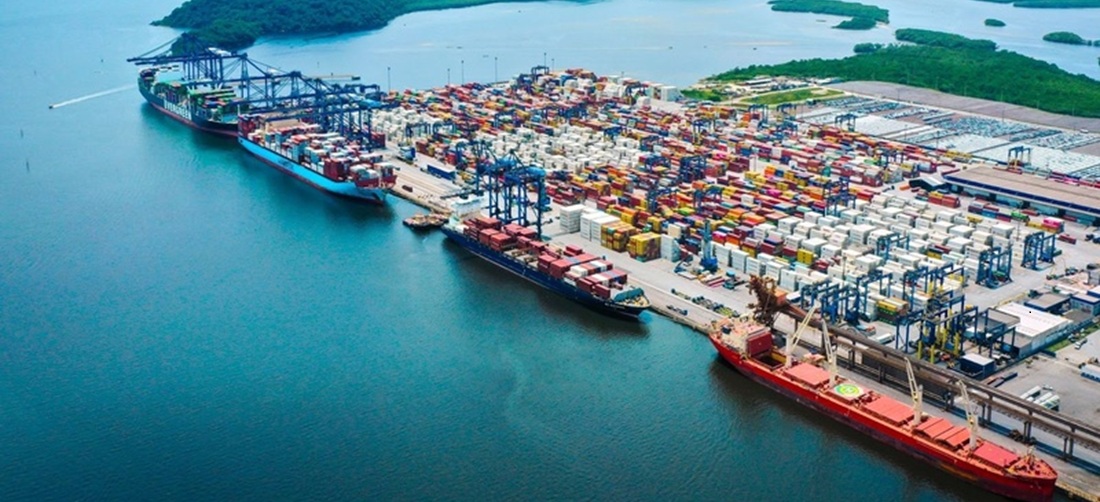
Norcoast currently operates four vessels of up to 3,500 TEU each — all calling at TCP since February 2024. The Paranaguá Container Terminal is today one of the most important links connecting exporters and importers to cabotage operations.
For Carolina Merkle Brown, TCP’s Commercial Manager for Shipping Lines and Market Intelligence, “coastal shipping is a sustainable, reliable, and cost-competitive logistics solution. Since these services returned to TCP in February 2024, we have seen more customers using this alternative and increasing their cargo volumes, which demonstrates the efficiency of the modal and a growing integration into the logistics chain for importers and exporters operating through the terminal.”
Klabin is currently the fourth-largest user of containerized cabotage in Brazil, with more than 20,000 TEUs transported in 2024. At the Port of Paranaguá alone, the company moved more than 3,500 TEUs using this logistics option.
“We adopted cabotage as part of our logistics strategy because it brings together two essential characteristics for Klabin: operational efficiency and sustainability. We use this mode to supply our industrial units in the North and Northeast regions, as well as to serve customers there, with raw material produced in the South of Brazil. Our expectation is that cabotage will have a growing share in our transport matrix in the coming years, in line with rising demand,” said Roberto Bisogni, Klabin’s Director of Operational Planning and Logistics.
From land to sea
Sustainability extends beyond moving Klabin’s paper and pulp by sea. Rail transport is also a key piece in the logistics chain and a competitive advantage that positions the Paranaguá Container Terminal as the only port terminal in the South Region with a direct connection between the bonded area and the railway.
Since September 2021, the 380 kilometers between Klabin’s Ortigueira Unit — which has a production capacity of 2.5 million tonnes of paper and pulp per year — and the Paranaguá Container Terminal have been covered by train, following the completion of KBT, one of Brazil’s largest intermodal logistics projects, created through a strategic collaboration between Klabin, Brado Logística and TCP. The new container terminal, operated by TCP and located next to Klabin’s plant, is directly linked to the railway operated by Brado Logística, guaranteeing seamless integration with the port and greater efficiency in moving paper and pulp.
The structuring of this intermodal corridor reduced dependence on road transport. As a result, rail shifted to a central role in the operation, contributing significantly to reductions in greenhouse gas emissions along the chain.
Cabotage grows and reinforces Paranaguá’s strategic role
Coastal navigation has been gaining ground in the Brazilian logistics matrix, and at TCP, this mode occupies a strategic position. In the first half of 2025, the terminal handled 44,714 TEUs in cabotage services, a 71% increase compared with the same period of the previous year — the result of deeper integration of the service into clients’ logistics chains and the terminal’s competitive infrastructure.
One of TCP’s unique characteristics is its reefer container yard — the largest in South America, with 5,268 plugs — which is especially attractive to agribusiness exporters. Poultry producers from Paraná, the country’s largest producer, find in TCP both capacity and efficiency for handling and storing their shipments. From there, cargo can move to other Brazilian regions via cabotage, enhancing competitiveness and reinforcing environmental gains.
“Our infrastructure allows the terminal to serve multiple industrial segments, from refrigerated cargo to paper and pulp, as in Klabin’s case. By strengthening cabotage, we offer a modal that combines sustainability with long-distance cost efficiency, improved delivery predictability, reduced highway congestion, and lower accident risk,” Carolina added.
In addition, TCP’s equipment fleet — the largest in Brazil, with 40 rubber-tired gantry cranes (RTGs) and 69 terminal tractors (TTs) — along with integrated logistics services, direct rail connection, and partnerships with hinterland warehouses, consolidates Paranaguá as a national and international logistics hub ready to advance sustainable growth strategies.
Source: Norcoast
-
Meat
Feb, 12, 2026
0
Paraguay poultry exports fall in January, down 7.9% in volume and 22.3% in value
-
OTI Rankings
Dec, 03, 2018
0
Mills in the Center-South region extend cane processing period
-
Ports and Terminals
Apr, 24, 2024
0
Bulk carrier grounds in Argentina
-
Ports and Terminals
Feb, 17, 2020
0
Port of Santos development plan for next 20 years