


China steps up pressure on Panama after loss of Canal port concessions
Jun, 15, 2026 Posted by Gabriel MalheirosWeek 202626
The dispute involving CK Hutchison Holdings, the Panama Canal and China-U.S. relations has become one of the most closely watched geopolitical flashpoints tied to global logistics in recent years.
The standoff brings together two of the world’s largest economies, a waterway that carries about 6% of global trade and some of the biggest names in international port operations. At the center of the dispute is CK Hutchison’s loss of the concessions to operate Balboa and Cristóbal, the ports located at the Pacific and Atlantic entrances to the Panama Canal.
Since March 2026, China has increased inspections and detentions of Panamanian-flagged vessels. Ambrey Analytics, the maritime intelligence unit of British firm Ambrey, said the number of detentions has reached unprecedented levels.
In April alone, Chinese authorities held 136 Panamanian-flagged ships, 6.4 times the average recorded in 2025. Another 96 vessels were detained in March. Beijing has cited technical and safety issues, but the measures have caused delays, raised logistics costs and disrupted global transport chains.
The escalation followed a decision by Panama’s Supreme Court declaring unconstitutional the concession that allowed Panama Ports Company, a CK Hutchison subsidiary, to operate the Balboa and Cristóbal terminals. The original contracts dated back to 1997 and had been renewed in 2021.
The ruling drew international attention because of the ports’ strategic location at both ends of the Canal. Under the Trump administration, the issue became a priority in U.S.-Panama relations, with Washington raising concerns about China’s growing presence in the region.
There is no public evidence that China controls the Panama Canal. Still, Beijing has sharply expanded its investments in infrastructure and logistics in Panama over the past several decades. Panama’s government rejects allegations of foreign interference in the waterway’s administration.
CK Hutchison accused Panama of illegally confiscating its assets and launched international arbitration proceedings, seeking more than US$2 billion in compensation.
Economic pressure and political signaling
Analysts view the vessel detentions as a form of indirect economic pressure. Alicia García-Herrero, chief economist for Asia-Pacific at Natixis and a senior fellow at Bruegel, said the measures send a warning to governments that take decisions Beijing sees as harmful to Chinese interests.
Evan Ellis, a researcher at the Strategic Studies Institute of the U.S. Army War College, made a similar assessment, saying the move appears intended to show the costs of actions that affect Chinese companies or firms linked to Hong Kong.
China’s response has gone beyond vessel inspections. COSCO has suspended services at Balboa, Chinese officials have held meetings with executives from Maersk and MSC, and new Chinese investment in Panama has been put on hold.
Why the Canal matters
For Beijing, the Panama Canal is a strategic artery in global maritime trade. Balboa and Cristóbal were part of a logistics network seen as important for securing access to international routes, reducing dependence on rival-controlled corridors and expanding China’s commercial influence in the Western Hemisphere.
Analysts also say the response may be tied to CK Hutchison’s attempt to sell part of its global port portfolio to a consortium led by BlackRock and MSC. The deal, announced in 2025, involved assets valued at about US$20 billion.
Beijing may have interpreted the sale of assets it considers strategic as a move made without sufficient alignment with Chinese state interests, according to analysts.
Implications for Latin America
The episode fits a broader pattern often associated with Chinese economic diplomacy. Rather than using formal sanctions, Beijing frequently relies on customs controls, regulatory pressure and technical barriers to signal political displeasure.
Similar pressure has appeared in disputes involving Argentina, Guatemala, Guyana and Chile. In those cases, agricultural products and other exports faced restrictions or tighter inspections after decisions viewed as contrary to Chinese interests.
So far, there has not been a major shift away from Panama’s ship registry. But industry players say Chinese financiers have been encouraging shipowners to move vessels to other flags.
The outcome of the dispute could shape not only the future of Panama’s port sector, but also the balance of influence among China, the United States and Latin America at a time of growing competition over strategic logistics corridors.
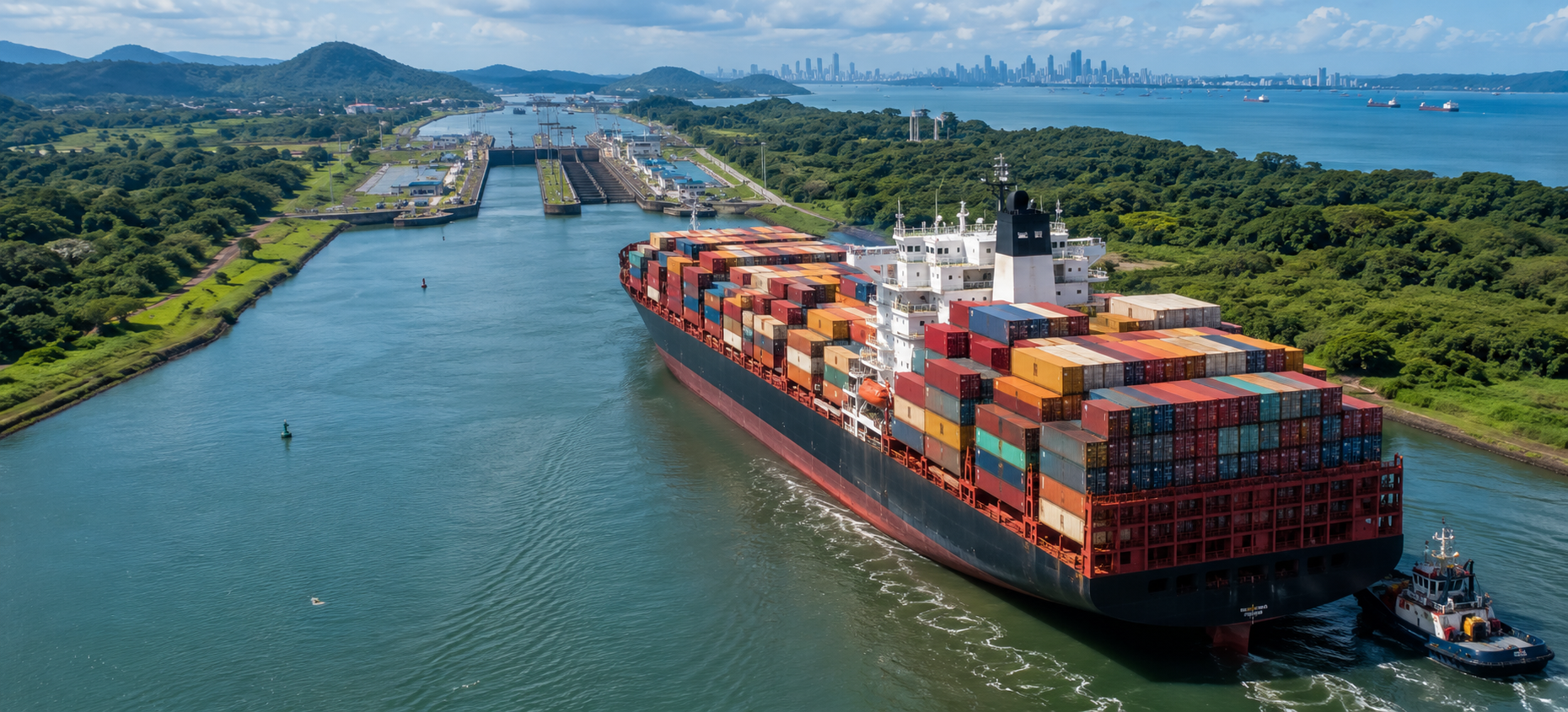
AI-generated image.
Source: BBC
-
Meat
May, 16, 2024
0
Peru’s president to visit China in June, possible beef exports on agenda, minister says
-
Shipping
Aug, 19, 2025
0
Cabotage firms adopt early shipping strategies to mitigate Amazon River drought
-
Grains
Jun, 16, 2021
0
Agribusiness sets new record, registering almost $14 billion in exports in May
-
Grains
May, 11, 2020
0
China’s soy imports rose 1.5% in first four months of 2020 YoY