


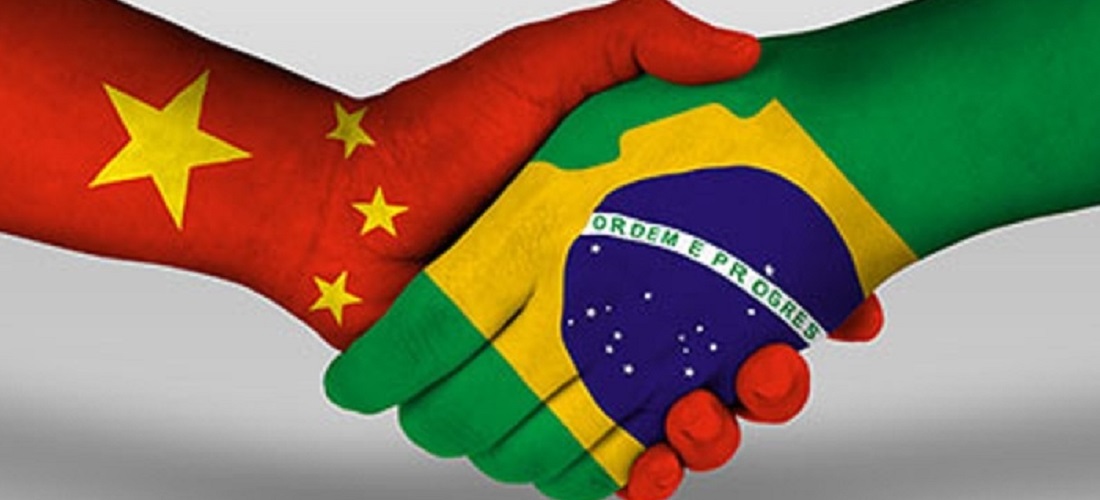
China’s drive to reduce import dependence raises risks for Brazilian agribusiness
May, 20, 2026 Posted by Gabriel MalheirosWeek 202621
China plans to reduce its dependence on imports to safeguard food security, according to the country’s 15th Five-Year Plan for 2026-2030. The policy shift poses risks for Brazilian agribusiness, which could lose billions of dollars in export revenue.
“We are talking about roughly US$50 billion to US$60 billion a year in agribusiness exports to China,” said Patrícia Ellen, managing partner of Systemiq in Latin America and former secretary of economic development for the state of São Paulo. “It is not an immediate loss. It may be gradual and there should be market adjustments, but that is the scale of the impact,” she said.
The 15th Five-Year Plan, approved in March, cites food security and self-sufficiency as priorities for the Chinese government. The goal is to secure production capacity, base supply on the domestic market, moderate imports and diversify the range of products available to the population.
“The critical consideration is whether China will continue to drive global demand growth,” Systemiq said in its report China’s Food Future, produced with the Gordon and Betty Moore Foundation.
The study notes that, over the past 40 years, China has been an engine of global agricultural demand, reshaping supply chains as it aligned its priorities with its industrial capacity.
The situation is now different. China’s relationship with agricultural markets will depend on how the country intends to secure its own supply.
Soybean and beef exports are among the segments most exposed to the risk of weaker Chinese demand. In beef, China imposed a safeguard measure and set a shipment quota eligible for a lower tariff.
Brazil’s tariff-benefited volume stands at 1.1 million tonnes, nearly 600,000 tonnes below the amount shipped in 2025. Chinese government data show that 50% of the quota has already been used. The industry is still betting on the strength of the Asian market, but the assessment is that the quota is here to stay.
In soybeans, in addition to the replacement of part of imports with local production, Brazil is likely to face stronger competition from countries such as the United States and Argentina.
The chart below shows monthly soybean export volumes to China over the past three years, according to Datamar data:
Soybean Exports to China | Jan 2023 – Mar 2026 | WTMT
Source: DataLiner (click here to request a demo)
Last week, Presidents Donald Trump and Xi Jinping met in an attempt to unlock political and trade tensions. Both leaders described the results as positive, but did not provide details on any agreements.
Later, the U.S. government announced that China would buy American agricultural products. It also received confirmation from the Chinese government that 77 U.S. beef plants had been approved for bilateral trade.
The U.S. Department of Agriculture estimates that China will produce 20.90 million tonnes of soybeans in the 2025/26 crop year and import 112 million tonnes. For 2026/27, it projects a crop of 21 million tonnes and imports of 114 million tonnes.
In its report, Systemiq notes that China buys, on average, 71% of Brazilian soybeans and 54% of U.S. soybeans. In beef, China accounts for more than half of Brazil’s exports. In Argentina, the share reaches 75%.
The company estimates that implementation of the Five-Year Plan could reduce Chinese soybean imports by 23.5 million tonnes, or 25% compared with current levels.
“Significant reductions in imports of beef, pork, dairy products and eggs are also projected, while demand for corn increases modestly as feed formulations are adjusted,” the report said.
Systemiq also notes that the Chinese government’s plan includes the development of alternative proteins and the strengthening of a bio-based industry. The next 12 to 18 months will be decisive for monitoring implementation of that agenda.
Patrícia Ellen said that, although the results for China’s economy may materialize over the longer term, Brazilian agribusiness should move immediately to mitigate the effects.
She noted that, among the main products Brazil exports to China — soybeans, corn, beef and chicken — the country is the leading buyer of nearly all of them.
In a conservative scenario, Patrícia said, Brazil would stop exporting 10 million to 20 million tonnes of soybeans to China by 2030. That would represent around US$5 billion to US$20 billion a year, depending on how the market reorganizes.
“It is not just about volume. A reduction in Chinese demand tends to pressure international prices and increase competition, reducing margins across the chain,” she said. “And it affects land values, investment decisions, demand for inputs and infrastructure. It has a domino effect,” she added.
Brazilian agribusiness will need to reorganize, Patrícia said. It is a defensive strategy, but also an opportunity agenda: selling an increasingly diverse range of products and reaching markets that, although they do not buy the same volumes as China, pay higher prices.
She said trade agreements such as Mercosur-European Union, Mercosur-EFTA — Switzerland, Norway, Iceland and Liechtenstein — and Mercosur-Singapore tend to bring positive results. They do not replace China, but they help dilute risks and reduce exposure to shifts in Chinese policy.
Adding value to production chains, positioning Brazil as a supplier of inputs for new production segments such as alternative proteins, and increasing the focus on the bioeconomy, low-carbon agriculture and biofuels should be part of that market diversification strategy.
Agribusiness also needs to pay attention to China as a supplier. The country is among the main sources of fertilizer for the Brazilian market and recently decided to restrict its exports of the input.
That situation, together with the wars in Eastern Europe and the Middle East, adds further urgency to the implementation of a policy that reduces Brazil’s dependence on imported fertilizers.
“This is not a one-off shock. It is a structural shift. The question is not whether and how the impact of China’s policy will come, but when and with what intensity. And, more importantly, how Brazilian agribusiness can reorganize itself,” Patrícia said.
Source: Valor Econômico
-
Grains
May, 31, 2021
0
FIESP: Peanut chain ripening and growing
-
Trade Regulations
Jul, 29, 2025
0
Economic rebound revives Brazilian exports to Argentina
-
Ports and Terminals
Nov, 07, 2022
1
Port of Suape to restart dredging with BRL 480 million invested
-
Meat
Aug, 01, 2025
0
Uruguay beef export prices hit record high amid tight cattle supply