


Despite the war, 12 ships have already sailed from Brazil to the Gulf
Apr, 22, 2026 Posted by Gabriel MalheirosWeek 202619
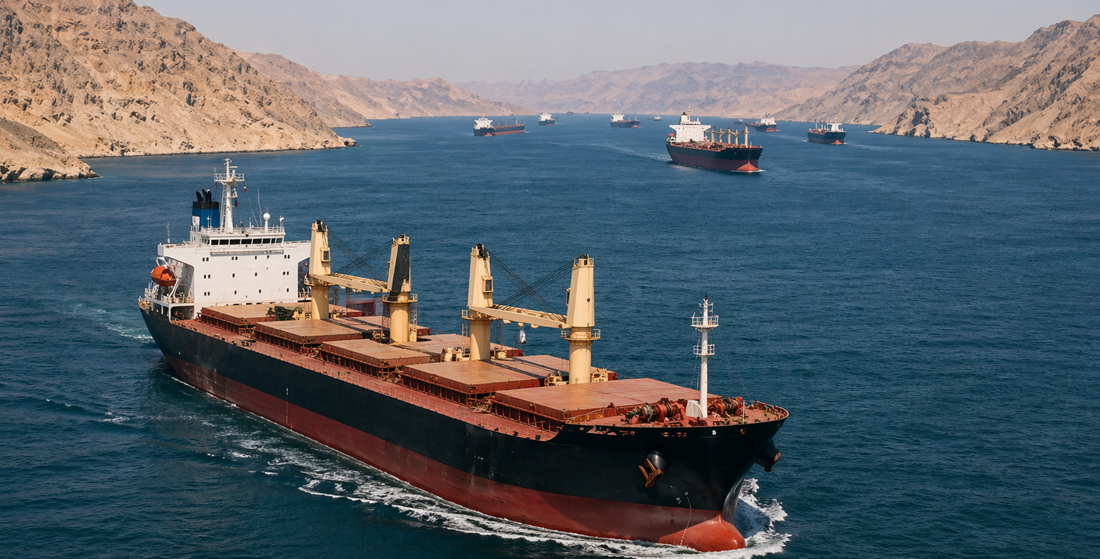
Despite more than 50 days of restricted transit through the Strait of Hormuz due to the war in Iran, 12 cargo vessels have left Brazilian ports for Persian Gulf countries during that period. The strait is the main gateway to most ports in the region.
Eight of those vessels departed Brazil in March, the first month of the war launched by the United States and Israel against Iran. Another four cargo ships left Brazilian ports from the start of April, according to information provided by the Brazilian Navy to Valor. The Navy did not specify, however, which Gulf countries those vessels were bound for.
Among Gulf countries, Saudi Arabia and the United Arab Emirates are Brazil’s two biggest buyers, especially of sugar, chicken meat and corn. Iran, the third-largest, stands out as Brazil’s main corn importer, accounting for 23% of Brazilian corn exports in 2025, more than 9 million tonnes, according to the National Association of Cereal Exporters.
“My understanding is that vessels of interest to Iran must still be getting through,” Brazil’s ambassador to Iran, André Veras, told Valor before the start of the U.S. blockade on ships traveling to or from the country.
Despite the war, in value terms Brazil’s exports to Iran last month were higher than in March 2025. According to Brazil’s Ministry of Development, Industry, Trade and Services, revenue reached $134.8 million, compared with $128.6 million a year earlier.
Sales to the region’s two largest economies declined in March. Exports to Saudi Arabia totaled $248 million, versus $255.6 million a year earlier. Shipments to the United Arab Emirates fell from $248.3 million to $207 million.
In both 2025 and 2024, Brazil’s sales to Iran were around $3 billion a year. These are transactions long surrounded by difficulty. Banks and companies fear penalties from countries that sanction Iran, even though food is excluded from those sanctions.
According to André Veras, Iranians often say Brazilian sales actually total $9 billion. “Possibly many of those cargoes are being shipped to other countries first and then brought here, even though food is exempt from sanctions,” the diplomat said. In March, Brasília announced an agreement with Turkey allowing Turkish ports to serve as an alternative route to the Persian Gulf.
Despite the disruption in the Strait of Hormuz, vessels carrying Brazilian corn have continued arriving in Iran, especially at the port of Bandar Imam Khomeini. According to a trading source, about 500,000 tonnes were waiting to be discharged at that port by the end of the second week of April, while another 560,000 tonnes were already being unloaded. A further 675,000 tonnes had arrived in the country in the second half of March.
Still, the total volume of corn arriving in Iran, not only from Brazil, has declined. According to the operator, around 1.1 million tonnes were unloaded in March, about 200,000 tonnes less than in the same month of 2025. There are also reports of longer delays in port discharge and in payments to exporters.
Since the start of the war on Feb. 28, Iran has all but interrupted vessel traffic through Hormuz. Last week, the United States announced that it would begin blocking the passage of ships serving Iran through the strait, prompting Tehran on Saturday to once again impose restrictions on traffic in Hormuz.
“The Navy continues to monitor the situation and issue risk assessments and maritime safety guidance to companies in the sector, especially regarding areas considered sensitive,” the Brazilian force said.
Image generated by artificial intelligence.
Source: Valor Econômico
-
Ports and Terminals
May, 15, 2023
0
Brazil environmental authorities green light Porto Central installation
-
Sugar and Ethanol
May, 08, 2025
0
Brazil’s Sugar Exports in April Hit Two-Year Low, Says Secex
-
Mar, 07, 2023
0
Maersk Supply Service wins Petrobras contract for AHTS trio
-
Sugar and Ethanol
Oct, 23, 2023
0
Sugar-alcohol Sector Make Up 1/3 of São Paulo’s Agribusiness Exports