


Suape Expands Capacity for Larger Ships After R$247 Million Investment in Pernambuco
Oct, 19, 2026 Posted by Gabriel MalheirosWeek 202643
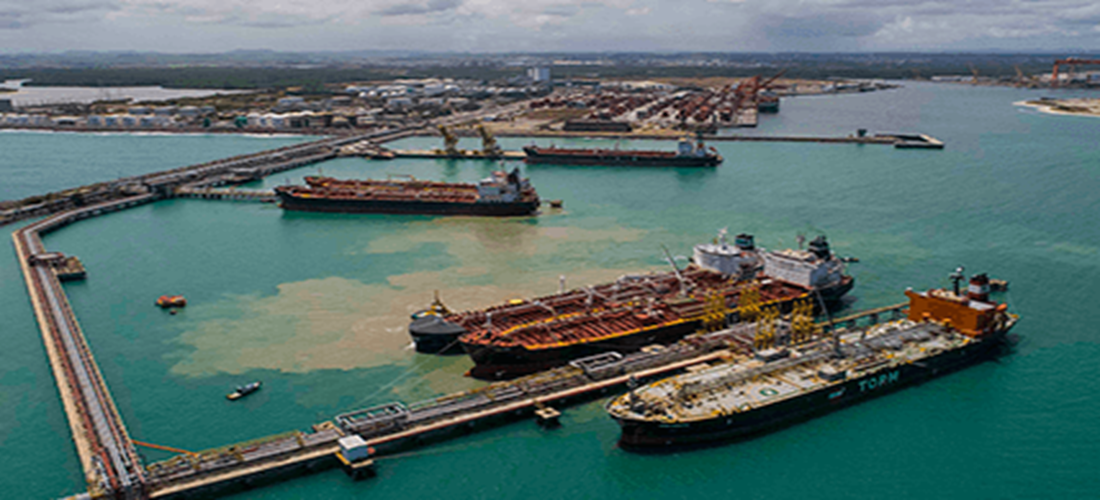
Dredging at the Port of Suape, in Brazil’s Pernambuco state, has brought the port closer to handling large cargo vessels at higher operating capacity. The Brazilian Navy has approved new depths for the port complex’s inner channel, turning basin and liquid bulk piers following a R$247 million dredging project.
The changes improve navigation conditions and mark an important step toward allowing container ships up to 366 meters long, including New Panamax-class vessels, to make greater use of their cargo capacity.
However, Suape must still complete a maneuverability study, scheduled for 2026, before moving forward with these operations under the applicable maritime safety requirements.
The Pernambuco port aims to strengthen its competitiveness in international trade and improve its ability to attract international shipping services.
What Changes With Suape’s Newly Approved Depths?
The approval established new depths for key areas of the port’s infrastructure. The approved depths are as follows:
| Port area | Approved depth |
|---|---|
| Inner channel | 16.25 meters |
| Turning basin | 18.39 meters |
| Liquid Bulk Piers 3A and 3B | 18.39 meters |
| Outer channel | 20 meters |
These measurements help determine the conditions under which vessels can safely navigate, maneuver and berth. Greater water depth can provide more operational flexibility for ships with deeper drafts — the vertical distance between the waterline and the lowest point of a vessel’s hull.
In practice, the approval allows Suape to advance its planning for operations involving large vessels. Even so, water depth is not the only factor determining how much cargo a ship can carry. Port operators and shipping companies must also consider vessel draft, tides, navigation conditions and safety limits.
Why Can Larger Ships Benefit International Trade?
Large container ships transport goods between ports in different countries. When a terminal has the infrastructure needed for these vessels to make better use of their capacity, it can improve the efficiency of maritime transportation.
Potential benefits include:
- More cargo per voyage: When draft and operating conditions allow, vessels can transport larger volumes of goods.
- Greater logistics efficiency: Better capacity utilization can reduce average transportation costs per container, depending on the operation.
- Potential for new routes: Infrastructure capable of accommodating large vessels can make a port more attractive to shipping lines planning international services.
- Vessel call planning: More predictable operating conditions help shipping companies and port operators organize vessel schedules.
- Regional competitiveness: A better-equipped port can expand shipping options for companies in Pernambuco and other states within its hinterland.
These benefits, however, are not automatic. The arrival of new shipping services also depends on cargo demand, port costs, landside infrastructure and shipping lines’ commercial decisions.
The Port of Suape is already an important hub for containerized cargo in northeastern Brazil. According to Datamar, the port handled 5,271 TEUs in exports and 63,714 TEUs in imports. The chart below compares its international cargo flows, excluding cabotage, transshipment, and other domestic operations:
Exports & Imports | Port of Suape | Jan 2024 – Aug 2025 | TEUs
Source: DataLiner – explore our trade data
Does Suape Already Receive Ships Up to 366 Meters Long?
Yes. According to the port administration, Suape already accommodates container ships up to 366 meters long, including New Panamax-class vessels.
The main change concerns the conditions under which these ships can make better use of their cargo capacity. To achieve this, the port must complete a maneuverability study assessing the conditions required for vessels to carry out their maneuvers safely.
The approval of the new depths therefore represents a completed stage, while the technical study must still establish the applicable operating parameters. The port administration expects to carry out this assessment in 2026.
Dredging at the Port of Suape Removed 4.18 Million Cubic Meters of Sediment
The increased depths resulted from dredging work completed in January 2026. Approximately 4.18 million cubic meters of sediment were removed from the inner channel, turning basin and liquid bulk piers.
Total investment reached R$247 million, funded as follows:
| Funding source | Amount |
|---|---|
| Ministry of Ports and Airports, through the Novo PAC infrastructure program | R$100 million |
| Suape’s own funds | R$147 million |
| Total | R$247 million |
Dredging removes material accumulated on the bottom of navigable waterways, allowing ports to restore or increase available water depth. At Suape, the work prepared the infrastructure to accommodate deeper-draft vessels in the areas covered by the project.
The Brazilian Navy subsequently confirmed the new depths following hydrographic surveys and technical assessments of navigability conditions. This process is essential to ensure that the port operates within the parameters established by the Maritime Authority.
Suape’s Outer Channel Has a Depth of 20 Meters
The improvements to the inner channel complement existing deep-water infrastructure in the outer port area. Suape’s outer channel has a Navy-approved depth of 20 meters, achieved after dredging completed in 2024 and officially approved in 2025.
This depth allows large vessels, including Suezmax-class oil tankers, to navigate the channel, subject to the operating conditions applicable to each ship.
The combination of the deeper outer channel, inner channel, turning basin and piers strengthens the port complex’s maritime infrastructure. However, each area has its own characteristics and requirements, and operating limits vary according to the vessel and navigation conditions.
Next Step: Maneuverability Study
With the approval of the new depths, Suape has completed an important stage in preparing to operate large container ships with greater cargo capacity utilization. The maneuverability study must now determine the technical conditions required to move forward.
If the assessment allows vessels to make greater use of their capacity, the port could gain new operational opportunities and strengthen its position in international trade logistics.
The key factor to monitor in the coming months will therefore be how these investments translate into operational results: better utilization of vessel capacity, more efficient port calls and potential new maritime connections. These developments will help determine the project’s actual impact on Pernambuco and the broader economy of northeastern Brazil.
Source: Portal NE9
-
DW 2019 EN
Feb, 25, 2019
0
DatamarWeek 26 February 2019
-
Meat
Oct, 06, 2023
0
Past month’s pork exports outdo September 2022 shipments
-
Ports and Terminals
Sep, 05, 2025
0
Brazil’s Itaqui port launches innovation tender under new startup law
-
Grains
Apr, 25, 2019
0
Brazil exports 30,000 tons of rice to Venezuela