


EU leaders caught off guard by Brazil meat export ban
Jul, 28, 2026 Posted by Sylvia SchandertWeek 202631
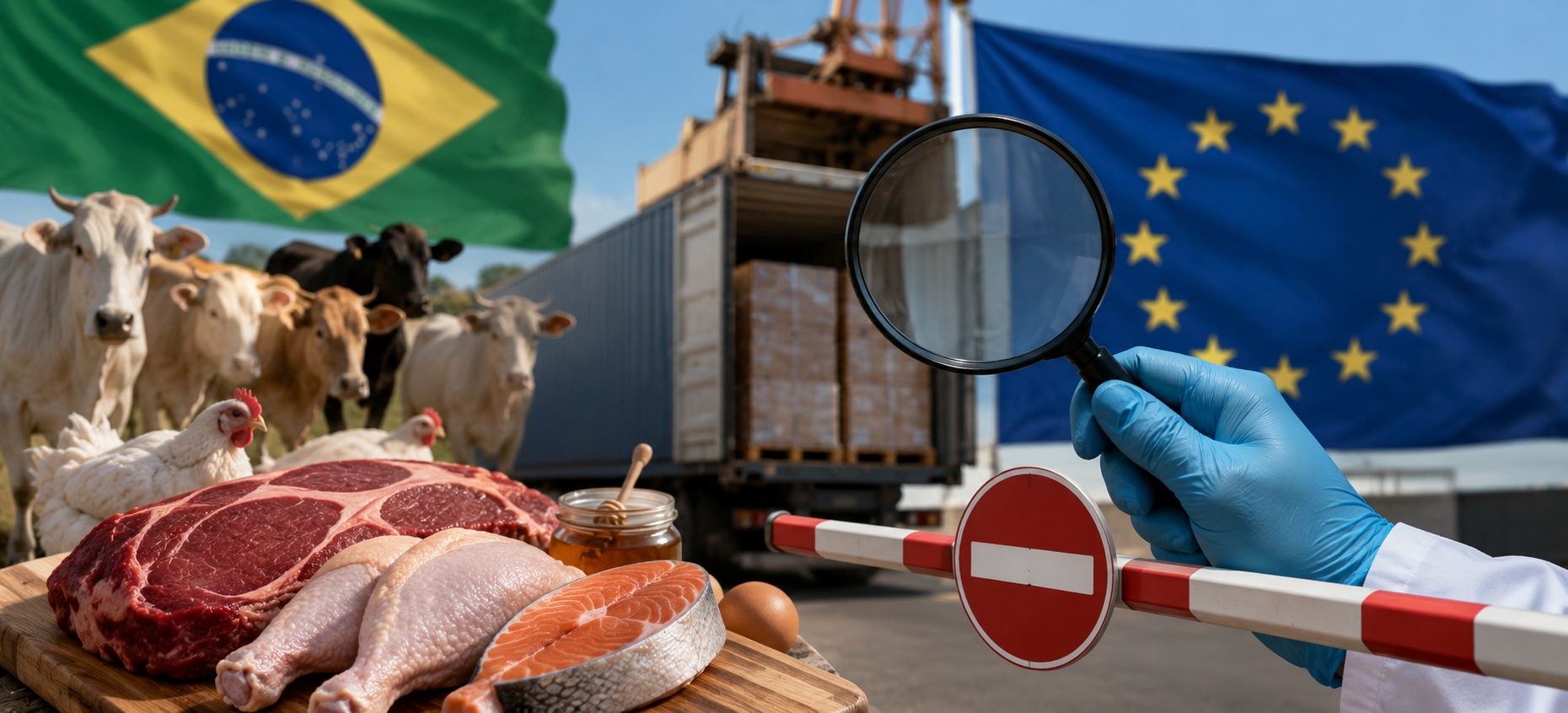
In mid-May, just two weeks after the Mercosur-European Union free trade agreement entered into provisional force, the European Commission took a step that ran counter to what would normally be expected from a bilateral market-opening accord: it announced that, effective September 3, Brazil would be removed from the list of countries authorized to export beef, poultry, horse meat, fish, honey, eggs and their products to the bloc’s 27 member states.
The Commission argued that Brazil was not complying with the EU’s 2023 legislation banning imports of animals and animal products originating from production systems that use antimicrobials to promote growth or increase productivity, or substances reserved for human medical treatment.
In Brasília, senior government officials acknowledged privately that the Ministry of Agriculture had “dropped the ball” by failing to prepare the sector to meet the European buyer’s requirements. But what also surprised officials was the timing and manner of the announcement.
Without hiding his irritation, President Lula called European Commission President Ursula von der Leyen and European Council President António Costa, reminding them how difficult it had been to negotiate the free trade agreement only for Brazil to face sanctions immediately afterward in meat exports—a product with strong economic and symbolic significance for the country.
According to an account shared with Valor, the response from the two European leaders came as a surprise. Costa and von der Leyen reportedly said they had not been informed by their respective services and that the decision had been taken at the European Commission’s technical level. Both assured Lula they would seek “a technical solution” to the issue.
Last week, Ireland’s ambassador to Brazil, Martin Gallagher, said in an interview in Brasília that the EU would not relax its sanitary requirements to allow Brazilian meat exports to resume. He noted that the bloc’s rules on the use of antimicrobials in animal production are not new and have been discussed with Brazilian authorities for years.
The same day, a Brazilian official told Valor that Brazil and the EU were continuing to “talk and negotiate,” while acknowledging that meeting the European standards—particularly for beef—in the short term would be difficult.
As Maria Eduarda Blaiklock, a veterinarian and Brazil’s former agricultural attaché to Thailand from 2018 to 2022, notes, the Irish ambassador’s remarks were fully consistent with the position adopted in Brussels. According to Blaiklock, the Brazilian government has already issued four joint circulars—one for each affected production chain (cattle, poultry, honey and fish)—tailored to the specific production and inspection characteristics of each sector.
It appears the Brazilian government expects the publication of these new guidelines, by itself, to be enough for Brazil to regain its status as an approved exporter of animal products to the European Union.
But Blaiklock argues there is an important distinction between a production cycle already underway and a control system that is still being built. The former can be implemented gradually; the latter must already be in place before certification can be granted.
Animals currently in production may simply not have completed the period required to qualify for export. What inspectors cannot accept, however, is a future promise that the system will eventually be capable of identifying which animals complied with the new requirements.
According to the former agricultural attaché, compliance depends not only on publishing official inspection rules but also on demonstrating that those controls work effectively. That can only be proven through the generation of data and the validation of the new inspection framework.
Cattle, poultry, farmed fish and beehives all have different production cycles. As a result, products eligible for export are likely to become available gradually. For shorter production cycles—such as poultry, honey, eggs and aquaculture—the issue could be resolved within a few months.
The biggest obstacle, however, is beef. Under the logic of the EU regulation, combined with cattle’s production cycle of roughly three years, no animal will be eligible for certification by September 3. In practice, full compliance can only be demonstrated between 2028 and 2029, when cattle raised entirely under the new requirements begin supplying the European market.
Datamar data show that 3,409 TEUs of chilled or frozen beef were shipped to the 27 EU member states between January and May 2026. The chart below shows the monthly volumes recorded in recent years:
Beef Exports to the EU | Jan 2023 – May 2026 | TEUs
Source: DataLiner (click here to request a demo)
As Blaiklock points out, the EU is under no obligation to accept assurances simply because Brazil has been exporting to the bloc for decades. European authorities must verify that Brazil’s inspection and control systems effectively meet the specific regulatory requirements now in force. Changing that perception in Brussels has proved to be a Herculean task.
Source: Valor International
-
Trade Regulations
May, 19, 2021
0
Multinationals call on Europe to end supplier deforestation
-
Other Cargo
Jun, 27, 2022
0
Brazil electronics industry faces USD 15.21bn deficit in 2022
-
Blog News (ENG)
Jan, 21, 2025
0
Port of Itajaí Ends 2024 with 14.17 Million Tonnes of Cargo Throughput
-
Ports and Terminals
Oct, 15, 2025
0
APS signs contract with Valenciaport Foundation for decarbonization of Port of Santos