


Investigation exposes friction with China and raises concern in the Brazilian market
Apr, 20, 2026 Posted by Gabriel MalheirosWeek 202619
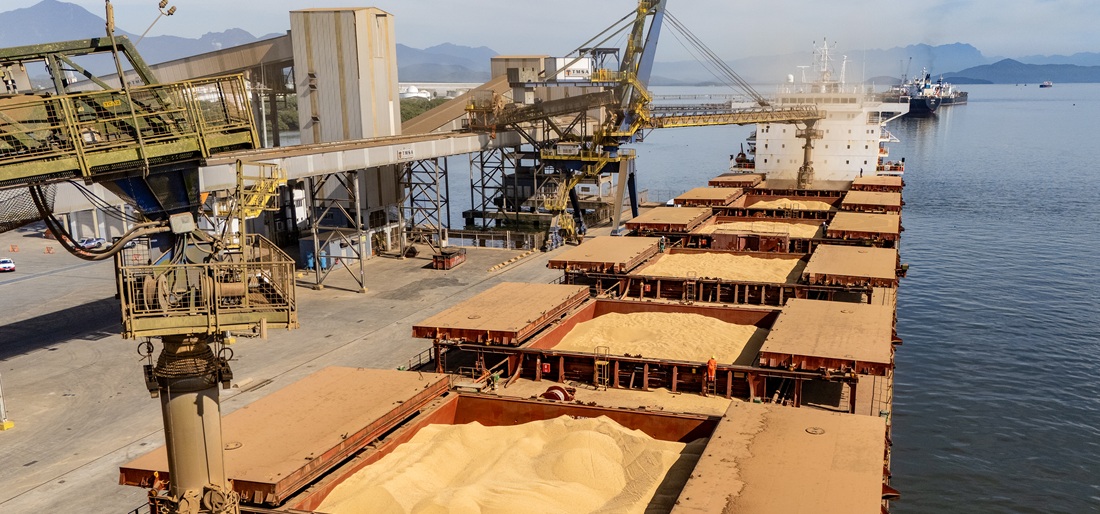
The Brazilian government’s decision to open an investigation into possible dumping in Chinese soy protein imports comes against a broader backdrop of trade tension involving the main product of Brazil’s agribusiness sector: soybeans. Although the formal focus of the probe is a specific derivative product, the move highlights the sensitivity of the trade relationship between Brazil and China, the destination for more than 70% of Brazil’s soy complex exports.
Brazil ships between 95 million and 105 million tonnes of soybeans each year, depending on the size of the crop, consolidating its position as the world’s largest exporter. Of that total, China absorbs the largest share, with purchases that often exceed 70 million tonnes annually. It is a relationship of high dependence: for Brazil, China is the main buyer; for China, Brazil is the main supplier.
The issue is that this flow is not free of control mechanisms. China operates with an indirect import regulation system based mainly on licenses, crushing controls and the management of strategic inventories. In practice, this works as a kind of informal quota. The Chinese government can reduce or increase the pace of purchases by issuing fewer or more approvals to importers and domestic crushers.
That mechanism has become clear in recent cycles. At times when margins are tight in China’s crushing industry, when meal and oil fail to offset the cost of imported soybeans, the country slows its buying pace. The effect is immediate: pressure on premiums at Brazilian ports and greater price volatility.
There is also a structural factor. China has been seeking to diversify suppliers and reduce geopolitical risks. Even with its strong dependence on Brazil, the country keeps active channels with the United States and other exporters, using purchase volumes as a trade negotiation tool.
In the specific case of soy protein, an industrial product aimed mainly at human consumption, the direct impact on Brazilian farmers is likely to be limited. Even so, the investigation being conducted by the Foreign Trade Secretariat under the Ministry of Development, Industry, Trade and Services signals a tougher Brazilian trade stance toward China, even if only on a limited front.
The process is examining evidence of sales at prices below production cost, a practice known as dumping, during the period from July 2024 to June 2025. If confirmed, Brazil could impose additional tariffs for as long as five years.
The point of attention is that, although technically limited, any move in this direction requires careful calibration. China is by far the largest buyer of Brazilian soybeans and one of the main destinations for other agribusiness products such as beef and chicken. Even sector-specific trade measures are closely watched by the market.
For producers, the situation reinforces a central point: soybean prices in Brazil do not depend only on domestic supply and demand, but also on strategic decisions taken in Beijing. The pace of purchases, inventory management and the margins of China’s crushing industry remain the main short-term drivers.
In practice, the current investigation does not alter the flow of soybean exports, but it lays bare Brazil’s dependence on a single market and the degree of exposure to external trade decisions.
Source: Pensar Agro
-
Automotive
Jun, 11, 2025
0
Vehicle Traffic Grows 7% at Multilog’s Border Dry Ports
-
Trade Regulations
Sep, 22, 2021
0
EU-China trade grows 32.4% and could close the year at US$ 700 bi
-
Sugar and Ethanol
Mar, 26, 2024
0
Russia top supplier of diesel to Brazil, earning USD 818.7 mln in two months
-
Blog News (ENG)
Jun, 06, 2025
0
Exports to Argentina Rise Over 50%, and Trade Deficit Turns Into Surplus