


Maersk conducts new fuel test with 50% ethanol on vessel Laura Maersk
Dec, 05, 2025 Posted by Lucas LorimerWeek 2025249
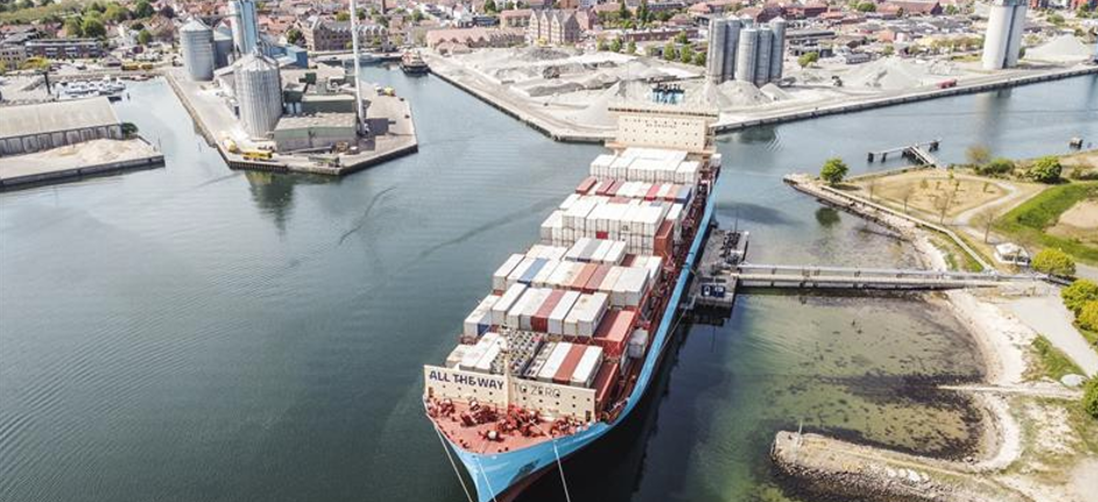
Maersk continues to explore options to diversify its portfolio of possible decarbonization pathways at sea through low-emission fuels and is moving into the second phase of the pilot project that tests ethanol in a dual-fuel methanol engine. Based on the successful initial test carried out in October and November 2025, which involved a 10% ethanol / 90% e-methanol blend, the company is now conducting a new stage with a 50% ethanol and 50% methanol blend onboard the vessel Laura Mærsk.
The first test confirmed that ethanol can be safely and effectively integrated into the fuel blend and reinforces the potential to create greater flexibility for Maersk’s dual-fuel methanol fleet, essentially allowing vessels to run on dual-fuel alcohol.
“At Maersk, we believe that multiple fuel pathways are essential for the maritime industry to achieve its climate goals. This means consciously exploring different options and technologies,” says Emma Mazhari, Head of Energy Markets at Maersk.
Laura Mærsk is the world’s first dual-fuel container vessel operating on methanol and was designed to use methanol as an alternative fuel. Since ethanol and methanol are both alcohols, they share similar properties. The initial test verified whether an E10 blend would ignite and perform as efficiently as pure methanol while maintaining comparable lubrication and corrosiveness.
The results confirm that ethanol can be blended with methanol without compromising engine performance, paving the way for blends with higher ethanol content. In addition to the upcoming test with E50, Maersk plans to conduct a test using 100% ethanol.
“Ethanol has a proven track record, with an established market and existing infrastructure, offering an additional pathway for decarbonization. By gradually increasing the ethanol content, we gain valuable insights into engine performance and combustion impacts, informing fuel supply potential,” adds Emma Mazhari.
About ethanol:
- The ethanol applied in the tests is the so-called anhydrous ethanol, the same type currently used for gasoline blending in several countries.
- The United States is the world’s largest ethanol producer, followed by Brazil. Together, they represent 80% of the global market.
- Collaboration with stakeholders and partners, such as engine manufacturers, is essential to support the exploration of ethanol as a fuel for dual-fuel vessels.
- Since there is already a strong market for ethanol, it offers flexibility to meet Maersk’s climate targets.
- Ethanol is produced from biomass, such as corn or sugarcane.
- It is important to ensure that the specific type of ethanol used does not directly or indirectly contribute to land conversion and deforestation, nor compete with food and feed.
Maersk is assessing the potential role of first-generation, crop-based fuels such as ethanol in its transitional fuel matrix. This assessment is being conducted under robust sustainability criteria, covering lifecycle greenhouse-gas emissions, traceability, certification standards and responsible sourcing practices.
To future-proof its fleet, Maersk decided in 2021 to order only vessels with dual-fuel capability. By 2025, 19 dual-fuel vessels will be operating in the Maersk fleet. The current portfolio of low-emission fuels includes bio and e-methane, biodiesel, and, starting in 2027, liquefied biomethane and LNG as a fossil alternative, which will be added with the arrival of time-chartered dual-fuel LNG vessels.
Source: Maersk
-
Economy
Jul, 03, 2023
0
Brazil announces USD 10.59 billion surplus in June
-
Grains
Jul, 12, 2023
0
Brazil may become the world leader in corn exports in 2023, says Anec
-
Economy
Apr, 16, 2021
0
Hapag Lloyd large container order helps fight global box shortage
-
Trade Regulations
Aug, 14, 2024
0
New Market Access: EU Decides in Favor of Brazilian Live Horse Exports