

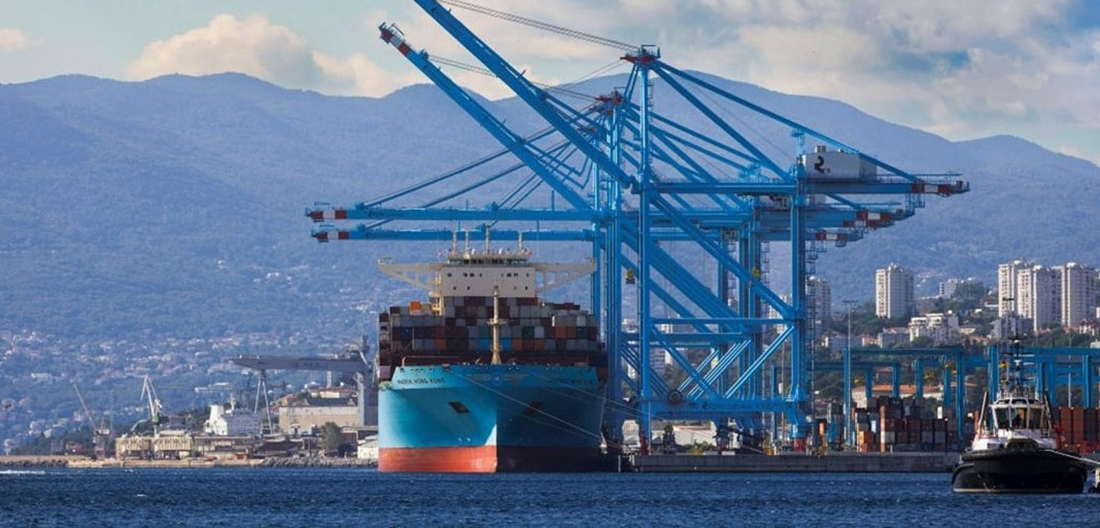
Maersk tests up to 100% ethanol in ships, sees global fuel market
Aug, 26, 2026 Posted by Gabriel MalheirosWeek 202635
Maersk has tested ethanol marine fuel blends of 10%, 50% and 100% in ship engines and found that equipment on some vessels can consume the biofuel, according to Danilo Veras, the company’s vice president for public policy and regulatory affairs in Latin America.
Veras discussed the tests during the opening presentation of Folha Energia – Matriz de Oportunidades, an event held on Monday, August 24, at Mar Hotel Conventions in Recife and organized by Folha de Pernambuco, part of the EQM Group.
The use of ethanol as a ship fuel could open a new market for ethanol producers in Brazil and abroad, especially as the maritime industry seeks lower-emission alternatives to fossil fuels.
Maersk is one of the world’s largest shipping groups, with about 4,000 vessels, including 800 containerships. Veras said the next step is to “really discuss regulation, price and the full certification process.”
He said Maersk began assessing ethanol as a fuel for shipping as part of its decarbonization strategy. The company initially focused its projects on methanol-powered vessels, but later decided to investigate whether ships could also use ethanol.
In addition to conducting fuel tests, Maersk approached Brazil’s sugar-energy sector, universities and maritime equipment manufacturers to gather technical information. Veras said the company brought its technical team to better understand Brazil’s ethanol chain and the characteristics of sugarcane production.
Fleet renewal could create ethanol demand
The opportunity to expand ethanol use is tied to fleet renewal. According to Veras, Maersk needs to renew about 20% of its global fleet every six years.
He said that by 2040, the company could have about 40 vessels capable of consuming ethanol. Based on the estimates he presented, those 40 vessels alone could generate demand for 1 million metric tons of ethanol.
Veras also said pricing will be central to the adoption of lower-emission fuels. Shipping, he argued, faces the challenge of decarbonizing without causing an excessive increase in final costs for consumers.
In that context, he said the recent relationship between ethanol prices and bunker fuel — the conventional fossil fuel used by ships — “came close” to parity. The comparison was made on an energy-equivalent basis, and ethanol was “more efficient for a brief moment,” he said.
Because maritime shipping follows international rules, Veras said the adoption of ethanol on vessels will require progress on regulation, a reliable certification system and the participation of Brazilian universities in building the technical basis for the fuel’s use.
Suape could become an ethanol bunkering hub
At the end of his presentation, Veras also mentioned Pernambuco. He said Maersk found a favorable technical and business environment in the state.
The company has already visited the Port of Suape, which could become a hub for supplying ethanol to ships. Maersk already has an APM Terminals container terminal operating at the Pernambuco port.
The possibility of using ethanol marine fuel would connect Brazil’s sugar-energy industry with the global shipping sector, creating a potential new demand source for a biofuel already produced at large scale in the country.
New paths for ethanol
The event focused on new opportunities for renewable energy.
Eduardo de Queiroz Monteiro, president of the EQM Group and Movimento Econômico, said shipping decarbonization is now “on the agenda” and close to the sector’s reality.
“We have a forum every two years. What was missing in between was a meeting that would allow us to bring the Northeast’s perspective to renewable energy,” Monteiro said. “We were surprised by the number of people present and by the representation of sector leaders at this event.”
Folha Energia brought together executives from Copersucar, Unica, Udop, sugar mill unions from Pernambuco, Alagoas and Goiás, Bioenergia Brasil and other organizations.
Renato Cunha, president of Pernambuco’s sugar and ethanol industry union Sindaçúcar-PE, said technical studies are helping build the framework for the energy transition in a decarbonization scenario.
The event was also attended by business leaders and executives from the sugar-energy and energy sectors across several Brazilian states.
Political attendance was strong as well. Participants included Ministers Luciana Santos, of Science, Technology and Innovation, and André de Paula, of Agriculture and Livestock; Thairyne Oliveira, executive secretary for ports and airports; Senators Fernando Dueire and Humberto Costa; Recife Mayor Vitor Marques; and federal lawmakers including Mendonça Filho and Fernando Monteiro.
Pernambuco Vice Governor Priscila Krause also attended. Governor Raquel Lyra, who is running for re-election, took part in the opening session and said, among other points, that Petrobras could be a partner in the future implementation of the Pernambuco branch of the Transnordestina Railway.
João Campos, also a candidate for governor of Pernambuco, took part in the event’s first debate and defended the future implementation of the Transnordestina as a way to improve the state’s logistics.
Source: Ângela Fernanda Belfort for Movimento Econômico
-
Other Cargo
Dec, 04, 2019
0
November cotton exports grow 21% in volume
-
OTI Rankings
Nov, 16, 2022
0
OTI Ranking | DataLiner | Jan-Sep 2022 vs. Jan-Sep 2021 | Brazil and Plate
-
Trade Regulations
Feb, 10, 2022
0
Brazil resists Expanded Trade Partnership proposal by the UK
-
Other Cargo
Oct, 03, 2021
0
Spanish police seize 450 kilos of cocaine in a container from Brazil