


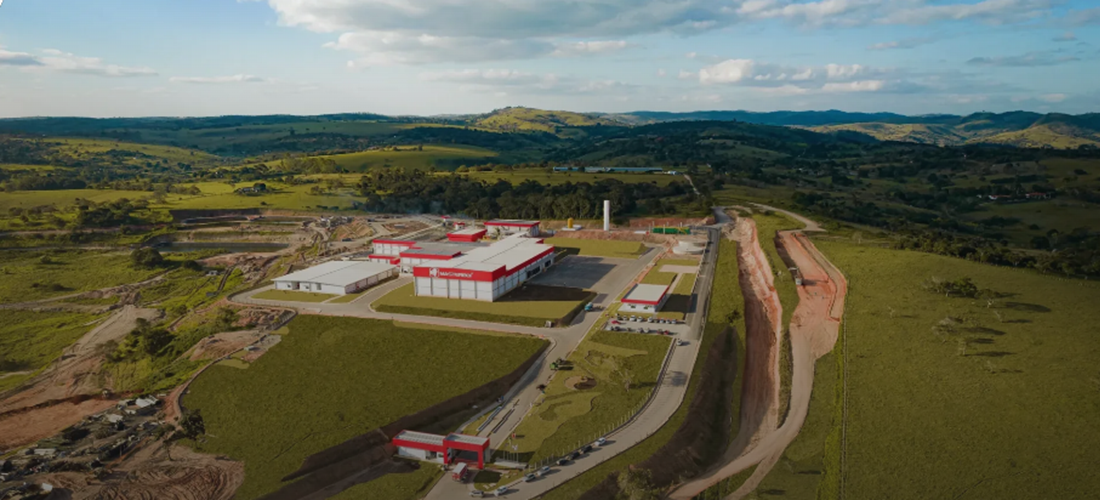
Masterboi Begins Beef Exports to China From Northeast Brazil Plant
Oct, 27, 2026 Posted by Gabriel MalheirosWeek 202643
A 27-tonne shipment of beef departed inland northeastern Brazil for China for the first time on Friday, Oct. 23. The container, loaded with forequarter cuts, will travel approximately 200 kilometers from Canhotinho, in the Agreste region of Pernambuco state, to the Port of Suape, near Recife. From there, the cargo is scheduled to depart by sea in November for Shanghai, where it is expected to arrive in 2027.
The shipment is being handled by Masterboi, whose Pernambuco meatpacking plant, inaugurated in 2022, received authorization to export beef to China in late September. Supremo Carnes’ facility in Carlos Chagas, Minas Gerais, which had been seeking access to the Chinese market since 2018, was also approved.
Brazil now has 69 meatpacking plants authorized to export beef to China, operated by 32 companies across 12 states. Only one of these facilities is located in the Northeast.
Access to the Brazilian beef industry’s largest export market could mark a turning point for both companies in terms of revenue and market positioning, with potential benefits for cattle producers and the economies of the regions where the plants operate. Both newly approved facilities already have plans to expand production.
The main uncertainty, however, concerns how quickly and extensively the companies will be able to enter the Chinese market, given the beef import quotas imposed by Beijing through 2028.
Masterboi Plans to Expand Production Following China Approval
Masterboi’s Pernambuco plant currently slaughters approximately 800 cattle per day and regularly exports to around 40 countries, while also supplying a substantial share of its production to the domestic market. The company plans to increase daily slaughter to 920 animals.
“The approval of the Canhotinho plant expands our ability to access this market and, above all, allows us to obtain better value from the carcass as a whole,” Nelson Bezerra, Masterboi’s co-founder and president, told Valor.
The company, founded by Bezerra and his sister Guilhermina, who currently serves as vice president, expects revenue to reach R$5.5 billion in 2026.
One of the main advantages of gaining access to the Chinese market is the opportunity to increase the value of beef cuts that typically command lower demand and prices in Brazil, particularly forequarter products such as shank, brisket, chuck, chuck tender, neck and shoulder, as well as flank cuts.
The development is also expected to encourage an increase in cattle supply in the region and support herd values. According to Bezerra, the regional cattle herd grew by more than 800,000 head in 2025.
He said the opening of the meatpacking plant in Pernambuco’s Agreste region four years ago had already provided cattle producers with greater predictability regarding purchases, encouraging further investment by Nelore cattle breeders.
Supremo Carnes has also begun negotiations and intends to make its first beef shipment to China in November.
The company expects revenue of R$1.5 billion in 2026 and projects 30% growth in 2027, with sales to the Chinese market accounting for a significant share of the increase, according to CEO Sandro Oliveira.
The group currently exports approximately 40% of the production from its facilities in Minas Gerais. Following the authorization to supply China, it expects that share to rise to 60%.
Its products are already shipped to around 30 countries and markets, including Russia, Indonesia, Hong Kong, Egypt, Singapore and destinations in the Middle East.
To support this expansion, Oliveira plans to increase slaughter capacity at the newly approved plant from 640 to 850 cattle per day as early as 2027.
The authorization is also expected to increase demand for cattle that meet China’s import requirements, known in Brazil as boi China. These animals must be slaughtered before reaching 30 months of age to comply with buyers’ specifications, which can improve returns for cattle producers in Minas Gerais.
“We are slaughtering increasingly younger animals, and cattle producers are also receiving better prices. Minas Gerais has a substantial number of animals that meet the age requirements,” Oliveira said.
Masterboi already operates a plant in São Geraldo do Araguaia, Pará state, which has been exporting beef to China since 2019. The Chinese market accounts for 40% of the company’s total export sales.
The Pará facility also received authorization last week to export bovine gallstones to China, a market that opened to Brazilian suppliers earlier this year and is considered to have potential worth billions of reais.
Masterboi plans to draw on its existing commercial relationships and experience in China to gradually increase the volume of beef shipped from its Pernambuco facility.
Brazilian Beef Exports to China Face Import Quota Restrictions
The timing of the first shipment from Masterboi’s Canhotinho plant was deliberately arranged so that the cargo would enter China only in 2027.
Brazil has already exhausted its 2026 Chinese import quota of 1.106 million tonnes of fresh and frozen beef, which is subject to the regular 12% import tariff.
For 2027, Brazil’s quota will increase to 1.128 million tonnes. Shipments within that limit will avoid the additional 55% tariff imposed by China on volumes exceeding the annual allowance.
The Brazilian Beef Exporters Association (Abiec) has called for the Brazilian government to administer the quota, distributing volumes proportionally among exporters to provide greater predictability and prevent companies from rushing to secure sales.
Without such a mechanism, beef shipments to China could be interrupted as early as mid-April 2027, the association recently projected.
“For a newly approved plant, the allocation criteria are especially important. Sanitary approval opens the market, but the actual ability to develop exports will also depend on the volume the facility can access within the quota,” Bezerra said.
Source: Globo Rural
-
Ports and Terminals
Jul, 20, 2020
0
Port of Santos auctions to be brought forward
-
Ports and Terminals
Apr, 14, 2021
0
Suape Port authorized to receive New Panamax vessels
-
Economy
Nov, 05, 2024
0
Paraguai deseja fortalecer laços com o Reino Unido
-
Dec, 03, 2021
0
India’s mills increase sugar production, but take away from exports