


Mercosur countries discuss investment and sustainability in regional waterways
Jun, 19, 2026 Posted by Gabriel MalheirosWeek 202625
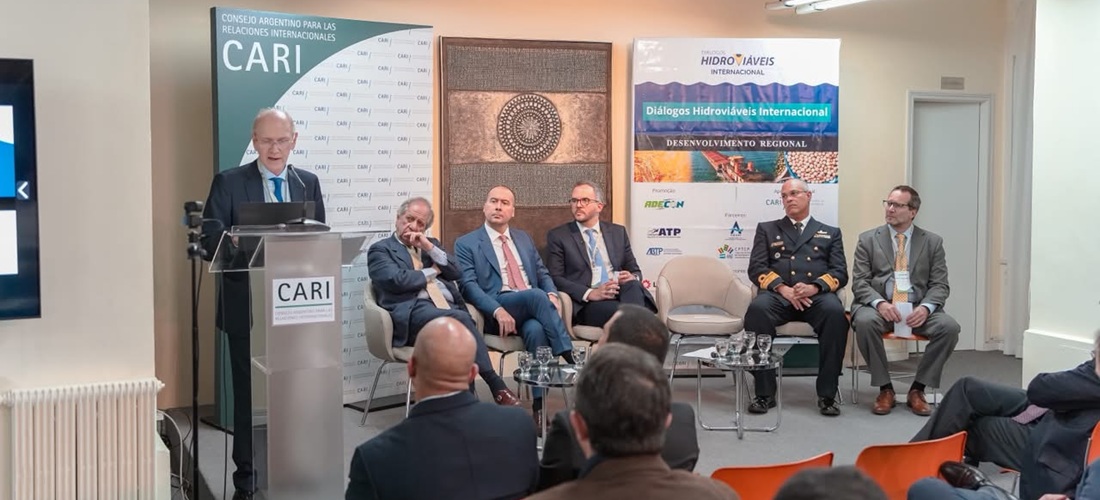
Brazil’s Minister of Ports and Airports, Tomé Franca, took part on Wednesday (17) in the opening of the “Diálogos Hidroviáveis Internacional” meeting in Buenos Aires, which brought together Mercosur officials and business leaders to discuss investment, bottlenecks and sustainability in the region’s inland waterways.
The discussions focused on the Paraguay-Paraná and Tietê-Paraná waterways, two corridors that are central to South American river logistics. The Paraguay-Paraná system is a key route for moving commodities such as soybeans, corn, iron ore and fuels, while the Tietê-Paraná waterway plays an important role in the transport of grains and sugarcane-related cargoes in Brazil.
The event runs through Thursday (18).
At the opening, Franca said Brazil sees inland navigation as a central part of regional integration and logistics competitiveness.
“Our vision for waterways is of a future in which regional integration becomes the norm, logistics efficiency supports economic development and sustainability remains a permanent guideline,” the minister said.
Investment, financing and long-term planning
The agenda includes discussions on attracting private investment for channel concessions, creating financing mechanisms for a regional fund for sustainable vessels in Mercosur and developing long-term planning to improve operational efficiency.
Technology and business rounds are also part of the program, with the goal of connecting investors and suppliers working on solutions for the sector.
The economic and environmental efficiency of inland waterways is also expected to be one of the main themes. Waterway transport can consume up to 80% less fuel per tonne-kilometer than road transport, helping reduce carbon emissions and improve environmental performance.
“More than a transport route, a waterway is a strategic driver of economic development, environmental sustainability and social cohesion,” Franca said.
Brazil-Argentina cooperation
Also on Wednesday (17), Franca met with Brazil’s ambassador to Argentina, Julio Glinternick Bitelli. The meeting focused on cooperation between the two countries in ports, airports and waterways, including initiatives to strengthen logistics integration, share technical experience and expand institutional dialogue.
Later in the day, the Brazilian delegation made a technical visit to the Port of Buenos Aires, Argentina’s main port infrastructure and the country’s largest container handling center. The port accounts for about 60% of Argentina’s container traffic.
The port handles about 11 million tonnes of cargo and roughly 1 million containers a year. It is considered Argentina’s main export outlet, handling products such as soybeans, corn and beef, as well as consumer goods and industrial inputs.
A regional logistics agenda
The participation of Brazil’s Ministry of Ports and Airports in the Buenos Aires meeting reflects the federal government’s push to modernize and expand port and waterway infrastructure while supporting foreign trade and regional integration.
The expectation is that the discussions and partnerships formed in the Argentine capital will lead to concrete progress for the sector, supporting job creation, development and more sustainable logistics in South America.
“We hope this meeting will be a milestone in deepening our partnerships and building a more prosperous and connected future for all countries in the region,” Franca said.
The event was organized by the Sustainable Development Agency for Waterways and Export Corridors, Adecon, in partnership with the Brazilian Association of Port Terminals, ABTP, and the Permanent Transport Commission of the La Plata Basin, CPTCP.
Source: MPOR
-
Ports and Terminals
Jun, 03, 2024
0
Brazil Ports Minister announces 2024 first port auctions
-
Ports and Terminals
Jun, 28, 2023
0
Brazil government commits over BRL 9 billion in port sector contracts
-
Trade Regulations
Aug, 22, 2022
0
Brazil whey protein industry protests recent import exemption
-
Automotive
Nov, 09, 2021
0
Vehicle exports down 4.6% in October but YTD numbers up 26.8%