

Brazil promulgates Mercosur-EFTA trade deal ahead of phased entry into force
Sep, 25, 2026 Posted by Gabriel MalheirosWeek 202639
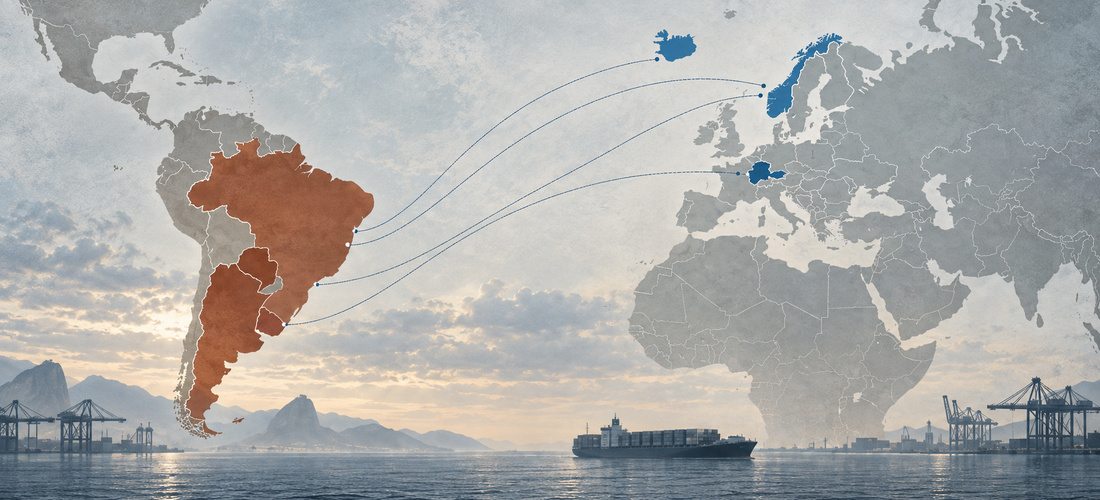
Brazilian President Luiz Inácio Lula da Silva has promulgated the Mercosur-EFTA free trade agreement, completing another domestic step toward implementing the pact with Switzerland, Norway, Iceland and Liechtenstein.
Decree No. 13,126 was published in an extra edition of Brazil’s Federal Official Gazette on Wednesday, September 23, formalizing in Brazil the agreement signed in Rio de Janeiro on September 16, 2025.
The agreement covers trade in goods and services, investment and government procurement, as well as rules of origin, intellectual property, trade facilitation and sustainable development.
Brazil’s Congress approved the treaty through Legislative Decree No. 146 on June 22, 2026. The Brazilian government subsequently deposited its instrument of ratification with Norway, the agreement’s depositary, on July 8.
Agreement expands access to European markets
The trade deal broadens Mercosur’s network of commercial agreements and will provide preferential access for a large share of Brazilian exports to EFTA markets.
Once fully implemented, nearly 99% of the value of Brazilian exports to EFTA countries will have duty-free access, according to Brazilian government estimates. EFTA will eliminate import tariffs on industrial and fishery products when the agreement takes effect, while agricultural products will receive a combination of duty-free access, tariff preferences and specific quotas.
For Brazil, the agreement enters into force in the external legal order on October 1, 2026. Its practical implementation, however, will occur bilaterally as each EFTA country completes its ratification process.
The agreement will apply between Brazil and Iceland from October 1 and between Brazil and Norway from November 1. Entry into force with Switzerland and Liechtenstein still depends on completion of their respective domestic procedures.
Agribusiness gains new export opportunities
Agricultural products are among the sectors expected to gain new market-access opportunities under the agreement.
The deal covers products including beef, poultry and pork, corn, soybean meal, sugarcane molasses, honey, roasted coffee, ethyl alcohol, rice, bananas, melons, grapes and fruit juices. Some will enter through tariff-rate quotas.
Switzerland and Liechtenstein, for example, established specific bilateral quotas for Mercosur products including corn, beef, poultry, pork, honey and vegetable oils, including soybean oil.
Norway also granted quotas for products including beef, poultry, corn and corn flour, soybean meal and sugarcane molasses.
The agreement also establishes trade-facilitation rules aimed at making customs procedures more predictable, increasing the use of technology and risk management, and strengthening cooperation among the authorities of the participating countries.
Brazil-EFTA trade reached $7.8 billion in 2025
Trade between Brazil and the four EFTA countries already amounts to billions of dollars.
In 2025, total two-way trade reached $7.8 billion, while Brazilian exports to the bloc totaled $3.8 billion, up 22.9% from the previous year.
According to Datamar foreign trade data, Brazil exported nearly 2 million metric tons of goods to EFTA countries in the first seven months of the year. The chart below shows the share of the main export products by volume:
Top Exports to EFTA | Jan-Jul 2026 | WTMT
Source: DataLiner (click here to request a demo)
In 2024, before the agreement was signed, Brazil exported $3.1 billion in goods to EFTA countries and imported $4.1 billion.
The Brazilian government expects lower trade barriers to create additional opportunities for companies across several sectors.
An official economic simulation estimates that by 2044 the agreement could add R$2.69 billion to Brazil’s gross domestic product, increase investment by R$660 million and generate an estimated R$3.34 billion impact on total exports.
Those figures are projections from an economic modeling exercise rather than realized gains.
Companies prepare for new trade rules
With the agreement promulgated, Brazilian companies can already consult government guidance on tariff reductions, rules of origin and geographical indications ahead of the application of the new preferences.
The full agreement and its annexes are available through Brazil’s Siscomex foreign trade portal, including tariff-reduction schedules for Mercosur and each EFTA country.
Different products will follow different tariff phaseout schedules, while others will receive preferential treatment immediately once the agreement takes effect between the relevant countries.
The Mercosur-EFTA agreement was concluded after years of negotiations and adds another European market-access channel for Brazilian exporters outside the European Union.
Source: Compre Rural
-
Ports and Terminals
Mar, 25, 2024
0
Port of Santos: Warehouse berths being dredged
-
Economy
Apr, 13, 2023
0
China’s exports rose unexpectedly in March, first gain in six months
-
Other Cargo
Mar, 18, 2022
0
JBS invests BRL 134 million to produce fertilizers
-
Grains
Jun, 22, 2021
0
Water crisis could weaken GDP