



Mercosur-EFTA Trade Agreement Simplifies Rules of Origin
Nov, 04, 2026 Posted by Sylvia SchandertWeek 202645
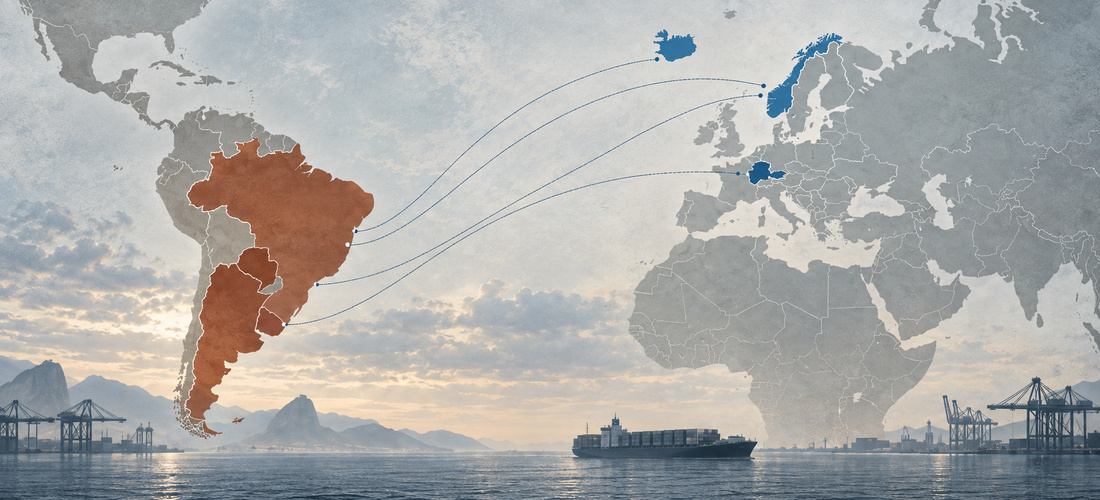
Under the Mercosur-EFTA Agreement, Brazil has completed the procedures required to implement self-certification of origin and the use of Electronic Certificates of Origin (COEs), after EFTA countries recognized that the information submitted by Brazil met the agreement’s requirements. As a result, a hybrid system for proving origin is now in effect, allowing Brazilian exporters to choose between Declarations of Origin issued by the operators themselves and Certificates of Origin issued by authorized entities, in either paper or electronic format.
The adoption of these mechanisms represents progress in trade facilitation by simplifying procedures, reducing operating costs, and making foreign trade operations faster, more secure, and more efficient.
The use of self-certification and electronic certificates of origin is optional and is regulated in Brazil by SECEX Ordinance No. 249 of 2023. Exporters therefore have greater flexibility in demonstrating the origin of their products and taking advantage of the tariff preferences provided under the agreement.
According to Datamar foreign trade data, Brazil exported nearly 2 million metric tons of goods to EFTA countries in the first seven months of the year. The chart below shows the share of the main export products by volume:
Top Exports to EFTA | Jan-Jul 2026 | WTMT
Source: DataLiner (click here to request a demo)
Entry into Force
The Mercosur-EFTA Agreement began applying to trade relations between Brazil and Iceland on October 1, 2026. Iceland offers preferential market access for Brazilian products, including the elimination of tariffs on industrial and fishery products and specific conditions for agricultural goods. Identified opportunities include agricultural products such as roasted coffee, which now benefits from immediate tariff reductions for most of the related Mercosur Common Nomenclature (NCM) codes.
For Brazil and Norway, the agreement entered into force on November 1. Benefits include the elimination of tariffs on 249 tariff lines covering apparel and made-up textile articles, as well as yeast, refined vegetable oils, and various processed foods. In 2025, Brazil exported $219.9 million worth of apparel and textiles worldwide, but only $300,000 to EFTA countries. Meanwhile, Brazilian yeast exports to Norway totaled $23.2 million, accounting for 97% of Brazil’s exports in that segment to the bloc.
Source: Brazilian Ministry of Development, Industry, Trade and Services (MDIC)
-
Ports and Terminals
May, 31, 2024
0
Slowdown by Ibama Employees Impacts Brazilian Vehicle Imports and Exports
-
Coffee
Aug, 24, 2026
0
Brazil coffee exports start 2026/27 crop year at stronger pace
-
Grains
Apr, 10, 2026
0
Argentina soybean harvest begins with crops in good condition
-
Trade Regulations
Jan, 18, 2022
0
Brazil-Chile free trade agreement to enter into force