

Panama in talks with Maersk to operate canal ports
Feb, 04, 2026 Posted by Sylvia SchandertWeek 202606
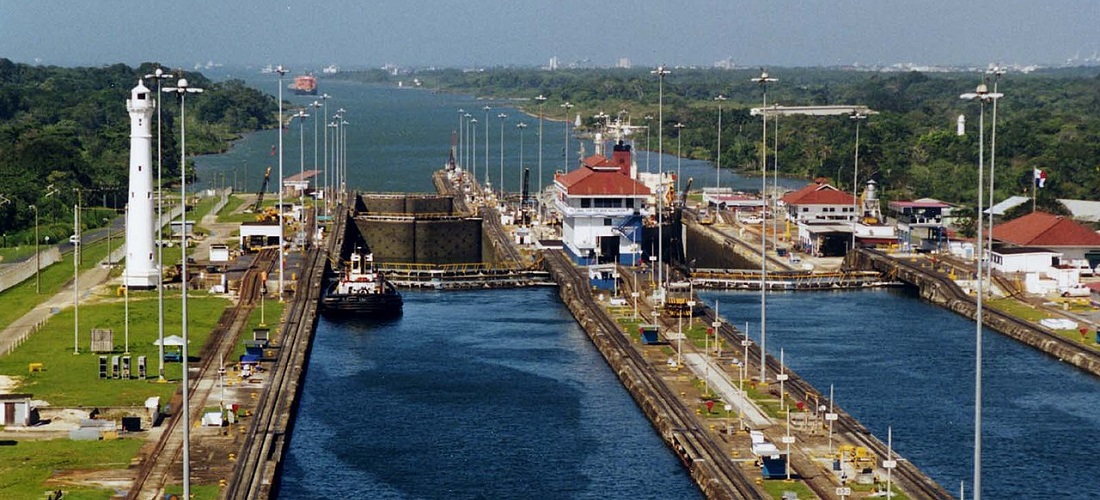
Panama announced last Friday (30) that it is in talks with the Danish company Maersk to temporarily take over two strategic ports located at the entrances to the canal that are currently operated by Hong Kong–based CK Hutchison Holdings, whose concession was annulled by the courts.
In a decision strongly criticized by China and the company, Panama’s Supreme Court invalidated the contracts on Thursday following threats by U.S. President Donald Trump to “take back” the interoceanic waterway, claiming it was under Beijing’s control.
“Discussions have already begun” with “a subsidiary of the APM Moller Maersk group, which has shown willingness to temporarily assume operations at both terminals and has the necessary capacity and experience,” Panamanian President José Raúl Mulino said in a televised address to the nation.
Mulino, who described the current contracts as “onerous” (abusive), assured that until the court ruling is enforced, there will be “a period of continuity for the current operator,” followed by a “transition” phase that will culminate in a new concession under “favorable conditions” for the country.
Panama’s ports “will continue operating without changes,” the president guaranteed, adding that an “orderly administrative transition” will be ensured.
Maersk’s subsidiary confirmed in a statement its “willingness to temporarily assume operations” in order to “mitigate any risks” that could affect services essential to regional and global trade.
The United States, which inaugurated the canal in 1914, and China are the main users of this route, through which about 5% of global maritime trade passes.
China’s response
Without detailing its arguments, the full bench of Panama’s highest court declared “unconstitutional” the laws under which Panama Ports Company (PPC), a subsidiary of CK Hutchison, had controlled the ports of Balboa and Cristóbal since 1997.
Chinese Foreign Ministry spokesperson Guo Jiakun warned that Beijing “will take all necessary measures to firmly protect the legitimate rights and interests” of its companies.
Hong Kong authorities rejected the idea that a “foreign government uses coercive, repressive or other methods” to interfere in commercial relations.
For its part, PPC said the ruling “lacks legal basis and puts at risk (…) the well-being and stability of thousands of Panamanian families” who depend on its activities.
The annulment had been requested last year by Panama’s comptroller, arguing that the concession — renewed in 2021 for 25 years — was unconstitutional and that Hutchison allegedly failed to pay the Panamanian state US$1.2 billion for its operations.
PPC, however, maintains that it is “the only port operator in the country in which the state is a shareholder” and says it has paid the government US$59 million over the past three years.
Complicated sale
CK Hutchison Holdings, founded by Li Ka-shing, the richest man in Hong Kong, is one of the largest conglomerates in the semi-autonomous financial hub, operating in finance, retail, infrastructure, telecommunications, and logistics.
Following Panama’s announcement, the group’s shares fell 4.6% during Friday’s session on the Bolsa de Valores de Hong Kong.
The court ruling comes amid a prolonged port sale process announced by Hutchison in March 2025 to transfer its stake in the Panamanian terminals to a consortium led by BlackRock as part of a US$22.8 billion package.
The deal was initially welcomed by the United States, but later slowed after China warned it could harm its global interests. Beijing urged the parties to act “cautiously,” warning of possible legal consequences if they proceeded without authorization.
Trump’s pressure
The Panama Canal was built by the United States and transferred to Panama on December 31, 1999, under bilateral treaties.
However, since returning to the White House in January, Trump has threatened to “retake” the canal, claiming that China controls it, even though it is managed by an autonomous Panamanian public institution.
“It is very difficult to imagine that the decision was not influenced by persistent U.S. pressure over canal ownership,” said Kelvin Lam, an economist specializing in China at Pantheon Macroeconomics.
He added that foreign investors will likely become increasingly cautious about investing capital in “strategic infrastructure projects in the United States’ backyard.”
Panama categorically denies that Beijing exercises effective control over the canal, which accounts for 40% of U.S. container traffic.
Source: IstoÉ Dinheiro
-
Other Cargo
Nov, 29, 2024
0
Brazil Seeks to Export R$10 Billion in Sorghum to China
-
Apr, 24, 2025
0
Brazil, Peru Seal Deal to Enable Poultry Oil Exports for Animal Feed
-
Shipping
Apr, 10, 2026
0
Coastal shipping handles 1.82 million tonnes in northeastern Brazil in January
-
Meat
Jul, 18, 2025
0
Before New U.S. Tariff, Brazil’s Beef Exports Hit Monthly Record in June