


Paranaguá’s ‘Moegão’ project reaches 75% completion
Oct, 28, 2025 Posted by Lucas LorimerWeek 202544
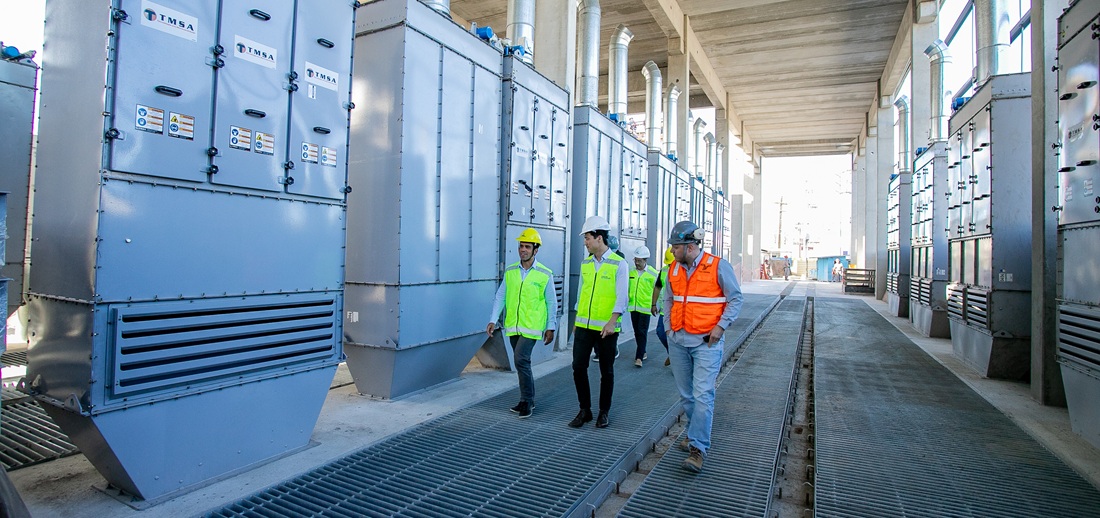
The National Secretary for Ports at the Ministry of Ports and Airports (MPor), Alex Ávila, carried out a technical visit to the Port of Paranaguá (PR) on Thursday (23) and Friday (24) to monitor progress on the “Moegão,” the new rail unloading system for the export corridor. The inspection — conducted together with the Director-General of the National Waterway Transport Agency (Antaq), Frederico Carvalho Dias — confirmed that 75% of the project has been completed.
The Moegão is a R$658 million investment financed by the National Development Bank (BNDES), with completion expected in January 2026. The name is the augmentative form of “moega,” the Portuguese word for a traditional funnel-shaped piece of equipment used to receive and direct grains. Paranaguá’s project earned the nickname because it is a much larger and more efficient version of that system, centralizing grain unloading from 11 terminals into a single point.
Secretary Alex Ávila highlighted the importance and impact of the project, stating that the new structure will increase the export corridor’s unloading capacity by nearly fivefold. “Our technical visit confirmed the excellent progress of this work, which is already 75% complete and is a strategic priority for MPor. The Moegão is not just an investment — it is a logistics revolution for the country. We will jump from five to 24 million tonnes in corridor capacity and, more importantly, we will rebalance the port’s transportation matrix, following Minister Silvio Costa Filho’s directive to modernize our ports,” he said.
The project is designed to transform the port’s logistics by rebalancing the freight transport matrix. Once operational, the Moegão is expected to increase the railway’s share of grain intake from the current 20% to 50%, placing it on par with road transport. This shift will improve operational efficiency, reduce logistics costs, and cut wait times for railcars. At the same time, prioritizing rail transport will contribute to sustainability by reducing pollutant emissions and minimizing traffic conflicts between trucks and trains in the city of Paranaguá.
Source: Informativo dos Portos
-
Ports and Terminals
Feb, 13, 2025
0
Paraná Ports to Hold Two Auctions on April 30
-
Grains
Nov, 18, 2020
0
Insect infected rice cargo detained at Imbituba port
-
Grains
Aug, 15, 2021
0
Paraná may restrict water grants to agriculture
-
Ports and Terminals
Mar, 01, 2021
0
Santos Brasil to auction fuel terminal at Port of Itaqui in April