


Port of Açu eyes critical minerals market amid energy transition
Dec, 08, 2025 Posted by Lucas LorimerWeek 202550
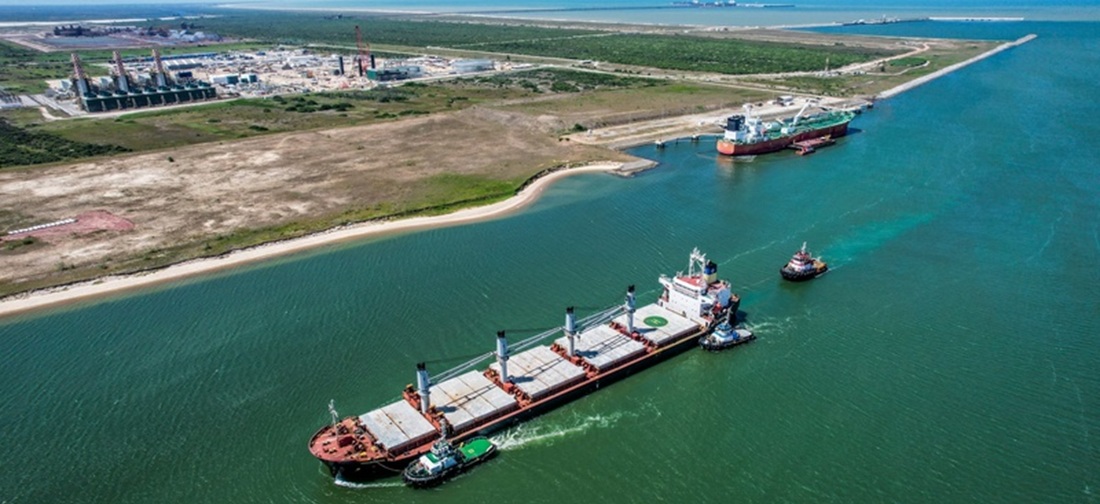
The Port of Açu, in the north of the state of Rio de Janeiro, is seeking to move closer to critical minerals production, aiming to handle these products amid increasing demand driven by the energy transition.
According to the CEO of the Port of Açu, Eugenio Figueiredo, conversations are underway with companies, associations, and governments from mineral-producing regions within the port’s area of influence, such as Minas Gerais and Goiás, in addition to Rio de Janeiro and Espírito Santo.
“In Minas, for example, we always mention Açu as a potential outlet for these minerals,” he told journalists.
One of the port’s differentiating factors to attract this type of cargo is its available space for expansion, said Rogério Zampronha, CEO of Prumo Logística, the port’s controlling company.
According to the executive, it is possible to create dedicated areas for these products. He cites rare-earth metals and copper among the places of interest.
“The logistics cost relative to the price of the product being shipped is not very representative. And we, more than any other port in Brazil, can create structures dedicated to a specific product to ensure there is no contamination,” he said.
Today, the Port of Açu is already one of the leading outlets for copper concentrate in the country.
In addition, the port has experience in the mining segment through a dedicated iron ore terminal operated by the joint venture Ferroport, a partnership between Anglo American and Prumo.
Last month, Prumo announced negotiations with 3Point2 for the sale of its stake in Ferroport.
According to Zampronha, the decision is linked to the maturity of the terminal’s operations and the profile of the company’s controllers. Prumo is a partnership between the U.S. fund EIG and Mubadala Investment Company, the sovereign wealth fund of the United Arab Emirates.
“It is outside the profile of this private equity fund to hold this type of asset as capital,” he explained.
Expansion of the area for clean fuels
In parallel, also with an eye on the energy transition, the Port of Açu has expanded the area dedicated to its clean fuels hub.
The company licensed one million square meters last year, which has already been fully leased. Now, it is licensing another 4.5 million square meters for new projects.
Binding agreements have already been signed for projects to produce sustainable aviation fuel (SAF), e-methanol, and bio-LNG (liquefied natural gas produced from biomethane).
According to Zampronha, the projects are in the engineering phase.
“We want to see the first drop of green fuel come out at the beginning of 2028,” he said.
New markets
A central terminal for handling oil and grains, the Port of Açu is targeting closer engagement with new markets for 2026.
Recently, the company’s executives traveled to India to strengthen relations and create space for new volumes.
“It’s a new frontier that is opening. We believe it will yield good results for Brazil,” said Zampronha.
The executive notes that port operations are affected by global trade flows, which are feeling the impact of import tariffs imposed by the United States.
“Next year will be complex, because we will see new advances and new setbacks in this tariff issue between the United States and Brazil, between the United States and other countries, and all of this influences Brazil,” he said.
Today, the Port of Açu handles around 40% of Brazil’s oil exports.
Source: Eixos
-
Blog News (ENG)
May, 29, 2026
0
Porto Itapoá announces two new shipping services in its Portfolio
-
Coffee
Jan, 18, 2024
0
Brazil’s coffee production to rise 5.5% in 2024, says Conab
-
Economy
Jun, 03, 2024
0
Brazil Expands Global Agribusiness Reach with Record Market Openings
-
Grains
Apr, 11, 2023
0
Brazil has around 207,566 k T wheat shipments scheduled for April