


Prumo, Port of Antwerp-Bruges and H2Uppp Sign €400,000 Agreement to Study Shared Pipeline Infrastructure
Nov, 13, 2026 Posted by Gabriel MalheirosWeek 202646
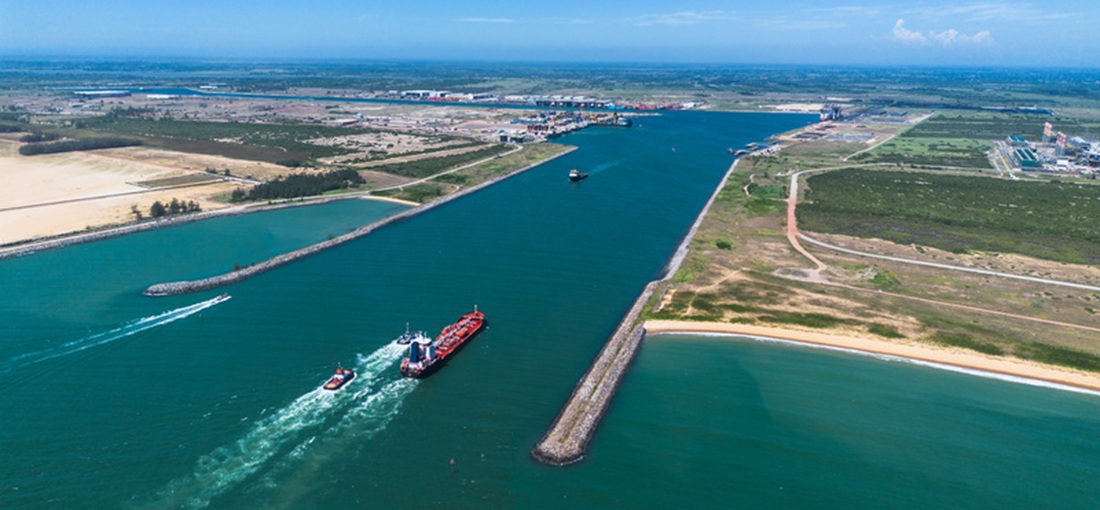
Prumo, the holding company responsible for developing the Port of Açu, Port of Antwerp-Bruges International and the International Hydrogen Ramp-up Programme (H2Uppp), implemented by Deutsche Gesellschaft für Internationale Zusammenarbeit (GIZ) GmbH, have signed a cooperation agreement to assess the technical and economic feasibility of a shared Port of Açu pipeline network for transporting and exporting renewable hydrogen and low-carbon synthetic fuels. The port is located in São João da Barra, in the Brazilian state of Rio de Janeiro.
The project, called Future Green Fuels Hub, has a budget of €400,000 (approximately R$2.5 million). Half of the funding will come from public contributions through the H2Uppp program, cofinanced by the European Union and Germany’s Federal Ministry for Economic Affairs and Energy (BMWE). The remaining half will be provided through technical contributions from Prumo and the Port of Antwerp-Bruges. The resources will finance studies and activities aimed at reducing risks associated with shared infrastructure, lowering entry barriers for new producers and laying the groundwork for a competitive green fuels corridor between Brazil and Europe.
“Logistics is a determining factor in the final cost of hydrogen projects and their low-carbon derivatives. By developing a shared pipeline network, we are preparing the Port of Açu to accommodate new industrial projects, integrate different stages of the value chain and strengthen connections with international markets. This reduces costs for producers and improves the competitiveness and economic viability of their projects. Our goal is to establish Açu as one of Brazil’s leading e-fuels hubs serving the European market,” said Mauro Andrade, Prumo’s Executive Director of Business Development.
Port of Açu Pipeline Network to Include Two Proposed Routes
The study will assess the development of two pipeline routes connected to the Port of Açu. The first would run approximately 8 kilometers, linking the port’s hydrogen and low-carbon fuels hubs to the Açu Liquid Terminal (TLA), operated by Vast Infraestrutura and also located within the port complex in Rio de Janeiro state.
The second would involve approximately 35 kilometers of pipelines connecting these production hubs to external networks within the Port of Açu’s wider economic area, allowing supplies of biogas and biogenic CO₂ to reach the facilities. The goal is to assess the efficiency of shared infrastructure capable of serving multiple users and integrating feedstock supply, production and exports.
The 12-month agreement covers technical, regulatory and environmental studies, along with financial modeling for the development of shared pipeline infrastructure within the port complex. The proposed model seeks to reduce capital and operating costs for new synthetic fuel (e-fuel) producers by enabling economies of scale and equitable access to export facilities.
“This agreement demonstrates the support for and confidence in the Port of Açu as a major energy hub. With support from the European Union and the German government to assess a pipeline network, we can further enhance the attractiveness and competitiveness of the Port of Açu as an integrated green energy and industrial cluster. The Port of Açu is set to become a major hub for green molecules, and the Port of Antwerp-Bruges, as a gateway for green molecules entering Europe, is well positioned to bring them into the heart of European industry. Together, we are building the green energy corridors of the future,” said Mario Lievens, Director of Strategic Partnerships at Port of Antwerp-Bruges International.
The study aims to lower entry barriers for new low-carbon fuel producers and support the development of large-scale projects at the Açu complex. The initiative also strengthens the green shipping corridor established between the Port of Açu and Port of Antwerp-Bruges International, connecting Brazilian production with the European consumer market.
Brazil and Europe have a significant opportunity to build a strategic partnership around green fuels. With its renewable energy generation potential, Brazil could play an important role in supplying renewable hydrogen and its derivatives, contributing to Europe’s decarbonization and energy security. In this context, the Port of Açu and the Port of Antwerp-Bruges could become strategic partners in developing a future transatlantic green corridor, linking Brazilian production to European demand and creating new opportunities for investment, technological cooperation and sustainable industrial development. Through its work with public and private partners, GIZ is helping establish the conditions needed to turn this shared ambition into reality.
In addition to technical and economic assessments and regulatory and environmental mapping, the agreement provides for the development of business models and tariff structures, as well as engagement with investors, potential buyers of the fuels produced (offtakers) and institutional stakeholders.
Sources: Prumo, Port of Antwerp-Bruges International, H2Uppp and Deutsche Gesellschaft für Internationale Zusammenarbeit (GIZ) GmbH.
-
DW 2019 EN
Oct, 21, 2019
0
DATAMARWEEK 22 OCTOBER 2019
-
Meat
Aug, 03, 2023
0
Pork exports remained above 90 thousand tons in July
-
Trade Regulations
Jul, 15, 2026
0
Brazilian industry still counting cost of U.S. tariffs, but sees alternatives in other markets
-
Sugar and Ethanol
Sep, 23, 2024
0
Brazil expands exports to Iraq