

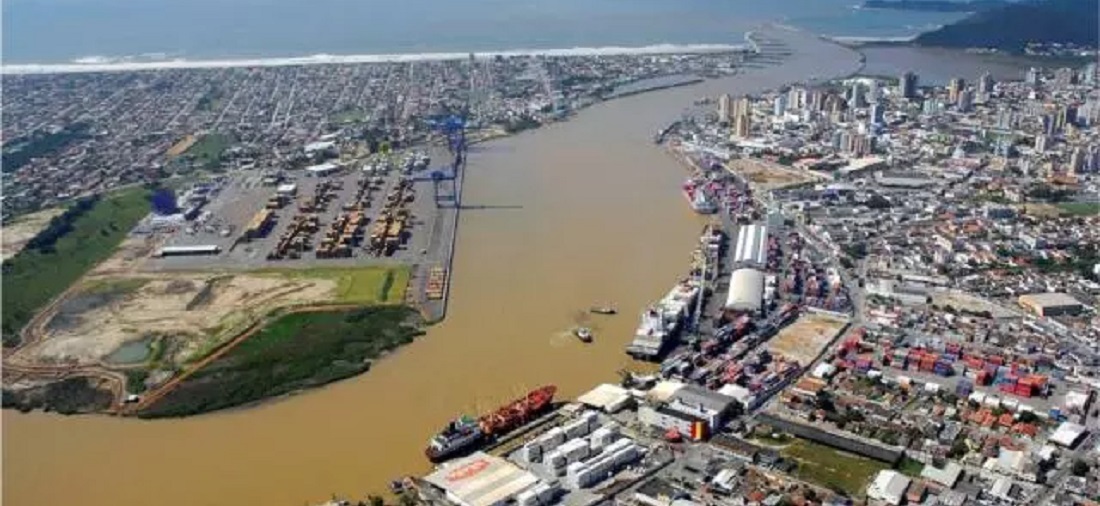
Port of Itajaí Seeks More Powerful Tugboats as Currents Intensify Amid El Niño
Oct, 16, 2026 Posted by Gabriel MalheirosWeek 202642
The Port of Itajaí has requested a review of Port of Itajaí tugboat requirements, including the minimum number of vessels and the power needed to ensure safe ship maneuvers amid strong currents in the Itajaí-Açu River. The request was submitted Tuesday, Oct. 13, by the Port of Itajaí Superintendency (SPI) to the local Port Authority.
The request comes amid increased river flow and stronger currents, conditions associated with the effects of El Niño. According to port management, currents recorded in recent weeks have been up to seven times stronger than levels considered safe for navigation, making vessel entry, departure and berthing maneuvers more difficult.
“Given this scenario, the Superintendency considers the number and power of the tugboats currently in use insufficient to cope with certain adverse conditions, especially during periods of strong currents. The SPI supports reassessing tugboat requirements, including the minimum number of units and the power and bollard pull needed to ensure greater safety during port operations,” the agency said.
The Port of Itajaí said it is monitoring hydrological conditions along the access channel. According to the Superintendency, the effects of El Niño can intensify rainfall, increase river discharge and accelerate currents.
The SPI also said preventive measures should take into account the risks identified and the ability of tugboats to operate under adverse conditions. The aim is to protect vessels, port infrastructure and workers involved in ship maneuvers while maintaining safe operations throughout the Itajaí Port Complex.
Port of Itajaí Tugboat Requirements Accompanied by New Monitoring Plans
The port is also studying the implementation of a new hydrodynamic and metocean monitoring system for the waterway access. A technical inspection was carried out earlier this month to determine where the equipment will be installed.
The system will include at least six monitoring stations distributed to cover the five operational sections of the waterway access. The infrastructure will continuously track parameters including currents, tides, waves, winds, visibility and rainfall, providing real-time data to support decisions related to navigation and port operations.
In practice, the monitoring system will expand the port’s ability to track river, sea and atmospheric conditions, providing additional information for assessing navigational safety, vessel maneuvers and waterway access operations.
Source: ND Mais
-
Shipping
Mar, 05, 2020
0
CMA CGM announces new tariffs on N Europe to South America
-
Grains
Jan, 21, 2021
0
Syngenta to export soybeans and corn to China
-
Ports and Terminals
Mar, 22, 2019
0
Suape approved to receive Sammax and New Panamax vessels
-
Meat
Jun, 27, 2023
0
China lifts ban on Brazilian beef produced before mad cow disease case