


Port of Itapoá to open commercial office in Shanghai
Aug, 17, 2026 Posted by Gabriel MalheirosWeek 202634
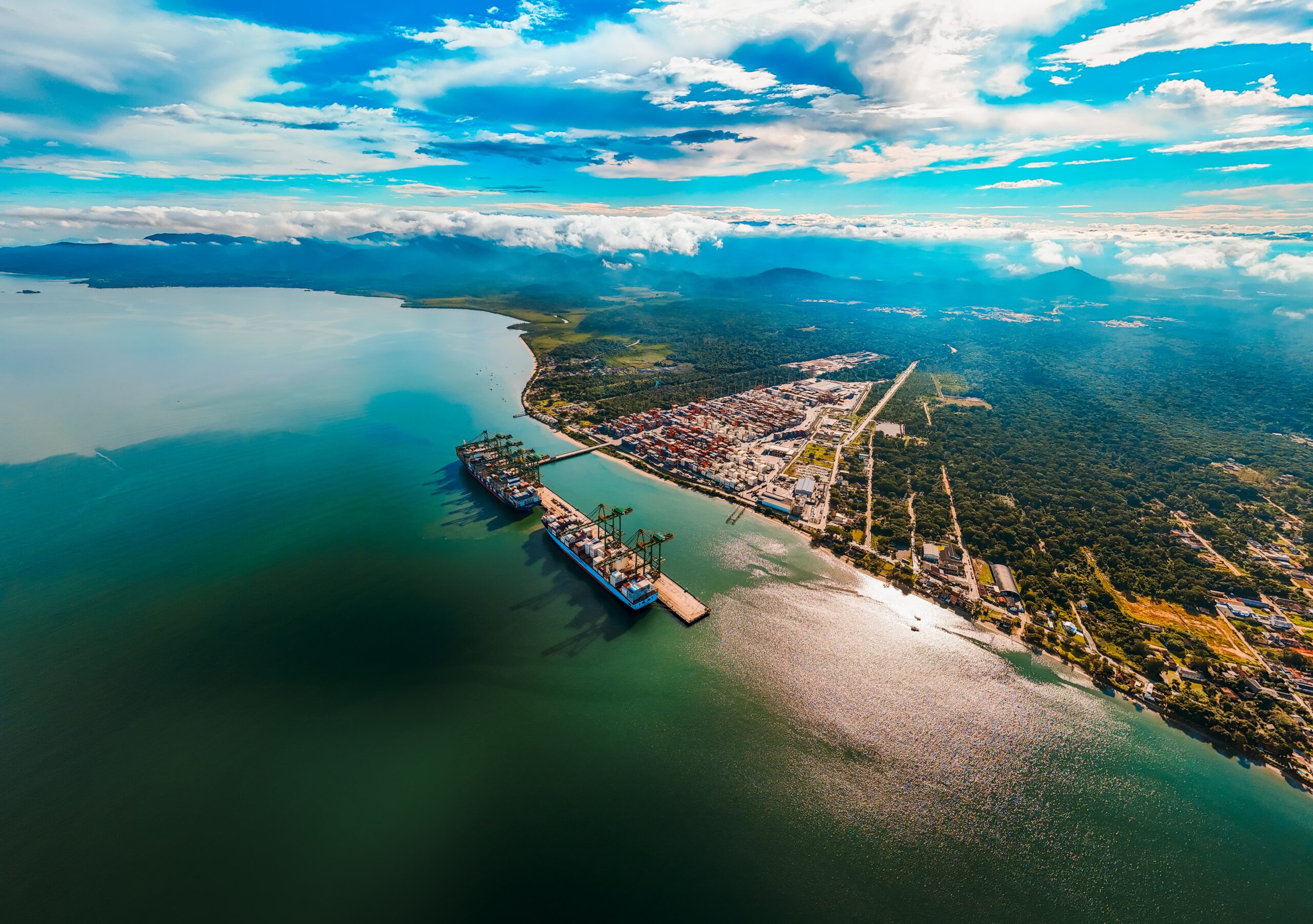
The Port of Itapoá, in Brazil’s southern state of Santa Catarina, will open a representative office in Shanghai on August 26, aiming to facilitate trade between exporters and importers already using the container terminal and attract cargo and services from new customers.
The project cost $100,000, equivalent to nearly R$530,000 at current exchange rates. Port of Itapoá CEO Ricardo Arten said the amount is relatively low given the business opportunities that a presence in China’s main financial center could create for the terminal.
“We decided to be in China because of a commercial opportunity, to facilitate this trade,” Arten said. “It is a very intense flow, and we want to show the capacity the terminal has created for importers and exporters.”
In the first half of 2026, China was the origin of 49.4% of imports that arrived in Brazil through Itapoá. It was also the destination for 17.9% of exports shipped through the Santa Catarina terminal.
Shanghai is considered China’s main logistics platform and is home to the world’s largest container port.
Agribusiness dominates exports to China through Itapoá. This year, it accounts for more than 90% of total shipments. Pulp and paper lead the flow, with a 50.13% share, followed by refrigerated and frozen meat at 43.97%, cotton at 2.72% and wood at 2.12%.
Segments with shares below 1% include dry food products, at 0.9%; agricultural commodities excluding cotton, at 0.09%; and other refrigerated foods, at 0.07%.
Arten said Itapoá has also become attractive for agribusiness cargo from other Brazilian states. Cotton and pulp, for example, come from the Center-West. Sugar and coffee exporters have also begun running some operations through the terminal, still on a trial basis.
“This tells us we need to keep investing in agribusiness. And there is also the reverse flow: inputs that come through the Port of Itapoá. That also goes through China. It is a very good moment for us to be setting up this office,” he said.
Arten added that the opening of the commercial office in China received support from the state of Santa Catarina and Brazilian diplomacy. He said the presence in Shanghai could also lead to other investments in the country.
“Today, it is a commercial representation office. The most important thing is to stay in contact with companies that already know us and generate new business,” he said. “Having a terminal in Shanghai is more complicated. But one idea is to have logistics warehouses there.”
Port of Itapoá expands capacity
The move into China comes as the Port of Itapoá advances the fourth phase of its capacity expansion, with investments of R$500 million.
The plan is to add 120,000 square meters to the yard, increasing the total area to 575,000 square meters. The quay is expected to reach 1.2 kilometers in length.
Itapoá is also increasing the number of plugs available for refrigerated containers, mainly to meet demand from the meat industry. Last year, the terminal had 3,800 reefer plugs. This year, the number is expected to reach 4,400, with a target of 5,300 next year.
“Our intention is to become an animal protein hub for Brazilian exporters,” Arten said.
Another part of the plan is to expand cross-docking warehouse capacity, where cargo is unloaded from trucks and stuffed into containers. The terminal mainly uses that area for heavier commodities that need to remain at the terminal longer while awaiting shipment.
“Few companies carry out this type of operation. Usually, it happens in the back area; here, the port does it. We want to increase that capacity,” the CEO said.
The terminal’s goal is to become the largest container terminal in South America by handling capacity. Current capacity stands at 2 million TEUs. The plan is to reach at least 3 million TEUs by 2040 through new expansion phases.
But meeting those growth targets and securing returns on investment will depend on better access to the terminal. The Port of Itapoá needs road works to improve truck arrivals and departures.
Arten said a work order is close to being signed for improvements to one of the two state roads that provide access to the terminal. He also said the city government of Itapoá informed him that funding is available to widen a municipal road.
“The terminal has to grow in quay, yard and gates. But if there are no conditions to move the cargo out, all that private investment becomes more fragile,” he said.
Babitonga Bay dredging nears completion
Expanding maritime access depends on dredging Babitonga Bay, which Itapoá shares with the Port of São Francisco do Sul.
The works, budgeted at around R$300 million, are underway and financed through an arrangement involving the public and private sectors.
The Port of Itapoá committed to funding the dredging. Execution is being handled by the local port authority. Payment will be made over 12 years using revenue from channel-use tariffs, adjusted by 4% per year.
Arten said 89% of the work has already been completed. The works are expected to finish within the next two months, increasing the draft to 16 meters. The port expects to obtain Brazilian Navy approval for the deepened access channel later this year.
Today, the Port of Itapoá can receive containerships up to 336 meters long, but cannot load them to full capacity. With the new draft, it will be able to berth vessels up to 366 meters fully loaded and ships up to 400 meters with partial loading.
Source: Globo Rural
-
Meat
Jul, 28, 2020
0
China grants export licenses to another three Brazilian fisheries
-
Ports and Terminals
Aug, 24, 2023
0
Brazilian gov’t announces tariff cut for Port of Itaguaí
-
Ports and Terminals
Jan, 10, 2023
0
Transpetro conducts green bunker performance tests
-
Grains
Nov, 06, 2023
0
International Demand for Brazilian Soybeans On The Rise, Inform Researchers