


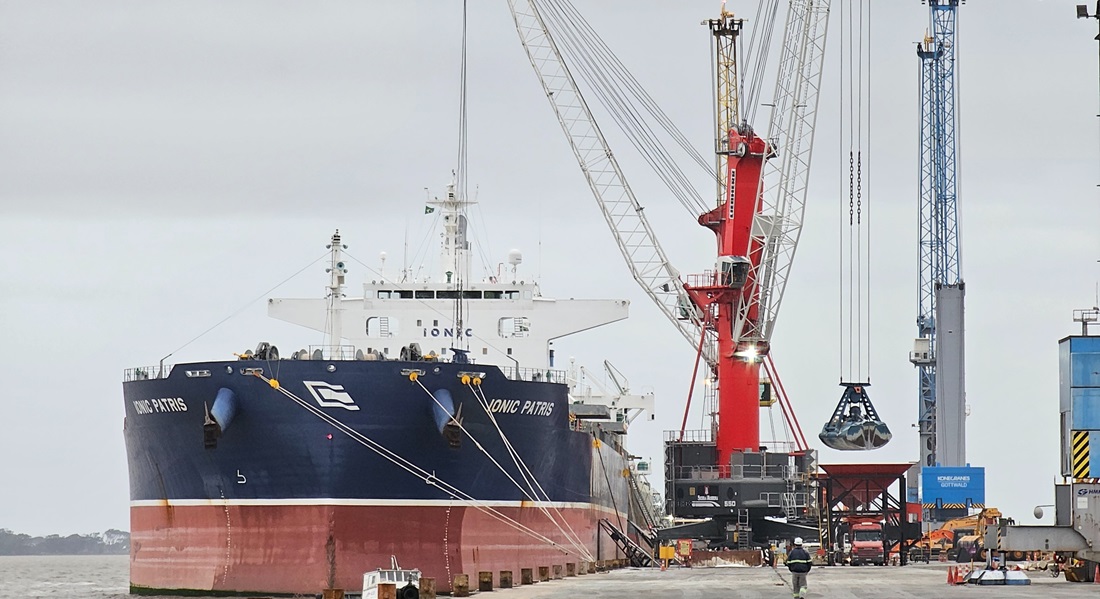
Port of Rio Grande Reports Increase in Grain and General Cargo Volumes
Sep, 17, 2024 Posted by Sylvia SchandertWeek 202438
The Port of Rio Grande has shown remarkable resilience, with significant increases in the movements of polyethylene, soybeans, wheat, cellulose, wood chips, and potassium chloride from January to August 2024 compared to the same period last year. These figures are a testament to the recovery of Rio Grande do Sul following the region’s most significant climatic disaster.
Polyethylene, a versatile plastic, saw an 8.67% increase in its movements. In 2023, shipments totaled 394,675 tonnes; this year, they reached 428,884 tonnes.
Soybeans followed with a 3.45% increase, rising from 5,720,659 tonnes in 2023 to 5,917,923 tonnes in 2024. Wheat, with a 3.32% increase, moved from 2,376,712 tonnes in 2023 to 2,455,673 tonnes.
Cellulose produced in Guaíba at the CMPC factory saw a 1.82% rise, reaching 2,418,107 tonnes in 2024. Wood chips were the fifth most transported product, totaling 694,336 tonnes—a 1.73% increase from last year.
Potassium chloride saw a 0.74% increase.
Container movements at the Rio Grande port complex also increased by 25.71%, with 505,979 TEUs handled from January to August. June was the peak month, with 77,432 TEUs moved.
Exports during this period were primarily directed to China (6,075,089 tonnes), Vietnam (863,781 tonnes), the Philippines (727,876 tonnes), Iran (726,717 tonnes), and the United States (632,289 tonnes). Imports came from China (1,039,219 tonnes), Argentina (994,304 tonnes), Russia (516,647 tonnes), Morocco (454,413 tonnes), and the United States (396,630 tonnes).
-
Coffee
Oct, 08, 2025
0
Port delays stall coffee exports and expose Brazil’s logistical bottlenecks
-
Jan, 24, 2025
0
MAPA Launches AgroInsight to Strengthen Brazilian Agribusiness Exports
-
Shipping
Apr, 30, 2024
0
Hapag-Lloyd launches its dry fleet tracking solution
-
Ports and Terminals
Oct, 06, 2021
0
ANTAQ prolongs public consultation for lease of STS 53 area at Santos