


Port of Santos eyes larger ethanol bunkering operation for ocean shipping
Sep, 09, 2026 Posted by Gabriel MalheirosWeek 202637
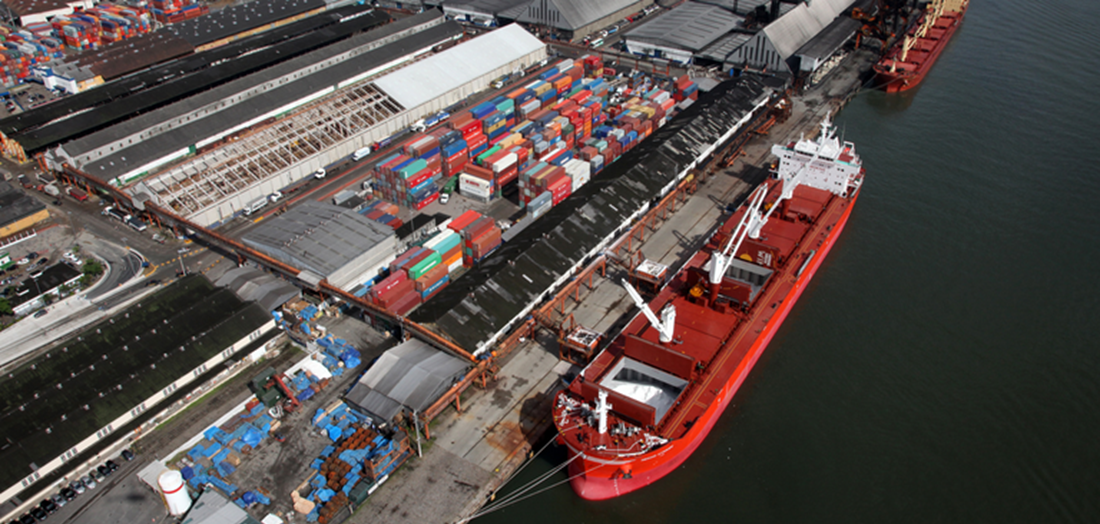
The Port of Santos is preparing for another step in shipping’s energy transition. After carrying out Brazil’s first ethanol bunkering at Santos for an ocean-going container ship, the port complex could host a new operation involving up to 6,000 metric tons of the biofuel.
If fully confirmed, the new bunkering would be 12 times larger than the operation carried out in July, when about 500 metric tons of ethanol were transferred to the container ship CMA CGM Iron. More than a jump in volume, the operation could mark a shift from a pioneering trial to a supply chain operating at commercial scale.
Full details of the next bunkering have not yet been disclosed, including the vessel’s name, the date of the operation and the companies responsible for supplying the fuel.
First operation opened the way
The first milestone took place on July 12 at Santos Brasil’s container terminal in Guarujá. The CMA CGM Iron, a 13,000-TEU container ship, received about 500 metric tons, or roughly 635,000 liters, of ethanol.
The vessel is equipped with a tri-fuel engine certified to run on conventional fuels, methanol and ethanol. It is the first in a series of 12 13,000-TEU ships ordered by CMA CGM with the same technology.
The operation brought together several links in the logistics chain. Copersucar supplied the ethanol; AGEO Terminais handled storage; Bunker One coordinated the bunkering using a specialized barge; and Santos Brasil provided the port infrastructure. Engine manufacturer Everllence took part in the development and certification of the propulsion technology.
The fuel moved from its production origin to Santos, was stored in dedicated infrastructure and then transferred to the vessel. The process required specific planning, international safety protocols and training for the teams involved.
Next operation changes the scale
A move to as much as 6,000 metric tons would change the logistics scale of the project. An operation of that size requires greater storage capacity, barge availability, integration with liquid bulk terminals and coordination among suppliers, shipowners, the port authority and regulators.
The challenge is not only to deliver the fuel, but to create regularity. For Santos to consolidate itself as a renewable fuel supply hub, the port will need to offer predictability, operational safety and product availability aligned with vessel calls.
Bunker One has said it is already in talks with major international shipowners interested in similar operations. According to the company, Asian companies have requested information on the origin of the ethanol, its logistics route and quality certifications. The names of the companies involved in the talks remain confidential.
Brazil’s advantage
Brazil has strategic conditions to gain ground in the market for lower-carbon marine fuels. The country has large-scale ethanol production, storage and distribution infrastructure, and proximity between the producing regions of the Center-South and the Port of Santos.
That combination could turn the Santos complex into a bridge between Brazilian renewable energy production and ships operating on major international routes.
CMA CGM expects to operate around 200 container ships capable of using low-carbon energy by 2031. The expansion of that fleet is likely to create growing demand for ports prepared to supply alternative fuels.
Santos enters the race for the fuel of the future
A bunkering operation involving up to 6,000 metric tons could place Santos among a still-limited group of ports capable of supplying ethanol at large scale for ocean shipping.
A single operation, however, does not create a new market on its own. The real breakthrough will come when ethanol supply stops being exceptional and becomes part of the port’s regular service chain.
Santos has already shown it has the technical capacity to carry out the operation. The next challenge is to turn that first-mover status into frequency, scale and competitive advantage. If that happens, Latin America’s largest port could also become one of the South Atlantic’s main references in renewable bunkering.
For ethanol bunkering at Santos, the move from a 500-ton trial to a possible 6,000-ton operation would signal that Brazil’s leading port is beginning to position itself in the emerging market for low-carbon marine fuels.
Source: Jornal Portuário
-
Economy
Nov, 23, 2022
0
Argentine exports hit historic highs in October
-
Meat
Dec, 18, 2018
0
Brazil succumbs to trade bans as chicken exports fall
-
Sugar and Ethanol
Aug, 08, 2021
0
Brazil exports 2.47m tons of sugar in July; average price drops 1.5% compared to June
-
Ports and Terminals
Jan, 16, 2019
0
Container Terminals Report tracks optimism among Brazilian operators