


Port of São Sebastião becomes first in Brazil to implement PCS digital system
Sep, 09, 2026 Posted by Sylvia SchandertWeek 202626
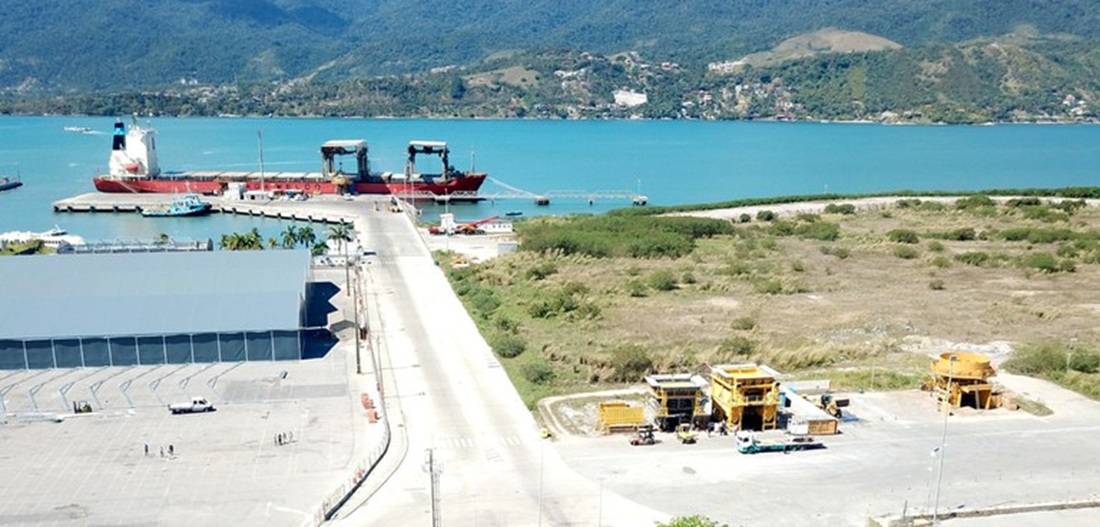
The Port of São Sebastião, on the northern coast of São Paulo state, is Brazil’s first port to adopt a Port Community System (PCS). Companhia Docas de São Sebastião (CDSS) implemented the digital platform on August 14 to improve speed, efficiency, and transparency while reducing costs across the logistics chain.
The shared digital system enables real-time monitoring of port activities. Private companies, operators and public agencies can register voluntarily, enter their operational information and monitor the activities of other participants in the logistics chain.
“The PCS is one of the modules that make up the digital port ecosystem, serving as a shared layer of data and services for the entire port community,” said CDSS, which is controlled by the São Paulo state government.
The company also said that some of the investment had been made before the PCS was implemented, in digital systems and solutions that were already operational and were subsequently integrated into the platform. “To date, excluding earlier systems, R$400,000 has been invested in improving the port ecosystem.”
CDSS President Ernesto Sampaio said the system is free for users and will be gradually enhanced. The platform already serves 50 companies and has 47 registered users.
“Development of the Port Community System began about three years ago. It is a community environment that port stakeholders and other public and private entities can voluntarily join if they are interested in accessing information circulating or available within the port environment,” Sampaio explained.
According to Sampaio, the aim is to organize and share information that was previously restricted to the port authority or obtained through separate channels. “This information was usually restricted to the port authority. The Port Community System organizes it through digitization and computerization, allowing the entire community to benefit from it,” he said.
In practice, the system can reduce manual procedures and the exchange of paper documents while making cargo flows more predictable. Available features include tracking regulatory requirements and outstanding documentation, monitoring landside cargo movements, managing access and appointments, and providing operational and cost indicators.
Collaborative development
Sampaio said the development of the PCS began with discussions involving the port community. “Companhia Docas held dozens of meetings with port community representatives to identify their main needs and determine which information should be shared. The discussions involved operations, Port Guard and Information Technology teams, as well as representatives from the different sectors involved in port activities.”
This assessment identified information already generated by the port management system that could be made available to other users while safeguarding internal data and commercially confidential information.
The CDSS president stressed, however, that the PCS is not an off-the-shelf solution.
“It is developed with the port community. It is a living organism. As the port community identifies new needs, new features and opportunities for improvement, it will submit them to the advisory council, and we at the port authority will assess whether they can be implemented,” he said.
Sampaio said commercial information would be protected whenever confidentiality is requested or required.
Real-time information
CDSS President Ernesto Sampaio said the tool allows different stakeholders to prepare for the next stages of an operation.
“The estimated completion time for a vessel’s handling, for example, can help the next operator organize its team, while shipping agents can track berthing and unberthing information to coordinate services with pilots and tugboat companies. This information is useful not only for ongoing operations but also for future movements,” he said.
Sampaio also noted that communications previously handled by telephone, email, or messaging apps now have a common reference platform. “You are replacing all of that with a single shared platform providing access to the same information, so there will be no discrepancies.”
He added that the system is integrated with the federal government’s Porto Sem Papel (Paperless Port) platform. This will allow users to consult information from both environments through the PCS, reducing the need to access separate systems.
Santos project discontinued
In 2023, the Ministry of Ports and Airports selected the ports of Santos, Itajaí in Santa Catarina, Suape in Pernambuco, and Rio de Janeiro to participate in a PCS implementation pilot supported by the British government. Developed by the University of São Paulo (USP) through the Institute of Software and Services Technology (ITS), the project was to receive UK funding. At the time, the platform was among the ministry’s priorities for modernizing public ports.
Angelino Caputo, executive president of the Brazilian Association of Terminals and Customs-Bonded Facilities (Abtra), recalled that discussions about implementing the platform in Brazil began around 2018, “following initiatives to implement the Trade Facilitation Agreement established by the World Trade Organization (WTO) in 2013.”
Caputo said the project was to receive non-repayable funding from the UK Prosperity Fund but faced constraints as the original funding allocation was reduced.
“The project mapped processes and planned a pilot in Santos, but it was interrupted during the pandemic. The British economy began to experience problems, and that funding—about £5 million—gradually dwindled until the project was discontinued,” he said.
Asked whether cost-effectiveness was the main barrier to implementing PCS platforms at Brazilian ports, Caputo said it was not. According to him, a study conducted abroad found a return of US$17 in profit for every dollar invested in the system. “So it is not even a question of cost-benefit; it is all benefit. The cost is small, and the benefit is enormous,” he said.
No current project
Contacted for comment, the Santos Port Authority (APS) said it currently has no project to implement a PCS. “Discussions about the study to implement a program under the same name ended in 2021.”
System improves efficiency, association says
Abtra Executive President Angelino Caputo said the Port Community System, which has been used in Europe for about 40 years, improves speed and operational efficiency throughout the port sector’s supply chain, strengthening competitiveness.
“The Port Community System is a platform that integrates stakeholders within the port community. The technology does not replace the systems used individually by terminals, authorities, pilotage services, customs brokers and other service providers. Instead, it connects them,” he said.
Caputo compares the PCS to a “neutral clothesline” through which different participants’ systems can exchange information. In practice, this allows data on a vessel’s arrival and operations, for example, to be shared automatically with stakeholders who need it to organize their own services.
“When I put up this ‘clothesline’ connecting these participants, one system talks to another. That ensures speed, real-time information, security, and protection of commercial confidentiality. It even prevents typing errors,” Caputo said.
For the executive, the impact extends to port competitiveness and reductions in the so-called “Brazil Cost,” the additional costs associated with doing business in the country. “The purpose of the PCS is not for the government to control the private sector, but to exchange information to speed up logistics flows,” he said.
Caputo said each port has its own system serving its port community, but São Sebastião is the only Brazilian port with a PCS developed in accordance with standards recognized by the International Port Community Systems Association (IPCSA).
Source: A Tribuna
-
Fruits
Jul, 02, 2025
0
Peru becomes South America’s top fruit exporter, overtaking Chile
-
Trade Regulations
May, 25, 2021
0
Government to access the impact on the Brazilian market of importing agricultural products
-
Mar, 09, 2026
1
APM Terminals Suape receives R$241 million in equipment as project enters final phase
-
Ports and Terminals
Aug, 15, 2024
0
PortosRio records 23% growth in cargo throughput in first half of 2024