


Port of São Sebastião Prepares for Historic Dredging to Boost Operations
Apr, 29, 2025 Posted by Denise VileraWeek 202519
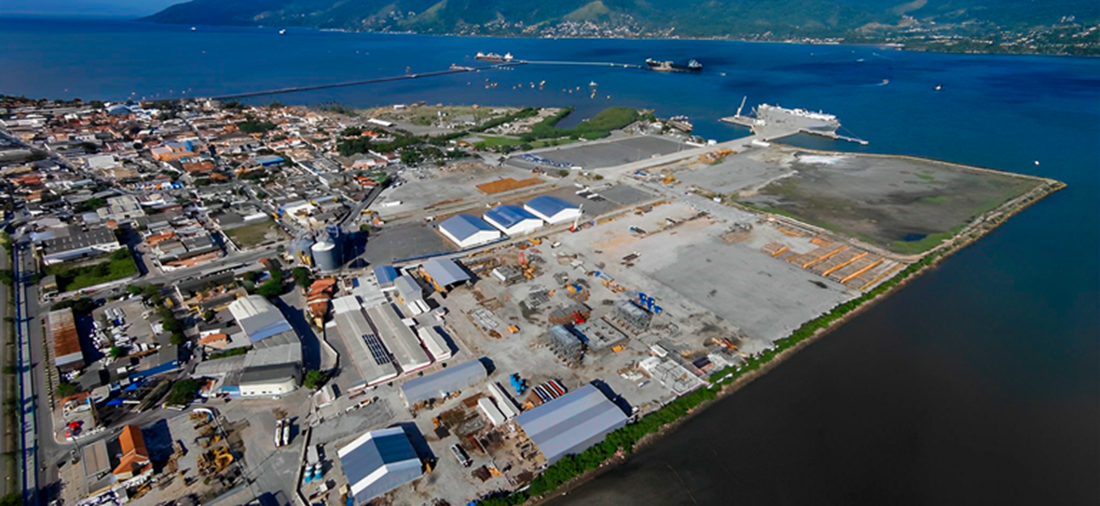
The Port of São Sebastião, managed by the São Sebastião Dock Company (CDSS) and linked to the Secretariat for Environment, Infrastructure and Logistics of the State of São Paulo (Semil), is preparing for one of the most significant interventions in its recent history: the maintenance dredging of its main berthing area.
With one of the deepest drafts in Brazil—up to 25 meters in its access channel—the Port of São Sebastião is a vital logistics corridor along the coast of São Paulo. However, due to its proximity to the shoreline, the berthing area suffers from natural silting caused by rain, currents, and winds, which require periodic dredging. The last operation occurred in 2022, and recent studies indicate an average sedimentation rate of approximately 26,000 cubic meters per year.
The project aims to remove sediment accumulated at the bottom of the turning basin and Berth 101, restoring a minimum depth of 10 meters and ensuring greater safety for operations. A total of 34,588.37 cubic meters of material—equivalent to more than 2,000 truckloads of sand, silt, and rock—will be removed, restoring the port’s full cargo handling capacity.
The dredging is expected to begin in June this year. The Dock Company has already contracted the company responsible for executing the work and a specialized firm to conduct environmental monitoring of the area. All required documents have been submitted to the Brazilian Institute of Environment and Renewable Natural Resources (Ibama), and the work is now awaiting final authorization from the agency. “This dredging is strategic not only for the safe operation of the port but also for maintaining São Paulo’s logistics efficiency and competitiveness. It is a project with a direct impact on regional development,” said Ernesto Sampaio, CEO of the Port of São Sebastião.
The dredging is expected to last five months, with 45 days dedicated to sediment removal. Two specialized vessels will be used: a hopper dredger, which suctions and transports the material to the disposal site, and a cutter suction dredger equipped with a disaggregating system.
All procedures strictly follow the guidelines of CONAMA Resolution No. 454/2012 and have been approved by Ibama. Environmental monitoring will be carried out before, during, and after the operation to ensure no adverse impacts on the local ecosystem.
One of the main areas of attention is the Araçá Bay, a mangrove zone that will be continuously monitored. Activities will be immediately suspended if there is any risk of sediment dispersion. In addition, beach profile studies and coastal circulation analyses will be conducted to identify and mitigate potential environmental impacts.
A Growing Port
The announcement of the dredging comes at a time of strong growth for the Port of São Sebastião. In 2024, for example, the terminal recorded a record throughput of 1.5 million tons — a 48% increase compared to 2023. Key commodities handled include sugar, malt, barley, soda ash, coke, and glass silicate.
-
Ports and Terminals
Dec, 15, 2023
0
Luis Correia Port Inaugurated After 50-Year Wait, Aims to Double Piauí’s GDP
-
Meat
Apr, 27, 2026
0
USDA projects global beef exports will rise in 2026
-
Ports and Terminals
Jul, 13, 2022
0
Itapoá acquires gondola-model lashing cage for portainers
-
Oil and Gas
Dec, 08, 2023
0
OceanPact signs contract with Petrobras for three-year FPSO mooring inspections