

Renovation Projects for the São Francisco and Parnaíba Waterways to Expand Sustainable Logistics in Northeastern Brazil
Jun, 03, 2026 Posted by Sylvia SchandertWeek 202623
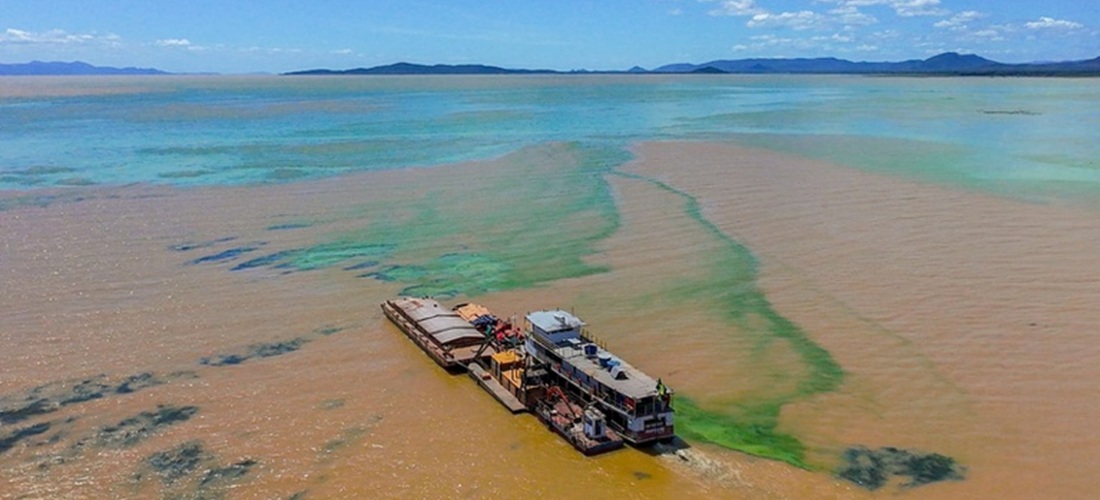
Essential to strengthening Brazil’s logistics network, the São Francisco and Parnaíba waterways are undergoing revitalization projects that are expected to enhance the competitiveness of Brazil’s Northeast region. In addition to helping diversify the country’s transportation matrix, the initiatives aim to reduce logistics costs and promote sustainable regional development through these two inland waterways once the projects are completed.
Stretching approximately 2,800 kilometers, the reactivation of the São Francisco River as a logistics corridor is considered one of the country’s most important initiatives to improve integration between Southeastern and Northeastern Brazil.
“The São Francisco Waterway is the most economical, efficient, and sustainable route linking Brazil’s Center-South and Northeast regions. The resumption of its operations will enable the economic integration of 505 municipalities across the states of Alagoas, Bahia, Minas Gerais, Pernambuco, and Sergipe, strengthening cargo flows and benefiting more than 11.4 million people,” explains Antonio Gobbo, President of the Federal Port Authority – CODEBA.
CODEBA’s São Francisco Waterway reactivation project involves several stages, including technical studies, vessel documentation procedures with the relevant authorities, navigation planning, attracting investment in waterway infrastructure, and identifying new business opportunities.
The New São Francisco Waterway project envisions the reactivation of commercial navigation along 1,371 kilometers of navigable waterways between Pirapora (Minas Gerais) and Juazeiro (Bahia)/Petrolina (Pernambuco). Under CODEBA’s coordination, the waterway is expected to handle up to 5 million tonnes of cargo in its first year of operation.
Economic modeling studies currently underway involve the participation of the National Waterway Transportation Agency (ANTAQ) and the Brazilian Navy. The initiative seeks to establish a more efficient and environmentally sustainable transportation model. A single waterway convoy, for example, can replace up to 163 trucks on highways, significantly reducing costs, emissions, and congestion.
The project also includes integrating the waterway with rail, road, and port networks, connecting it to the Centro-Atlântica Railway (FCA), the West-East Integration Railway (FIOL), and the Port of Aratu (Bahia). This integration will improve logistics efficiency for the transport of agricultural inputs, grains, minerals, gypsum, limestone, beverages, and salt.
“The New São Francisco Waterway represents a major step forward for Brazil’s logistics sector, promoting cleaner, more efficient, and more competitive transportation while increasing cargo movement among Northeastern states,” said Otto Luiz Burlier, National Secretary for Waterways and Navigation at the Ministry of Ports and Airports.
Parnaíba Waterway
With a total length of 1,344 kilometers, the Parnaíba Waterway encompasses the Parnaíba and Balsas rivers, crossing the states of Maranhão, Piauí, and Ceará and serving 54 municipalities. The route is part of strategic logistics corridors and has significant potential to support the transportation of agricultural production from MATOPIBA (Maranhão, Tocantins, Piauí, and Bahia), one of Brazil’s most important agricultural frontiers.
In May 2025, the Federal Government delegated management of the waterway to the State of Piauí, marking the first such transfer in Brazil’s history. The measure will enable the restoration of navigability and the modernization of waterway infrastructure under the coordination of Porto Piauí.
According to current studies and preparatory work, once fully operational, the waterway will allow vessels to transport up to 2,100 tonnes of grain per voyage, equivalent to approximately 50 double-trailer trucks.
The expectation is that within three years of the start of operations, the waterway will handle between 4 and 5 million tonnes of grain annually. In addition to reducing dependence on road transportation, the project will strengthen logistical integration with Porto Piauí, generate jobs, attract investment, and enhance the competitiveness of regional production.
“These actions allow navigation to take place continuously, strengthening strategic freight routes and improving safety for waterway users,” concluded Secretary Otto Luiz Burlier.
Source: CODEBA
-
Blog News (ENG)
Feb, 28, 2024
0
Port of Salvador shows steady growth in Bahia state throughput in ten years
-
Ports and Terminals
Mar, 16, 2022
0
Lockdown has damaging effects on cargo freight in China
-
Ports and Terminals
Mar, 19, 2024
0
Port of Cabedelo warms up to export Fiat, Jeep and RAM vehicles
-
Meat
Aug, 26, 2021
0
Brazil shipped 15% more beef to the Arab countries this year