


Road-rail rivals to Panama Canal face mounting costs, other headwinds
Feb, 10, 2026 Posted by Sylvia SchandertWeek 202607
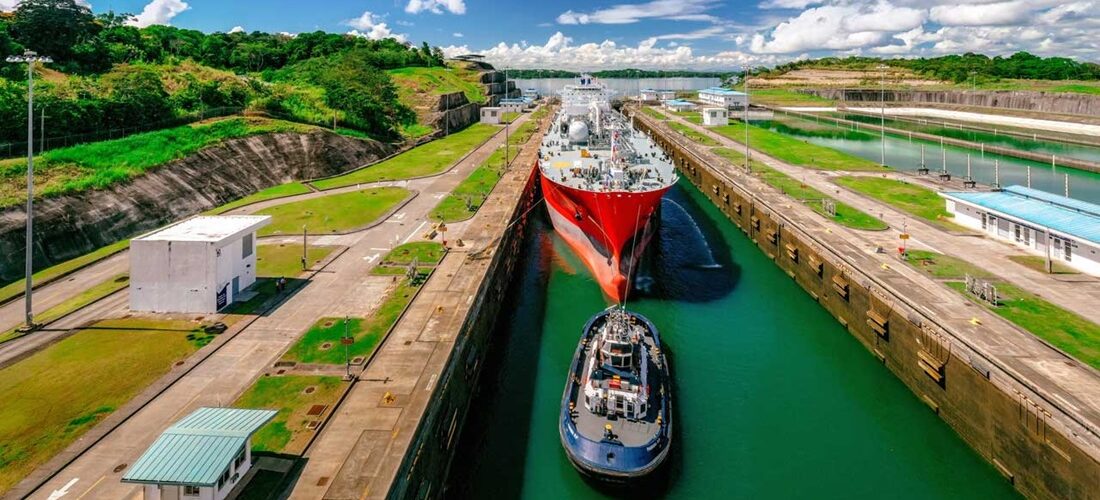
Several projects in Latin America aimed at establishing land routes connecting the Pacific and Atlantic oceans are facing significant headwinds, while the dominance of the Panama Canal — which handles around 5% of global maritime logistics — is likely to continue.
In recent years, a number of Latin American countries have launched large-scale logistics network plans as alternatives to the Panama Canal. Only one — Mexico’s Interoceanic Corridor of the Isthmus of Tehuantepec (CIIT) — has entered operation, but railway services have been suspended since a fatal derailment in December.
Mexican President Claudia Sheinbaum said on February 2 that CIIT operations will not resume until authorities confirm that all safety requirements have been met. The accident killed 14 people. Federal authorities are investigating the train driver and operations managers, suspecting excessive speed as a contributing factor.
The corridor was partially opened in December 2023, connecting the Pacific port of Salina Cruz with the Atlantic port of Coatzacoalcos. The network had been gradually expanding and, in March 2025, transported Hyundai Motor automobiles across the isthmus for the first time.
Efforts to develop trans-isthmus projects stem from chronic congestion at the Panama Canal. In 2023 and 2024, shortages of freshwater used to raise and lower canal water levels caused long waiting times for large container ships. Other countries are seeking to position themselves as alternatives, emphasizing speed and cost efficiency.
Honduras’s “dry canal” concept involves a network combining road transport, railways and logistics centers to integrate land and maritime transportation. The total cost of the project is estimated at $18 billion. Construction by Honduras alone — one of the poorest countries in Central America — was considered unrealistic from the outset.
A national highway intended to be part of the project — linking the capital Tegucigalpa with the country’s second-largest city, San Pedro Sula — operates under constant pressure from heavy truck traffic.
Honduras’s strategy envisioned the construction of eight-lane highways and the use of the Atlantic port of Puerto Cortés, the largest container port in Central America. However, there has been little momentum to build infrastructure beyond roads.
Mario Sosa, a professor at the Metropolitan University of Honduras, says that if the country is serious about building the dry canal, it has no option but to rely on China.
Honduras’s diplomacy, however, appears to be moving in the opposite direction. President Nasry Asfura, who took office at the end of January, has announced a return to a pro-United States stance.
Former President Xiomara Castro’s pro-China policy, which involved cutting diplomatic ties with Taiwan and establishing relations with Beijing, failed to deliver significant results. China showed little willingness to import Honduran products, including shrimp, one of the country’s main exports. Public disappointment helped fuel a change of government toward a pro-U.S., right-wing administration.
Sosa also notes that China has lost interest in Nicaragua’s interoceanic canal project, which once appeared close to realization but is now effectively frozen.
In 2013, the Nicaraguan government granted a Hong Kong-based company the right to build and operate a canal and even held a groundbreaking ceremony.
However, crossing the country would require a canal of up to 450 kilometers in length, compared with the Panama Canal’s roughly 80 kilometers. Financing difficulties, with construction costs estimated between $50 billion and $100 billion, are believed to have led companies to abandon the project.
The construction of the Panama Canal in the early 20th century by the United States, after taking over the project from France, took about 10 years. Including the period under French control, an estimated nearly 30,000 workers died from infectious diseases such as yellow fever and malaria, as well as from harsh working conditions.
Building a new canal in modern times with such a human cost is unthinkable. As proposed projects in Guatemala, Costa Rica and Nicaragua have emerged only to sink under the weight of their costs, the Panama Canal has steadily consolidated its lead and laid the groundwork for the future.
Last year, the Panama Canal Authority announced plans to build a pipeline for transporting liquefied petroleum gas, with investments ranging from $4 billion to $8 billion. It is also strengthening its competitiveness through the construction of new port terminals and large-scale reservoirs.
Source: Nikkei Asia
-
Grains
Feb, 16, 2022
0
Argentine agro-exports increase 27% in 2021
-
Trade Regulations
Jul, 16, 2021
0
Bill suspends resolution cutting import tax on capital goods and telecommunications
-
Meat
Aug, 23, 2021
0
Japan opens market for poultry genetic material from Brazil
-
Ports and Terminals
May, 13, 2025
0
Cargo Throughput at Itajaí Port Rises 11%, Reaching 4.8 Million Tonnes in 2025