


Santos Brasil launches operations with new liquid bulk pier lines at Port of Itaqui
Feb, 13, 2026 Posted by Gabriel MalheirosWeek 202608
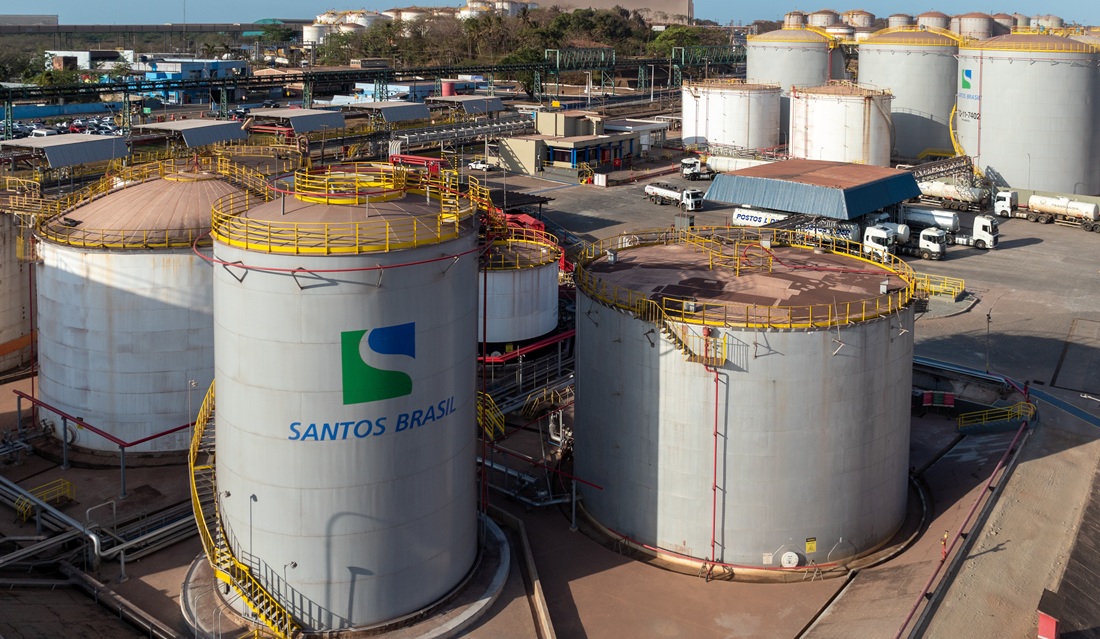
Santos Brasil has completed its first large-scale operation using the new liquid bulk pier lines it built at the Port of Itaqui, in Maranhão state. The terminal discharged 20,000 cubic meters of diesel at an average rate of 585 cubic meters per hour.
The operation, carried out after authorization from Maranhão’s port authority EMAP, was executed in line with international operational and safety standards, the company said.
The three new 14-inch-diameter lines enable high-flow loading and unloading, while eliminating previous line conflicts, reducing overall turnaround time and lowering demurrage costs for customers.
Carlos Quintero, Santos Brasil’s director of liquid bulk, said the new infrastructure increases productivity at the port. “Higher flow rates translate into shorter berth times and lower costs for clients, making the Port of Itaqui more competitive for this type of cargo and opening up new business opportunities,” he said.
In December, Santos Brasil received authorization from oil and gas regulator ANP to operate at the full capacity of its liquid bulk terminal at Itaqui following the completion of expansion works. The company also secured approval for the new pier lines late last year.
Santos Brasil is licensed by Brazil’s Federal Revenue Service to operate as a bonded warehouse for the import and export of liquid bulk at Itaqui, where it now has around 200,000 cubic meters of storage capacity, backed by investments exceeding 850 million reais.
The company entered the liquid bulk segment in 2021 after acquiring, through a B3 auction, three terminals at Itaqui — two brownfield sites that were expanded and one greenfield terminal built from scratch and completed in November 2025. The facilities have since been unified. Operations began in 2022 with 54,000 cubic meters of capacity and have expanded steadily.
Itaqui serves as a key distribution hub for petroleum derivatives to Brazil’s Northeast, North and Midwest regions, with strong growth potential linked to agribusiness. The port benefits from rail connections that position it as a strategic logistics corridor for central Brazil and northern markets. Santos Brasil’s liquid bulk terminals are bonded and connected to road, rail, pipeline and maritime transport. Itaqui can accommodate vessels of up to 155,000 tonnes.
Source: Santos Brasil
-
Ports and Terminals
Jul, 03, 2023
0
Environmentalists want to end decree that permits acid storage terminal creation in Alagoas
-
Blog News (ENG)
Aug, 31, 2022
0
Brazilian imports via containers soar in July
-
Other Logistics
Jun, 16, 2023
0
Brazil’s North-South Railroad launch rescheduled as bad weather calls off presidential visit
-
Jan, 20, 2021
0
Brazilian orange juice exports fell 23.5% in 2nd semester of 2020