



Brazil Seizes Over 17 Tonnes of Shark Fins at Port of Itapoá
Oct, 29, 2026 Posted by Gabriel MalheirosWeek 202644
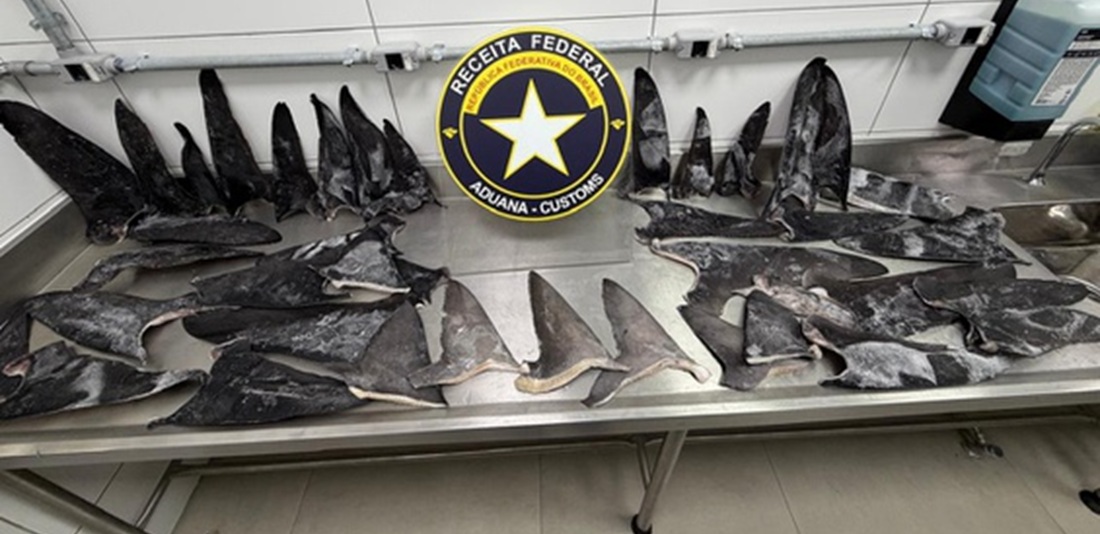
Brazilian customs officers seized more than 17 tonnes of shark fins at the Port of Itapoá, on the northern coast of Santa Catarina state, on Tuesday morning, Oct. 27.
The shipment had been officially declared as “frozen sardines,” with the shark fins concealed in woven polypropylene bags bearing the same description in an attempt to evade customs inspections.
The cargo was bound for Malaysia and was intercepted following intelligence gathering and customs monitoring by Brazil’s Federal Revenue Service.
During the inspection, customs officers confirmed that the cargo had been falsely declared.
According to Gilberto Tragancin, head of the agency’s Port Enforcement Team for Paraná and Santa Catarina, the initial estimate was that more than 17,000 sharks had been killed to produce that quantity of fins.
“Shark fins are considered a delicacy in Asian countries, where buyers pay extremely high prices for them, reaching as much as $3,000 per kilogram,” Tragancin said.
Shark Finning Is Prohibited in Brazil
According to the Brazilian Institute of Environment and Renewable Natural Resources (Ibama), shark fishing is permitted in Brazil, subject to a series of restrictions. However, shark finning—the practice of removing sharks’ fins and discarding their bodies at sea—is prohibited.
In a 2023 interview with g1, Ibama environmental analyst Leandro Aranha explained that shark fins command high prices in East Asian markets. According to Aranha, the delicacy is particularly associated with wealthier social groups, where its consumption is regarded as a status symbol. The fins are commonly used in soups.
Brazil’s Federal Revenue Service said the seized material would be referred to Ibama, which is responsible for conducting a technical assessment of the cargo and taking any necessary enforcement measures.
Source: G1
-
Economy
Nov, 03, 2022
0
Brazil trade balance stays positive at USD 3.9 bln in Oct, says gov’t
-
Automotive
Mar, 06, 2025
0
Trump grants one-month exemption for US automakers from new tariffs on imports from Mexico, Canada
-
Other Logistics
Nov, 07, 2022
0
Rumo gives green light to construction of new railway in Mato Grosso state
-
Other Logistics
Nov, 11, 2024
0
Brado records historic milestone of 10.7 thousand containers in the month