


TCP and Brado inaugurate new rail line at Paranaguá container terminal
Sep, 03, 2026 Posted by Gabriel MalheirosWeek 202636
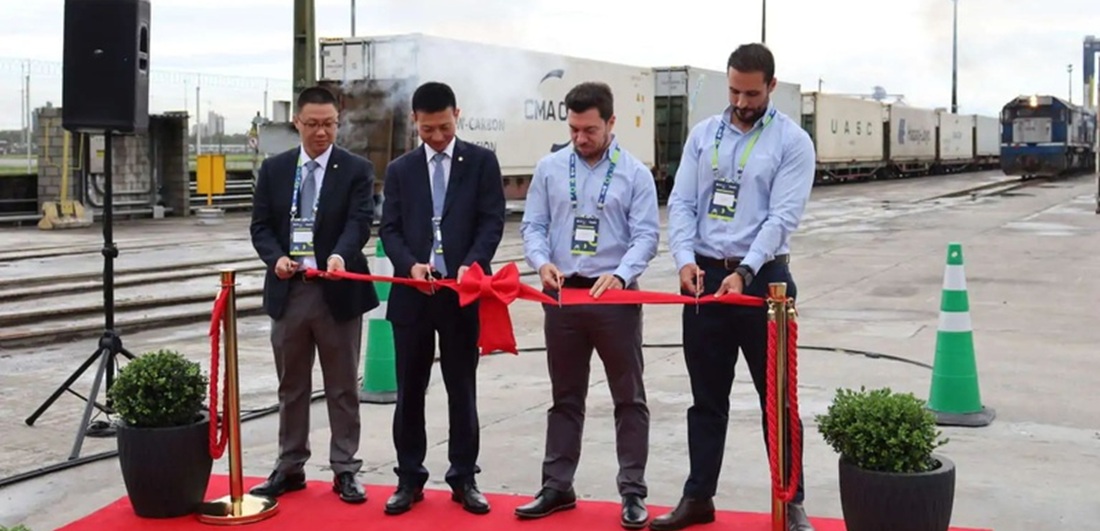
The Paranaguá Container Terminal and Brado Logística inaugurated a third rail line serving the terminal on Tuesday, September 1, in a move expected to increase Paranaguá container terminal rail capacity.
The new infrastructure expands Brado and TCP’s operating capacity inside the terminal yard and is expected to raise cargo movement by rail by about 20% by 2027.
The ceremony marked the completion of an investment stage aimed at strengthening rail connectivity at the terminal. It brought together representatives from several parts of Brazil’s foreign trade chain, including executives from TCP, Brado, Paraná state industry federation Fiep, rail operator Rumo and terminal customers.
For Brado Logística CEO Luciano Johnsson, the investment is especially relevant given Paraná’s role in producing and exporting agribusiness and industrial goods that supply both Brazilian and international markets.
“Paraná has an increasingly important role in foreign trade. When we expand rail capacity in Paranaguá, we are strengthening a strategic connection between producing regions, industry and the port. This is infrastructure that matches the scale of Paraná’s production and helps make the route between the countryside and the port more efficient,” he said.
New line changes train-handling dynamics
The new structure adds 757 meters of track and expands the maneuvering area inside the terminal, changing how trains are handled.
Previously, the yard operated with two rail lines. While one train arrived, another left the area, and loading and unloading took place in batches of 41 containers because the 82 railcars arriving at the terminal had to be split into two groups to cross the level crossing.
That setup required two interruptions for the full train to pass, affecting both rail operations and vehicles moving along the road.
With the third line, two trains will be able to remain in operation simultaneously while a third exits the area, improving operational flow and increasing yard-handling capacity.
The rail expansion is significant given Brado’s role in moving cargo through the terminal. In 2025, of the 326,300 full containers exported through TCP, around 52,000 were transported by Brado, equivalent to 16% of shipments.
TCP Commercial Manager Fabio Mattos said the increase in the number of rail lines serving the terminal will play an important role in the region’s economic development.
“TCP brought forward investments in new trucks and cranes to absorb the increase in cargo movement with the completion of the rail expansion. Rail already forms part of the logistics chain of major industries in the state, and with this new structure, the terminal expects to drive a new cycle of growth and regional development, offering exporters greater capacity and efficiency,” he said.
Rail corridor supports Paraná’s export chains
The impact of the new structure is also tied to the profile of Paraná’s economy. The state is Brazil’s leading chicken producer, with nearly 35% of the national market, and ranks second in pork production.
The strength of the animal protein industry creates steady demand for logistics solutions able to connect industrial and production hubs to port terminals with scale and reliability.
At Brado, chicken products account for 24% of the company’s transport operations, reinforcing the importance of rail infrastructure for supply chains that depend on logistics efficiency and access to international markets.
The rail corridor served by the operation reaches areas such as Cascavel and Cambé, important hubs for animal protein production and exports, as well as Ortigueira, a major pulp and paper production center.
The connection links different producing regions to the Port of Paranaguá and expands transport alternatives for export cargo.
For Johnsson, the new line also represents an evolution in how Brado uses available rail infrastructure to meet customer demand.
“We have a long-term view of our business, and that means paying attention not only to the volumes we move today, but also to the changes taking place in foreign trade and among the customers we serve,” he said.
“Brado wants to remain a company that anticipates these changes and turns market knowledge into concrete investment decisions. That perspective guides our work and supports the company’s next steps,” Johnsson added.
The increase in Paranaguá container terminal rail capacity strengthens one of southern Brazil’s key export gateways, improving the connection between inland production centers and maritime routes serving global markets.
-
Other Logistics
Feb, 07, 2025
0
Datamar Conference Centers on Extracting Data Value
-
Economy
Apr, 12, 2022
0
WTO downgrades its 2023 economic forecast and warns about China
-
Ports and Terminals
Jan, 13, 2026
0
Port of Posadas plans capacity expansion and aims to attract new shipping lines
-
Shipping
Nov, 30, 2020
0
CMA CGM extends surcharge date for reefer cargo to India, Persian Gulf, and Red Sea