


“The Opportunity to Make a Difference”: Claudio Oliveira Charts the Future of BTP and the Port of Santos
May, 06, 2025 Posted by Denise VileraWeek 202519
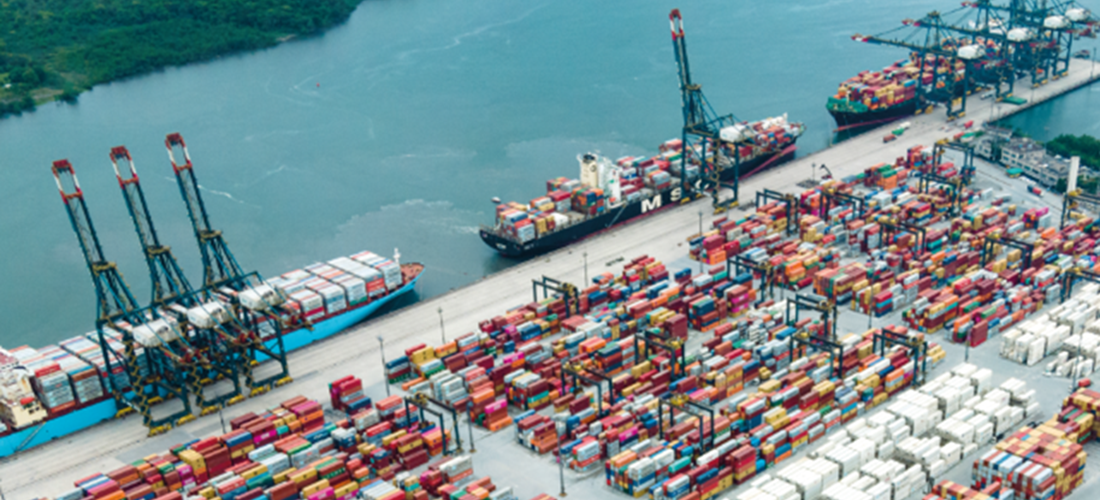
New CEO of Brasil Terminal Portuário discusses his career in the sector, the challenges of operating in Santos, sustainability goals, and the port’s role in the city’s development.
“When I arrived, BTP had only been operating for a year and three months. There was still a lot to be done. The company was developing,” says Claudio.
Claudio Oliveira took over as CEO of Brasil Terminal Portuário (BTP) at the Port of Santos in February of this year, following a solid career at the company, where he spent ten years as Director of Commercial and Marketing. He also held roles in communications, corporate marketing, and institutional relations.
At 59 years old, with more than 40 years of experience in the port sector—starting at age 18 as a ship visitor—Oliveira has worked for renowned international companies such as Sealand and Hapag-Lloyd and spent over a decade abroad with experience in Miami, USA, and Costa Rica.
Born in Santos, he holds a degree in Business Administration, an MBA in Business Management from Fundação Getúlio Vargas (FGV), and certification as a Board Member from the Brazilian Institute of Corporate Governance (IBGC). In the following interview, he talks about his professional journey, BTP’s challenges, investments in innovation and sustainability, and the future of the Port of Santos.
You started working very young. What was the beginning of your career like?
I started at 13 after insisting a lot on my father letting me work. He was reluctant, but I convinced him. My first job was at a traditional English school in Santos. I worked part-time, helping in the course department, distributing materials to teachers, and doing other tasks. Thanks to that job, I had the opportunity to study English there.
And how did English lead you to the port sector?
I was 18 and had just enrolled in a Physical Education degree, which shows how life takes you in different directions. Classes began in February, and by April, I was invited to be a ship visitor at an agency simply because I knew English. That opened the doors to the shipping industry.
I started as a telex operator, then got my credential to access the pier. I became a ship visitor and moved into operations, commercial, marketing, and business development. I always say I have nothing but gratitude. The opportunity to work across different areas gave me a strong foundation to grow in my career.
You also had international experience. What was that like?
In 2003, I was transferred to Costa Rica while working at CP Ships as Director of Services for Central America. I spent three and a half years there. Then, I returned to Brazil and was invited by a company to open an office and warehouse in Miami (USA) as a freight forwarder. I stayed there for seven and a half years before returning to BTP in 2015.
“Everyone at BTP is in sales—from the receptionist to the crane operator. Everyone helps sell the company’s image,” he says.
What motivated you to stay at BTP and now lead the company?
The opportunity to make a difference. When I joined, BTP had only been operating for a year and three months. There was a lot to do. The company was still growing, and I was able to contribute a bit of “Claudio” to its development.
What are your main goals as CEO of BTP?
The most important thing is to maintain our positive environment and value people because they drive everything. We must focus on the human side, on development and training. BTP has partnerships with universities and training companies to offer opportunities to our staff continually. This benefits not just the company but also the careers of the professionals themselves.
In your view, how has the port sector changed over the years?
Technology has made a huge impact. When I started, everything was on paper. Today, we have modern equipment, and productivity has increased across all sectors—not just containers. And professionals have had to evolve to keep up with this transformation.
How can the relationship between the port and the city be strengthened?
We need to change the city’s perception of the port. People still associate the port with dirt, chaos, and smuggling—just bad things. But that’s not true. It’s a very promising job market for the new generation. We have five or six universities in Santos, and we’re training professionals to be exported to other cities. Our slogan is “innovate and believe.” We strongly believe in innovation, and with technology becoming more present, we’ll need qualified professionals.
How can we change the public’s perception?
By participating actively. BTP was born with this DNA. When we decided to build a world-class terminal in an area that was heavily contaminated, we also took on the responsibility of regional development—starting with environmental remediation and building a modern terminal that now employs 1,800 people directly and about 5,000 indirectly.
Then came our social projects and corporate responsibility. Today, we support 22 social initiatives focused on education, health, culture, and sports. In partnership with the city, we built the Vila Gilda Clinic and the Rádio Clube Community Center. We’re also going to revitalize Warehouse 3 in the Valongo Park. BTP doesn’t do social work for recognition—it’s about the satisfaction of contributing to regional development.
What is BTP doing in terms of sustainability and innovation?
We have an ambitious goal to be carbon neutral by 2030. We’re replacing all our RTGs (rubber-tired gantry cranes) with electric models. We’re also switching our internal vehicles to electric and will fully automate all entry gates. Our new equipment will have remote operation capabilities. We were the first terminal in Brazil with an in-house 5G network.
What is BTP’s capacity?
Our current operational capacity is 1.5 million TEUs (twenty-foot equivalent units), about 70–80% of our total capacity of 2 million TEUs. But we’ve been operating at 1.9 million for the past three years—under strain and risking efficiency loss. That’s why we’re pushing for more capacity at the Port of Santos.
And it’s not just about BTP, which likely won’t even bid in the Tecon Santos 10 auction. But Santos needs more capacity—or it will collapse by 2027 at the latest. BTP is investing R$2 billion in capacity expansion to help address this.
We’re running late…
Very late. We need long-term planning. We can’t keep changing plans every four years when the government changes. And it’s not just about terminal capacity—it’s about road, rail, and waterway access too.
BTP has a strong customer service culture. How does that work?
Our philosophy is that everyone at BTP is in sales—from the receptionist to the crane operator—everyone helps to sell the company’s image.
What’s your message to someone who wants to enter the port industry today?
First, you have to want it. Don’t let anyone tell you that you can’t do something. You can do anything—but no one will do it for you. The port industry has a lot to teach, but your growth depends on your willingness. The opportunity will be there—go for it.
Source: A Tribuna
-
Other Logistics
Dec, 04, 2025
0
Brado opens Brazil’s largest rail route, boosting domestic market
-
Meat
Jan, 27, 2023
0
Brazil gains 5 new authorizations to export animal rendering products
-
Ports and Terminals
May, 21, 2024
0
Port of Buenos Aires at Risk of Losing Market to Uruguay and Brazil Due to Lack of Investment
-
Apr, 06, 2023
0
European and Brazilian police bust cocaine ring involving Bolivia, Paraguay, Brazil ports