


U.S. advances trade investigation that could lead to new sanctions against Brazil
Apr, 02, 2026 Posted by Gabriel MalheirosWeek 202614
The U.S. administration has told officials in President Luiz Inácio Lula da Silva’s government that it is nearing the final stages of its main trade investigation opened against Brazil last year, which could lead to further sanctions.
The next step is the consultation process that the U.S. Trade Representative (USTR), must complete before publishing the results of its investigation into trade practices Washington considers unfair. The outcome could lead to penalties against Brazil, including the imposition of new tariffs.
At this stage, a delegation from Lula’s government is expected to be invited to Washington to be briefed on the USTR’s preliminary conclusions. According to three people following the matter who spoke to Folha, that is expected to happen between April and May.
Holding the consultations during that period would clear the way for the USTR to publish its final findings by July.
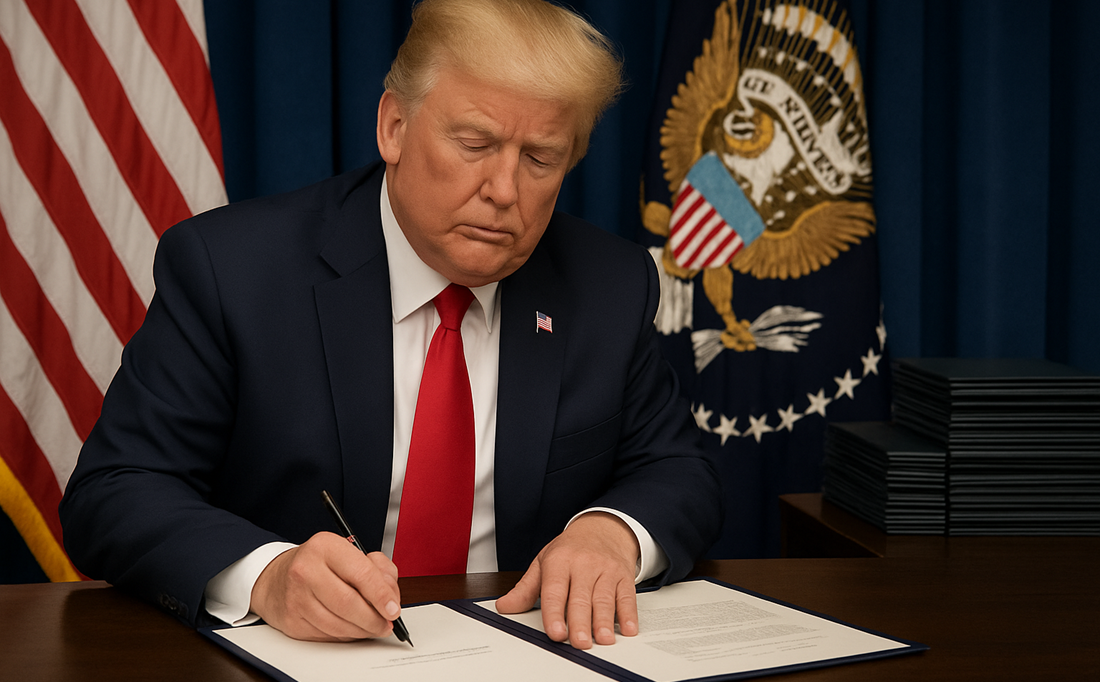
The investigation, based on Section 301 of the Trade Act of 1974, was opened by the USTR in July 2025 as one of the measures announced by Trump in response to what the Republican described as a “witch hunt” against former President Jair Bolsonaro.
The U.S. government included several fronts in the probe: digital trade and electronic payment services; “unfair or preferential” tariffs; anti-corruption laws; intellectual property protection; access to the ethanol market; and illegal deforestation.
The targets range from longstanding U.S. complaints, such as Brazilian tariffs on ethanol imports, to Pix, Brazil’s instant payment system. U.S. credit card companies argue that Brazil’s central bank gives Pix preferential treatment, a claim Lula’s government denies.
As Folha reported at the time, the U.S. investigation has the potential to inflict additional damage to Brazil, beyond the tariff hikes imposed by Trump last year, and carries the risk of sanctions that would be difficult to reverse.
Also under the justification of alleged political persecution against Bolsonaro, Brazil was hit by Trump’s tariff wave, which raised surcharges to as much as 50% on a range of products.
Inflationary effects in the United States and the gradual rapprochement between the Lula and Trump administrations, which culminated in two meetings between the presidents in late 2025, led to an expansion of exemptions from those tariff hikes.
In addition, in February the U.S. Supreme Court ruled that the use of the International Emergency Economic Powers Act, or IEEPA, to justify broad tariffs against U.S. trading partners was unlawful, further easing pressure on Brazil.
Any sanctions based on Section 301, however, could renew Washington’s pressure on Lula’s government.
According to specialists cited in the report, such measures rest on firmer legal ground in the United States and would be much harder to challenge in court than the tariff hikes imposed earlier.
In theory, the United States could adopt different kinds of penalties, both tariff and non-tariff, if the USTR concludes that Brazil maintains unfair trade practices.
In a recent investigation involving China, for example, the United States imposed surcharges on products from the Asian country. In a separate Section 301 investigation, the USTR also recommended measures to restrict Chinese investment in sensitive sectors of the U.S. economy.
Beyond the investigation opened in 2025, Brazil has also come under scrutiny in another USTR action launched this year to assess whether products made with forced labor are entering the U.S. market.
That process covers practices in about 60 countries and was launched a few weeks after the Supreme Court decision that struck down Trump’s broad tariff measures. According to specialists, the U.S. objective is to target trade links between partners and China.
The Trump administration’s plan is for this second investigation to move on an accelerated timetable, with the USTR’s conclusions published in a shorter period than the traditional timeframe of about one year.
Source: Folha de S. Paulo
-
Ports and Terminals
Mar, 21, 2025
0
Port of Itaqui Conducts Strategic Operation with Cargo from ENEVA’s First Proprietary Drilling Rig
-
Ports and Terminals
Aug, 09, 2021
0
Portos RS and UFRGS sign a contract for the environmental monitoring of the Port of Porto Alegre
-
Ports and Terminals
Oct, 23, 2019
0
Container handling at the Port of Itajaí grows 33% in September
-
Grains
Jul, 16, 2024
0
Port of Paranaguá breaks solid bulk operations record