

U.S. eyes Brazil’s niobium and rare earths in possible trade deal
Jul, 25, 2025 Posted by Lucas LorimerWeek 202531
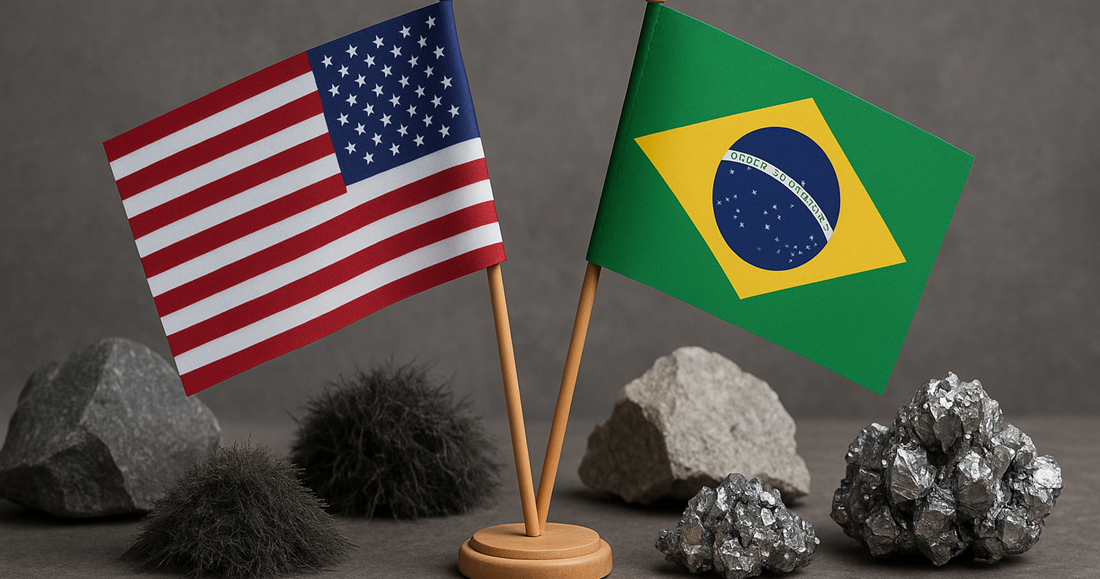
One week before the scheduled implementation of tariffs of up to 50% on Brazilian products—set to take effect on August 1—the United States has begun signaling interest in a trade agreement with Brazil focused on access to critical and strategic minerals, including niobium and rare earth elements. Gabriel Escobar raised the topic, chargé d’affaires at the U.S. Embassy in Brasília and currently the highest-ranking American diplomat in the country, during a meeting with representatives from the mining sector this week.
See below the top ten products exported by Brazil to the United States via containers in 2025 that will be directly impacted by the tariffs imposed by the U.S. government:
Top 10 Products Exported by Brazil to the United States via Containers | May 2025 | TEU
Source: DataLiner (Click here to request a demo)
Rare earth elements are a group of 17 chemical elements used in advanced technologies, including permanent magnets for electric motors, wind turbines, batteries, smartphones, and military equipment. Niobium, of which Brazil accounts for more than 90% of global production, is primarily used to strengthen metal alloys in the aerospace, automotive, and construction sectors.
The proposal is seen as a potential pathway to open negotiations that could prevent an escalation of the ongoing tariff dispute. According to people who attended the meeting, Escobar suggested that Brazil is strategically positioned to become a key supplier of these essential materials for the energy transition and tech industries. President Lula responded by stating that “no one lays a hand” on the country’s natural resources.
In addition to niobium, Brazil holds the world’s largest graphite reserves, the second-largest rare earth reserves, and the third-largest nickel reserves. This mineral potential has drawn the attention of the United States, which is seeking to reduce its dependency on China in these supply chains.
The idea of a bilateral agreement began to take shape in June, when AmCham Brasil (the American Chamber of Commerce in Brazil) and the U.S. Chamber of Commerce presented a cooperation plan to the two governments. The document outlines five areas of focus: strategic action planning, geological mapping, project financing, technological development, and sustainability and community engagement.
The plan draws on estimates from the International Energy Agency (IEA), which forecasts that demand for lithium will grow fivefold by 2040. Demand for graphite and nickel is expected to double, while demand for cobalt and rare earth elements is projected to rise between 50% and 60%. Copper demand is also expected to grow by 30%, driven primarily by the expansion of electric mobility and energy storage systems.
Source: Veja
-
Steel and Aluminium
Aug, 22, 2023
0
Steelmakers lobby in Brasilia for measures against imports
-
Coffee
Apr, 25, 2022
0
Coffee: USDA estimates a 5% increase in imports from China in 2021/22
-
Shipping
Sep, 26, 2025
0
CMA CGM renews Green Marine Europe environmental certification in 2025
-
Jan, 19, 2022
0
Ceará, the country’s third largest fruit exporter, sells US$ 178 million in 2021.