



Uruguay Offers Port of Nueva Palmira as Alternative Atlantic Export Route for Bolivia
Nov, 12, 2026 Posted by Gabriel MalheirosWeek 202646
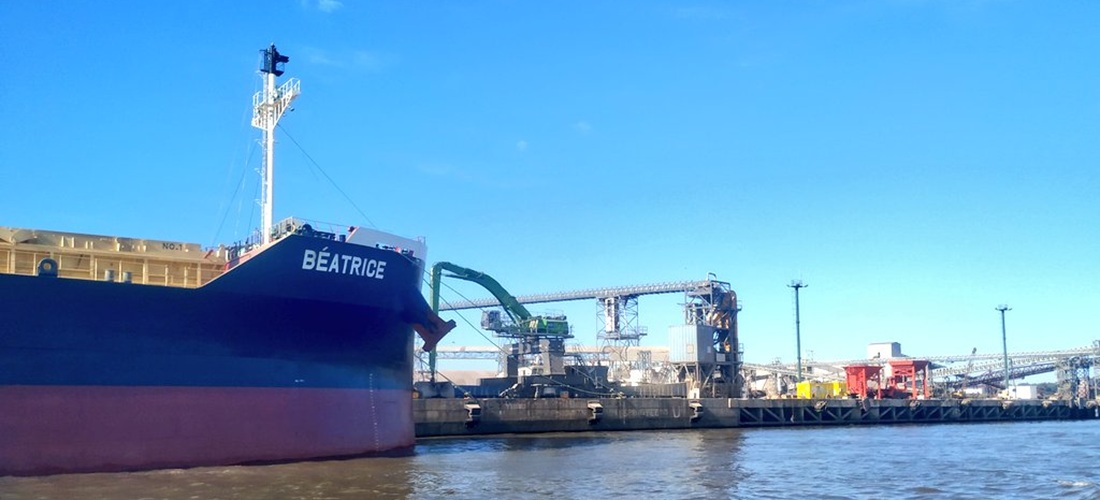
Bolivia could gain a new alternative for shipping its products to international markets through the Port of Nueva Palmira in Uruguay, strategically located along the Paraguay–Paraná Waterway and offering access to the Atlantic Ocean.
The proposal was presented by a Uruguayan delegation to business leaders in Santa Cruz de la Sierra and representatives of the Chamber of Exporters, Logistics and Investment Promotion (CADEX). It aims to attract Bolivian cargo through preferential tariffs, storage infrastructure and customs benefits that could improve the country’s foreign trade competitiveness.
The initiative is particularly relevant for Bolivia, a landlocked country that depends on efficient logistics connections to transport agricultural and industrial products, raw materials and other goods. In this context, Nueva Palmira offers an alternative for diversifying export routes and facilitating access to ocean-going vessels. According to Nicolás Suárez, captain of the Uruguayan port, the goal is to turn the logistical advantages offered by existing infrastructure into actual commercial operations with Bolivian exporters.
One of the proposal’s main attractions is the existence of a designated area for Bolivia within the Port of Nueva Palmira, reserved for storing Bolivian goods in transit. The facility would allow exporters to consolidate cargo before transferring it to larger vessels, organize inventories and plan shipments to different international markets.
Suárez explained that Paraguay also has a similar designated area at the port and emphasized the need to restore and expand the use of these facilities to encourage cargo movements throughout the region.
Paraguay–Paraná Waterway Offers a Route of More Than 2,400 Kilometers for Bolivian Exports
The proposed logistics route involves transporting goods from Bolivian port facilities, such as Puerto Quijarro and Puerto Busch, aboard barges navigating the Paraguay–Paraná Waterway to Nueva Palmira in Uruguay.
The river journey covers more than 2,400 kilometers, connecting Bolivia’s port system to facilities equipped to receive regional cargo and transfer it to ocean-going vessels. From Nueva Palmira, the goods can continue to buyers in different international markets.
Barge transportation is one of the route’s main attractions for high-volume cargo. According to Suárez, a single barge can carry approximately the equivalent of 16 trucks, although this ratio varies depending on each vessel’s capacity and navigation conditions.
For sectors such as agribusiness, where logistics costs significantly affect export profitability, the availability of alternative transportation options for large cargo volumes represents an important commercial advantage.
Using the waterway, however, also presents operational challenges. Fluctuations in river levels, draft restrictions and vessel traffic can affect transit times and limit the amount of cargo transported.
Periods of drought, in particular, may require barges to reduce their cargo loads, affecting operational efficiency. The route’s competitiveness will therefore depend not only on tariff conditions but also on service reliability and the ability to meet delivery schedules.
The Uruguayan proposal also includes access to free port regimes, free trade zones and other special customs arrangements, which offer differentiated conditions for cargo transit, storage and transshipment operations.
The port representative said Bolivian cargo could qualify for lower-than-standard tariffs and that certain operations are exempt from quay usage charges. He emphasized, however, that final costs depend on the type of merchandise, the services contracted and the specific requirements of each operation.
Port of Nueva Palmira Handles 1.75 Million Metric Tons and Seeks to Expand Operations
Uruguay’s interest in attracting Bolivian cargo is linked to Nueva Palmira’s existing operational capacity and its established role in regional trade.
According to figures presented by port authorities, Nueva Palmira’s public quay handled approximately 1.75 million metric tons between January and October 2026. Cargo handled included soybeans, barley, malt, rapeseed, solid and liquid fertilizers, and other goods closely associated with agricultural production and industrial supply chains.
The port complex also handles substantial volumes of iron ore originating in Corumbá, in the Brazilian state of Mato Grosso do Sul.
In 2025, approximately 6.7 million metric tons of iron ore moved through this logistics network. According to projections presented by Suárez, volumes could reach 10 million metric tons in 2026 and 14 million in 2027.
These estimates remain dependent on the realization of planned commercial operations and the logistics conditions needed to support higher cargo volumes.
According to the port representative, Nueva Palmira currently works with more than 80 companies and maintains trade relationships with Paraguay, Argentina and Brazil, while also participating in export supply chains serving markets such as China.
For Bolivia, the possibility of bringing larger cargo volumes into this network represents an opportunity to diversify its logistics options. Storing goods in transit before distributing them to different destinations could be particularly attractive to exporters that need to coordinate shipments and manage inventories throughout their supply chains.
The Uruguayan proposal is not limited to agricultural products. It also covers operations involving fuels and other bulk cargo.
Suárez said Uruguay’s National Port Administration (ANP) had awarded a water area to a Paraguayan company for fuel transshipment operations involving cargo in transit. Another area has also been designated for general cargo handling.
These initiatives are part of efforts to expand the range of port services available and attract cargo from neighboring countries.
The Uruguayan mission to Santa Cruz de la Sierra marked a new stage in commercial engagement with Bolivian exporters. During the meeting with CADEX, business representatives expressed interest in the conditions offered by Nueva Palmira, particularly the preferential tariffs and storage options.
According to port authorities, discussions are expected to continue to determine what cargo volumes could actually be transported along the river route to the Atlantic.
Source: AgroLatam
-
Environment and Sustainability
Sep, 22, 2022
0
Loopholes in EU shipping proposals risk undermining green shipping projects
-
Ports and Terminals
May, 11, 2023
0
Brazilian ports boom in 1Q23 with 1.64% increase in cargo handling
-
DW 2020 EN
Sep, 14, 2020
0
DATAMARWEEK 15 SEPTEMBER 2020
-
Aug, 04, 2023
0
TOC Americas 2023: registration open for more attendees, exhibitors, visitors