

VLI’s Semi-Autonomous Rail Technology Avoids 9,300 Tonnes of CO₂e
Oct, 14, 2026 Posted by Gabriel MalheirosWeek 202642
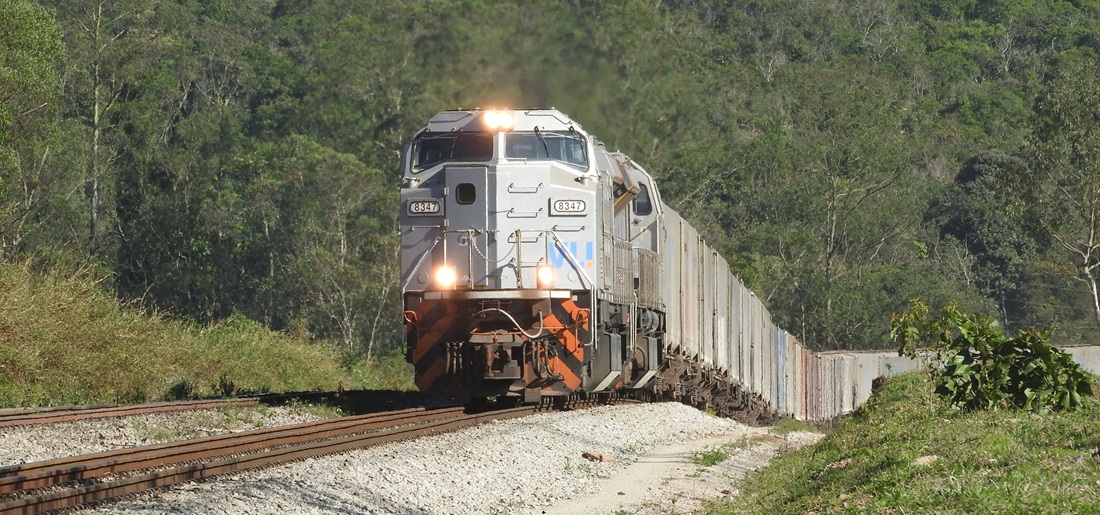
VLI’s semi-autonomous rail technology has helped the company save more than 4 million liters of diesel in its rail operations, marking another step in its sustainability agenda. The Leader system, introduced in May 2024 across VLI’s premium locomotive fleet, also avoided more than 9,300 tonnes of CO₂ equivalent emissions through July this year.
The system is currently used on around 60% of VLI’s trips, analyzing track and train dynamics in real time to calculate an optimized operating plan. In practice, the technology adjusts acceleration, braking and train speed to minimize fuel consumption while strictly observing operational restrictions, meeting journey-time requirements and preserving asset integrity.
The technology has generated average fuel savings of around 8% across VLI’s busiest freight corridors: the Northern Corridor, which connects Tocantins to the Port of Itaqui via the northern section of the North-South Railway, controlled by the company; and the Eastern and Southeastern Corridors, which connect producing regions to Espírito Santo’s port system and the Port of Santos, respectively, through the Ferrovia Centro-Atlântica, also controlled by VLI.
“Decarbonization is a competitive factor in logistics operations. Rail transport already emits around one-sixth as much CO₂ as road transport when diesel use is compared across the two modes, and technologies such as the Leader system allow us to build on these positive results by converting productivity gains into tangible environmental benefits and making our rail operations even more fuel-efficient. More than simply adopting a new tool, this initiative expands rail’s contribution to lower-carbon logistics in Brazil,” said Alessandro Gama, VLI’s executive director of Planning, Engineering and Technology.
VLI’s Semi-Autonomous Rail Technology Supports Decarbonization Goals
VLI’s commitment to sustainability is guided by transparency. In 2025, the company achieved a 12.5% reduction in greenhouse gas (GHG) emissions per tonne transported from locomotive diesel consumption compared with the 2020 baseline. Its target is to reach a 15% reduction by 2030.
The company’s emissions inventories have been publicly available since 2020 and are independently audited. Because of the consistency of its emissions management processes, VLI holds the Gold Seal under the Brazilian GHG Protocol Program, a globally used standard for accounting for, quantifying and managing greenhouse gas emissions.
The certification represents the program’s highest level of recognition and attests to the traceability, accuracy and compliance of the climate data reported by the company with stringent international standards. The recognition confirms that emission sources and calculations are based on rigorously verified technical data, an essential criterion for establishing corporate decarbonization targets.
Source: VLI
-
Shipping
Aug, 25, 2021
0
World’s first crewless, zero emissions cargo ship will set sail in Norway
-
Grains
May, 12, 2023
0
China to stabilize soybean imports, diversify sources
-
Economy
Aug, 02, 2024
0
Exports of Uruguayan goods increased 13% in the first seven months of the year
-
Ports and Terminals
Oct, 17, 2025
0
Complexo do Pecém assina acordo com Porto de Rostock (Alemanha) e Corredor Verde ganha reforço