

War-risk premiums for shipping surge as Iran conflict intensifies
Mar, 06, 2026 Posted by Gabriel MalheirosWeek 202610
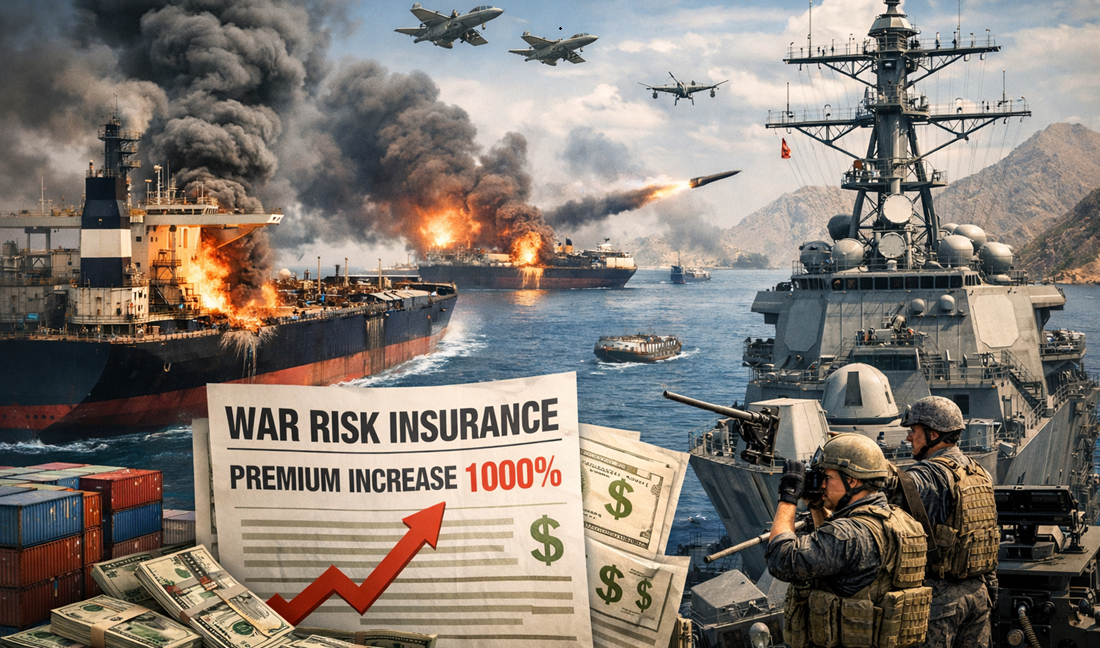
War-risk insurance premiums for maritime shipping are soaring as the conflict in the Gulf escalates, in some cases rising by more than 1,000% and sharply increasing the cost of transporting energy through a critical global shipping corridor.
The crisis, triggered by Israeli and U.S. airstrikes on Tehran on Feb. 28, has disrupted traffic through the Strait of Hormuz, one of the world’s most important maritime chokepoints.
On March 2, Iran warned it would fire on any vessel attempting to cross the area, and at least nine ships have been reported damaged in the region since the conflict began.
War-risk insurance allows shipowners to claim compensation for damage to vessels or cargo caused by conflict or terrorism. Policies are typically issued annually, although some cover specific voyages through dangerous waters, including war zones.
The surge in premiums illustrates how the conflict is raising costs for shipowners, traders and energy companies moving cargo through the Strait of Hormuz, fueling concerns that a prolonged crisis could contribute to global inflation, analysts said.
“The hull war-risk insurance market reacted more quickly,” said Stephen Rudman, head of marine for Asia at global brokerage Aon, citing the potential for large and concentrated losses if multiple ships are hit in the same area.
Rudman added that further premium increases are likely if the situation worsens.
“Additional premiums for vessels transiting high-risk waters are rising sharply and could continue to fluctuate in the short term,” he said.
Cargo war-risk insurance rates are also increasing, with quotes now being revised on a voyage-by-voyage basis, particularly for shipments of energy and bulk commodities.
Analysts at Jefferies estimated that potential industry losses — based on at least seven vessels reported damaged as of March 5 — could reach as much as $1.75 billion.
With most tankers valued between $200 million and $300 million, a new insurance rate of around 3% would imply a hull war-risk premium of roughly $7.5 million, compared with about 0.25% previously, or roughly $625,000 before the conflict began, the brokerage said.
Angus Blayney, divisional director for marine at Gallagher, told Reuters that premiums are rising and changing daily depending on vessel type and specific circumstances, though he did not provide precise figures. He added that coverage remains available.
“The type of vessel, ownership and flag are key factors. Certain flags may be viewed by insurers as higher risk, although in practice the attacks have been relatively indiscriminate,” Blayney said.
Last year, more than 20 million barrels per day of crude oil, condensate and fuels passed through the Strait of Hormuz, according to data from analytics firm Vortexa. Roughly one-fifth of global oil consumption moves through the route.
“Currently about 1,000 vessels remain in the Persian/Arabian Gulf and surrounding waters, roughly half of them tankers and gas carriers, with a combined hull value exceeding $25 billion,” Sheila Cameron, chief executive of the Lloyd’s Market Association, said in a statement.
Cameron added that the vast majority of those vessels are insured through the London market and that coverage “remains valid at present.”
At least 200 ships remained anchored offshore near major Gulf producers as of March 4, Reuters reported.
Earlier this month, ratings agency Morningstar DBRS said reinsurers may respond by raising the threshold at which their coverage begins or by reducing capacity, leaving primary insurers with greater risk exposure and potentially putting pressure on solvency levels.
“Supply chains will come under strain as cargo is rerouted via the Cape of Good Hope or overland routes, increasing transit times and costs,” the agency said.
On March 3, U.S. President Donald Trump said the U.S. Navy could begin escorting oil tankers through the Strait of Hormuz and added that he had directed the U.S. International Development Finance Corporation to provide political risk insurance and financial guarantees for maritime trade in the Gulf.
He also met with global insurance broker Marsh to discuss the issue, the company said on March 4. A Lloyd’s spokesperson said the market is working with the development finance agency and other stakeholders to explore solutions.
Analysts cautioned, however, that it remains unclear how the administration would intervene or whether any scheme would apply to vessels and cargo of all nationalities.
Absent an alternative, many shipowners are expected to reinstate coverage at higher premiums and absorb the additional costs.
“It’s like insuring a burning building,” said Michel Léonard, chief economist and data scientist at the Insurance Information Institute.
Source: Portal Portuario
-
Meat
Nov, 08, 2025
0
Brazil gains new market access in Lebanon and Tanzania
-
Economy
May, 31, 2023
0
Brazil’s Lula proposes common South American currency
-
Economy
May, 15, 2023
0
Argentina to import food to curb price hikes
-
Other Cargo
Jan, 28, 2025
0
Exports of Footwear from Ceará Drop 25% Amid Strong Asian Competition