



From Bulk Carriers to Barges: How Different Vessels Meet Brazil’s Freight Transport Needs
Nov, 25, 2026 Posted by Gabriel MalheirosWeek 202648
With approximately 20,000 kilometers of waterways used for commercial navigation and passenger transportation, along with an extensive coastline, waterborne freight transport in Brazil relies on a wide range of vessels to move goods domestically and connect the country’s producers with international markets. Each vessel type is designed to carry specific cargoes and operate under different navigational conditions.
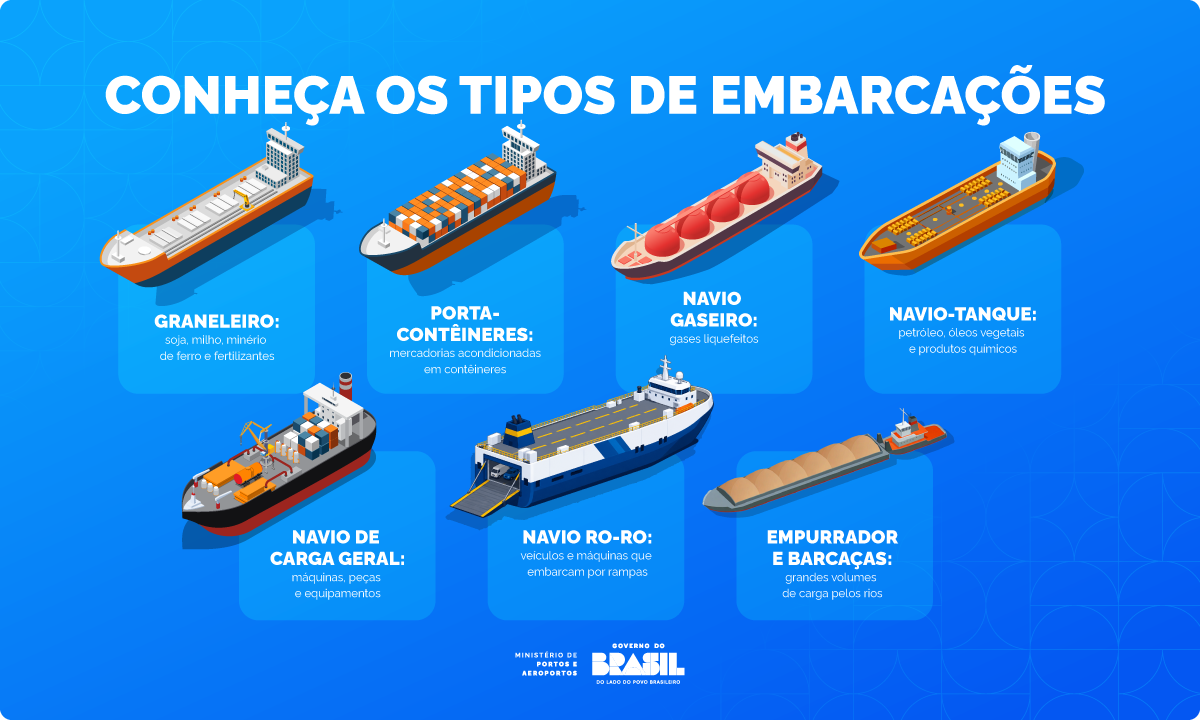
Among the most common are dry bulk carriers, which transport large volumes of solid commodities such as soybeans, corn, iron ore and fertilizers. Rather than being individually packaged, these commodities are loaded directly into the vessel’s cargo holds, allowing thousands of metric tons to be transported on a single voyage.
Container ships, meanwhile, carry a wider variety of goods, including clothing, household appliances, processed foods, parts and equipment. These products are transported in standardized steel containers, which simplify storage, handling and transfers between ships, trucks and trains.
Liquid cargoes are carried by tankers designed to transport crude oil, petroleum products, vegetable oils and chemicals in dedicated cargo tanks. Specialized gas carriers are also used to transport liquefied gases, with storage and control systems tailored to the characteristics of each product.
General cargo ships can carry machinery, equipment, parts and goods of varying dimensions, with cargo stowed according to the requirements of each operation. For vehicles and wheeled machinery, roll-on/roll-off (Ro-Ro) vessels offer a different loading method. Rather than being lifted aboard by cranes, these vehicles and machines are driven on and off the vessel via ramps.
Inland Waterway Freight Transport in Brazil
The characteristics of Brazil’s inland waterways also require vessels suited to regional navigational conditions. In the Amazon region, for example, one common method of transporting cargo involves using pushboats and barges.
In this configuration, powered pushboats propel barges carrying large volumes of cargo. The size of the barge convoy and its carrying capacity depend on navigational conditions along the route, including the river’s depth and width.
Seasonal fluctuations in water levels also affect navigation. During droughts, for example, stretches of river that previously accommodated larger vessels may require operators to reduce cargo loads or adjust their operations.
Expanding Coastal Shipping in Brazil
Coastal shipping, also known as cabotage, involves transporting cargo between Brazilian ports and offers another way to diversify the country’s logistics network. To strengthen the sector, the Ministry of Ports and Airports (MPor) has introduced BR do Mar, a program aimed at increasing vessel availability and making greater use of Brazil’s extensive coastline for freight transportation.
The initiative also promotes integration between maritime shipping and other modes of transportation, expanding the options available for moving goods across the country.
Source: MPOR
-
Ores
Jan, 21, 2020
0
Pig Iron exports via Vitoria Port grew 29% in 2019
-
Economy
Jan, 08, 2024
0
Brazil Achieves Record-breaking Exports Over $100 Billion to China
-
Other Cargo
Jan, 10, 2022
0
Pig iron sector expects a 7% increase in output volume
-
Grains
Aug, 31, 2022
0
Production costs affect int’l competitiveness of Brazilian grains