

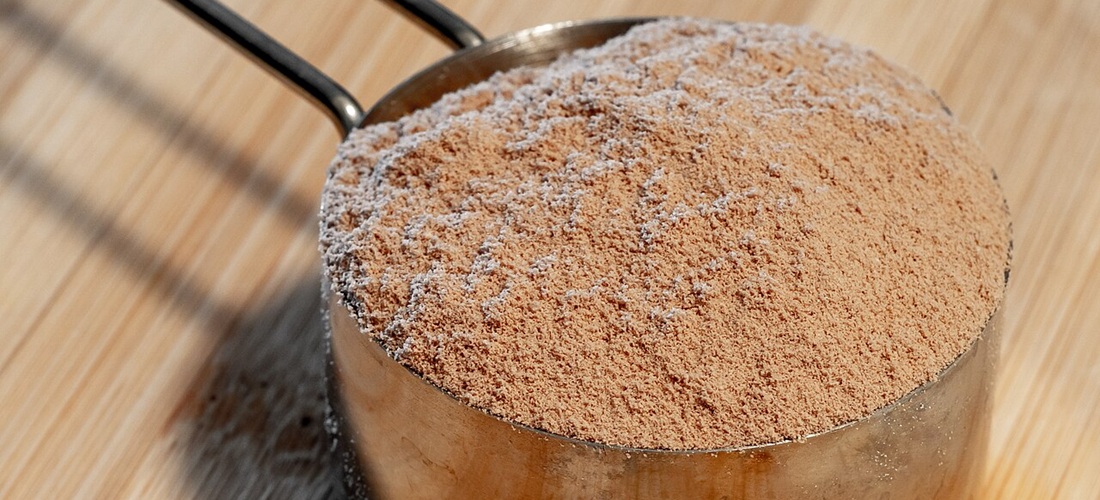
Whey fever is transforming Brazil’s dairy industry
Sep, 23, 2026 Posted by Gabriel MalheirosWeek 202639
Driven by changing consumer habits, demand for high-protein products is transforming the dairy industry. Whey, a byproduct of cheese production that until a few years ago had relatively little value, has become a valuable asset for producing whey protein. Although Brazil is a major consumer, it still relies heavily on imports of dairy ingredients made from whey, such as WPC (whey protein concentrate) and WPI (whey protein isolate). However, according to experts and industry sources, this is expected to change as new investments in production come on stream.
Demand has sent prices for these ingredients soaring both internationally and in Brazil. The more sophisticated and protein-rich the ingredient, the greater its value. According to a study by consultancy StoneX, the price of WPC80 (whey protein concentrate at 80% protein) has nearly tripled in the U.S. A metric ton cost approximately $10,000 at the beginning of 2025, compared with $28,000 in August this year. WPI, which contains at least 90% protein, rose 47% over the period, reaching $32,000 per metric ton. WPC34, which has a lower protein concentration, increased by 40%.
Demand for products considered healthier has been growing since the pandemic, but it gained further momentum with the advent of GLP-1 drugs that help control appetite and blood sugar—the so-called weight-loss injections. Today, high-value proteins are found not only in bars and dairy drinks, but also in snacks, chocolates, bread, and even wines and beers. However, the industry has been unable to keep pace with demand because expanding production capacity takes time.
“It was a combination of demand accelerating and supply being unable to keep up with that increase,” says Juliana Torres Santiago, a market intelligence analyst at StoneX. According to the consultancy, WPC80 from the U.S. reaches Brazil at around R$160,000 per metric ton, including taxes and import costs.
About 70% of the WPC80 and WPI consumed in Brazil is imported. The country is a major milk producer, producing more than 35 billion liters per year, according to the Brazilian Institute of Geography and Statistics (IBGE). But its capacity to process whey and turn it into higher-value-added protein ingredients is limited.
“There is a mismatch between the growth in demand for concentrated whey protein and the growth in the availability of whey as a byproduct of cheese production,” says Marcel de Barros, CEO of Tirolez, one of Brazil’s leading cheese manufacturers. “This mismatch creates demand pressure, which is driving all of this price growth. It is a global phenomenon,” he adds.
The whey market in Brazil is not exactly new. Tirolez itself used to sell this byproduct to companies that processed the ingredient for use in human food. According to Barros, the company is seeking “long-term strategic partnerships” to increase the business’s relevance within the group. At present, Tirolez supplies raw material to companies that use whey in product formulations.
The company recently acquired a plant from Grupo Barbosa & Marques, which is undergoing court-supervised reorganization, in Governador Valadares, Minas Gerais. The facility has the capacity to process and dry 480,000 liters of whey per day. Barros says the plant is operating at full capacity. Tirolez has been leasing the facility since July 1, but the definitive acquisition depends on the judicial reorganization proceedings.
One of the few companies in Brazil producing these high-concentration proteins, Sooro Renner has facilities in Marechal Cândido Rondon, Paraná, and Estação, Rio Grande do Sul. It produces 8,000 metric tons of WPC80 and around 2,000 metric tons of WPI per year, which are sold to other industries.
Following its merger with Relat, part of the Renner Hermann group, in 2019, the company drew up a plan to double its production capacity. In 2024, Sooro decided to build a new plant in Francisco Beltrão, Paraná, which is expected to begin operating in the second half of 2027. The new facility, representing an investment of more than R$1 billion, is expected to double the company’s current WPC80 and WPI production capacity.
The industry will also offer formulations for infant nutrition and the senior market. “In the past, whey was considered a product only for ‘muscle heads,’ people who lived in the gym. But we noticed that people who wanted to adopt a healthier lifestyle—whether running, cycling, or doing CrossFit—also needed to consume more protein,” says Sooro Renner CEO Eduardo Serra.
The company purchases whey from dairy producers in Brazil’s South. According to Serra, the cost of the raw material doubled over the past year. “The entire supply chain has gained value. My supplier is receiving more, but I am also selling at a higher price,” he says.
Unlike other companies that have to purchase whey from third parties, French company Lactalis has a WPC plant integrated with its cheese factory in Três de Maio, Rio Grande do Sul. The whey is transported through a pipeline in a closed-loop system directly to the whey production process.
“Per-capita consumption of milk protein in the U.S. and other more mature economies is still considerably higher than in Brazil. So we believe this market will continue to grow here,” says Guilherme Portella, director of communications, regulatory and corporate affairs at Lactalis Brazil.
The protein beverage market currently accounts for around 80 million liters per year, according to consultancy MilkPoint. By comparison, more traditional UHT beverages reach nearly 500 million liters. Although they represent a small volume, protein beverages have posted double-digit growth in recent years, according to Valter Galan, a partner at MilkPoint.
He notes that, because there is not enough whey to meet market demand, cheese plants are now being designed with integrated whey-protein facilities. One project with this profile belongs to Grupo Piracanjuba, one of Brazil’s largest dairy companies.
The company is investing more than R$500 million to build an industrial complex in São Jorge d’Oeste, Paraná, for the integrated production of cheese, butter, whey protein, and powdered lactose. The facility is expected to produce up to 6,000 metric tons of whey protein annually. The company declined to comment.
Source: Valor International
-
Automotive
Apr, 06, 2020
0
Anfavea data reveals extent of Coronavirus impact on automotive industry in March
-
Trade Regulations
Jul, 24, 2019
0
China opens market for Brazilian dairy exports
-
Oil and Gas
Jun, 23, 2022
0
Glycerin exports surpass US$ 40 million mark for the first time
-
Sugar and Ethanol
Oct, 20, 2022
0
Europe Is Buying Up Cheaper Brazilian Ethanol Amid Energy Crisis