


Argentina’s oilseed labor dispute deepens, raising concern over export dollar inflows
Jun, 17, 2026 Posted by Gabriel MalheirosWeek 202625
Salary talks between Argentina’s oilseed industry chamber, CIARA, and the SOEA oilseed workers’ union broke down on Tuesday, June 16, two days before the mandatory conciliation period is set to expire. The dispute matters because any strike action could disrupt port operations and threaten the flow of agro-industrial exports, one of Argentina’s main sources of foreign currency.
The meeting was aimed at unlocking wage negotiations that have kept the broader agro-export chain on alert. The parties, however, failed to narrow their differences, adding fresh uncertainty to the outlook.
Attention now turns to Thursday, June 18, when the mandatory conciliation ordered by the Labor Secretariat expires. Without an extension or a last-minute agreement, the union could resume industrial action.
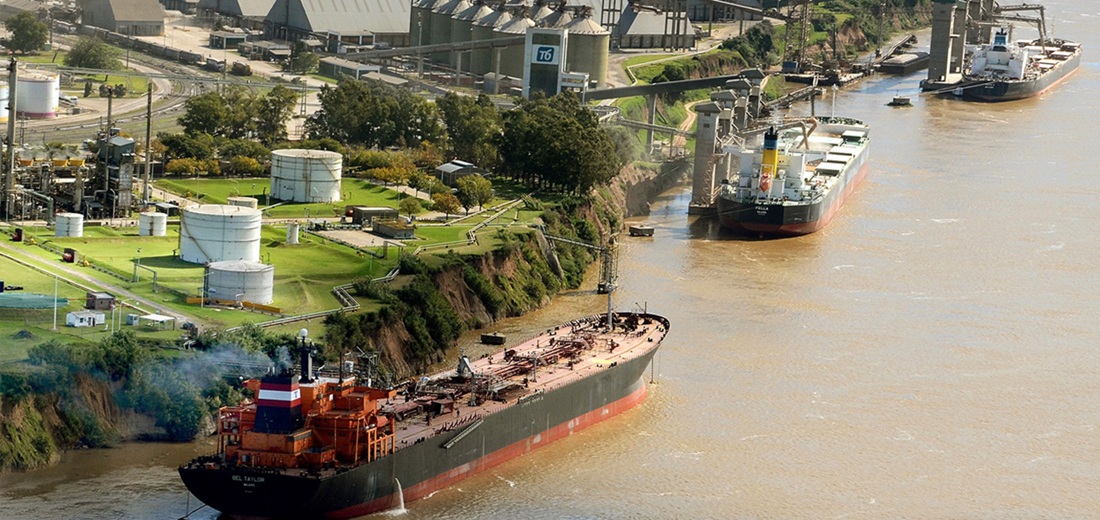
Argentina’s oilseed and export industry is one of the economy’s main generators of U.S. dollars. Most soybean meal and soybean oil shipments, along with other agro-industrial exports, leave the country through ports in the Greater Rosario area, supplying markets around the world. Any disruption to activity there raises concern among companies and the government, which is closely monitoring the potential impact on foreign currency inflows.
Industry executives are hoping the Labor Secretariat will extend the mandatory conciliation period until June 25, a move that would buy more time for negotiations and avert an immediate strike. CIARA said its offer included wage adjustments tied to monthly inflation data published by INDEC, Argentina’s statistics agency.
“The unions did not accept the industry’s proposals to update wages based on the monthly price index published by INDEC,” the business group said.
According to CIARA, the mechanism would preserve workers’ purchasing power through periodic inflation-linked adjustments.
“In this way, purchasing power is not lost,” exporters argued.
Union representatives, however, rejected the proposal and maintained their position. The dispute goes beyond wages. It also affects the operation of one of Argentina’s most strategic economic sectors.
At a time when the country needs to increase exports and secure more hard-currency inflows, any disruption at ports or processing plants could carry significant economic consequences. The conflict is also unfolding during the grain marketing season, when the agro-industrial complex accounts for a large share of foreign trade-related dollar settlements.
With the mandatory conciliation period close to expiring, all eyes are now on the Labor Secretariat.
If the agency extends the measure, the parties will have a few more days to seek a deal and avoid another shutdown. Otherwise, the threat of a strike will again become a concrete risk for the oilseed industry and for Argentina’s largest export complex.
Negotiations remain open, but time is running out. Markets are watching a dispute that could affect not only plants and ports, but also the foreign currency inflows Argentina’s economy urgently needs.
Source: AgroLatam
-
Ports and Terminals
Feb, 13, 2026
0
Port of Imbituba posts best January on record with 679,000 tonnes handled
-
Ports and Terminals
Jan, 24, 2022
0
President of DP World Santos believes that year will be of strategic importance for the port economy
-
Ports and Terminals
Dec, 22, 2025
0
Public ports in Rio Grande do Sul surpass 42 million tonnes and post the highest throughput since 2021
-
Other Cargo
Jun, 23, 2022
0
US urges countries to seek them out in case of importation problems created by sanctions