


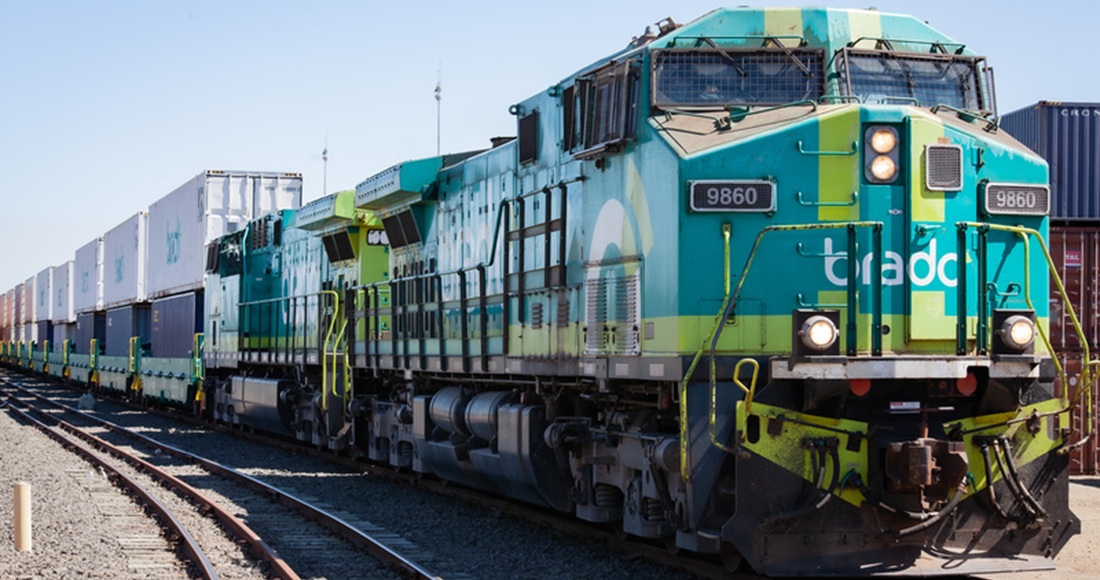
Brado boosts DDG transport with 146% increase in monthly average in Q1
Jun, 16, 2025 Posted by Sylvia SchandertWeek 202525
Brado recorded a significant increase in the transportation of DDG (Dried Distiller’s Grains) in the first quarter of 2025, with the average monthly volume rising 146% compared to the same period in 2024. The company moved 522 containers, totaling 14,656 tonnes of the product. This volume secured Brado an 89% market share of all DDG exported in containers from Brazil during the period.
“These results confirm Brado’s ability to meet the growing demand for efficient logistics solutions in agribusiness. This significant progress, which precedes the formalization of the export agreement with China, highlights the growth potential of the DDG market,” said Ronney Maniçoba, Brado’s Sales Manager.
DDG, or corn meal, is a byproduct of corn ethanol production. It is high in protein and widely used in animal feed. According to the National Union of Corn Ethanol (Unem), corn ethanol production in Brazil is expected to grow by 21%, reaching 17.7 million tons in the 2024/25 season, thus boosting DDG output. On average, every tonne of processed corn yields 300 kg of DDG.
DDG production for the 2025/26 season is projected at around 5 million tonnes. In Mato Grosso—where Brado’s multimodal terminal is located—corn ethanol production is expected to reach 6 billion liters during the same season, resulting in an estimated 1.8 million tonnes of DDG.
Another recent boost to the market was China’s authorization to import Brazilian DDG earlier this month. “China’s entry as a destination further drives the volume of DDG transported. It’s a clear sign we are on the right path, positioning Brado as a strategic link in this new export-dynamic,” added Maniçoba.
Niche market
Containerized DDG transport caters to a niche market seeking higher-quality products for feed manufacturing. “A sealed container ensures the cargo arrives at its destination in the same condition it left the producer or terminal, minimizing contamination and damage risks. This is essential to meet the demands of the animal nutrition industry,” the manager emphasized.
Currently, Brado receives pre-stuffed DDG containers at its terminal in Rondonópolis, Mato Grosso (MT), and transports them by rail to Cubatão, São Paulo (SP), and then by road to the Port of Santos. With the start-up of a second truck dumper in Rondonópolis this month, the company now also has the option to perform internal stuffing of DDG, supported by a Special Export Customs Clearance Area (Redex), which allows faster merchandise release.
Brado is also targeting the domestic DDG market. “We are well positioned to enter this segment by rail, using our Sumaré terminal as a distribution hub, following the successful model we’ve implemented for corn, with direct deliveries to feed factories,” concluded Maniçoba.
-
Other Logistics
Mar, 15, 2022
0
Intermodal 2022: Allog group announces its internationalization
-
Meat
Feb, 15, 2019
0
China exempts 14 chicken firms from import tariffs
-
Shipping
Jun, 11, 2026
0
Brazil, Paraguay and Bolivia advance plan for shared Paraguay River waterway management
-
Grains
Nov, 08, 2024
0
Brazilian Grains Association Reduced Soybean Export Estimate to 98 Mln T