


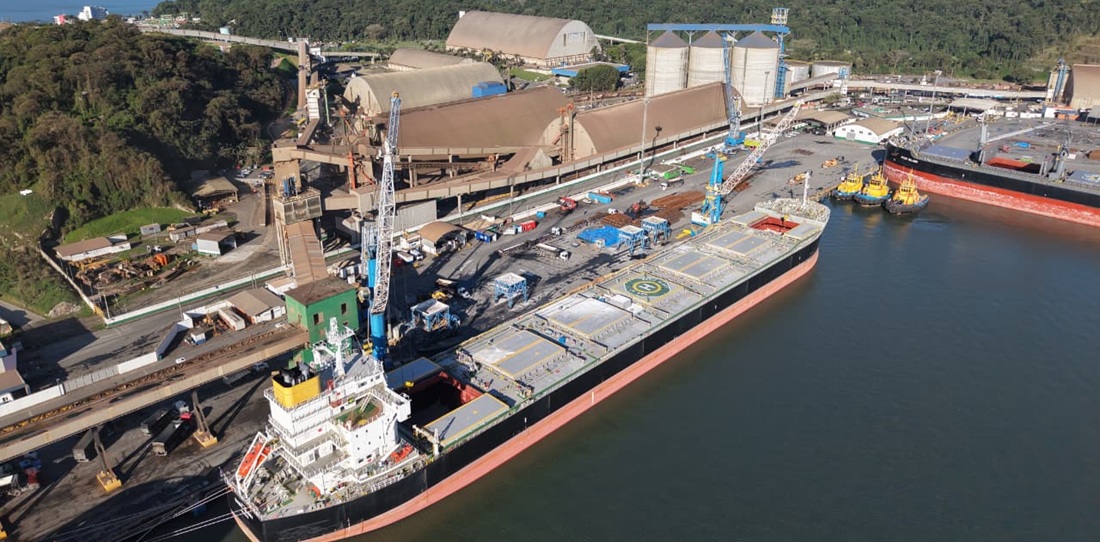
Brazil fertilizer imports fall, but Santos increases volumes
Sep, 04, 2026 Posted by Gabriel MalheirosWeek 202637
Brazil fertilizer imports fell in the first seven months of 2026, but the Port of Santos moved in the opposite direction and increased the volume received during the period, according to Conab’s August Logistics Bulletin.
Brazil brought in 22.4 million metric tons of fertilizers from January to July, down from 24.1 million tons in the same period of 2025. The national decline came amid still-high logistics costs and the effects of geopolitical conflicts on global supply chains, according to Conab, Brazil’s food supply and crop agency.
Despite the overall drop, Santos increased its share of inbound fertilizer flows. The São Paulo port received 4.92 million metric tons between January and July 2026, up from 3.91 million tons in the same period last year.
That performance contrasted with other corridors highlighted by Conab. Northern Arc ports handled 6.49 million metric tons of fertilizers, down from 7 million tons in the first seven months of 2025. Paranaguá, one of Brazil’s traditional fertilizer gateways, also posted a decline, with volumes falling from 6.35 million to 5.17 million tons.
According to foreign trade data from Datamar, roughly 25% of Brazil’s fertilizer imports came from Russia between January and July 2026. The chart below shows the breakdown of the other main countries of origin:
Top Origins of Fertilizer Imports | Jan-Jul 2026 | WTMT
Source: DataLiner (click here to request a demo)
Santos gains ground in fertilizer flows
Conab’s figures point to a relevant shift for Brazil’s port logistics. Although national demand for imported fertilizers was lower in the year to July, Santos gained both absolute volume and relative weight in supplying the domestic market.
The increase may reinforce the São Paulo port complex’s importance in fertilizer unloading, storage and distribution operations.
For agribusiness, fertilizer movement matters beyond port activity itself. The product is directly tied to the planting calendar and to cost formation for the next crop. It also affects freight dynamics, since imported fertilizers can serve as return cargo on corridors that move grains to export terminals.
The decline in Brazil fertilizer imports does not necessarily mean less logistics pressure in the second half. Conab’s bulletin points to a significant increase in volumes brought into the country in July, even though the year-to-date result remained below 2025 levels.
That suggests the recovery in flows may be concentrated in specific windows, increasing demand for berths, warehouses and inland transport.
Santos’ performance stands out precisely because it came during a period of national contraction. While Paranaguá and the Northern Arc lost volume year on year, the São Paulo port absorbed more cargo and strengthened its position as one of Brazil’s main fertilizer entry points.
The trend in the coming months will depend on demand for the 2026/27 crop, international fertilizer prices and ocean freight conditions. For now, Conab’s data show that competition among port corridors in Brazil’s fertilizer import market remains open, with Santos gaining space in a less heated national market.
Source: CONAB – Logistics Bulletin
-
Ports and Terminals
Feb, 09, 2026
0
Puerto Dock Sud closes 2025 with a 71% surge in container throughput
-
Ports and Terminals
Oct, 13, 2025
0
In one year, JBS has already moved R$130 million at the Port of Itajaí
-
Other Cargo
Sep, 29, 2022
0
Argentina is making inroads in the lithium market and could export 200,000 tons by 2025
-
Other Cargo
May, 26, 2020
0
Brazil imported 19,000 tons of medical products in 46 days to help in fight against pandemic