


Brazil melon exports rise 6% in 2025/26 season; Rio Grande do Norte may double shipments
Mar, 04, 2026 Posted by Gabriel MalheirosWeek 202610
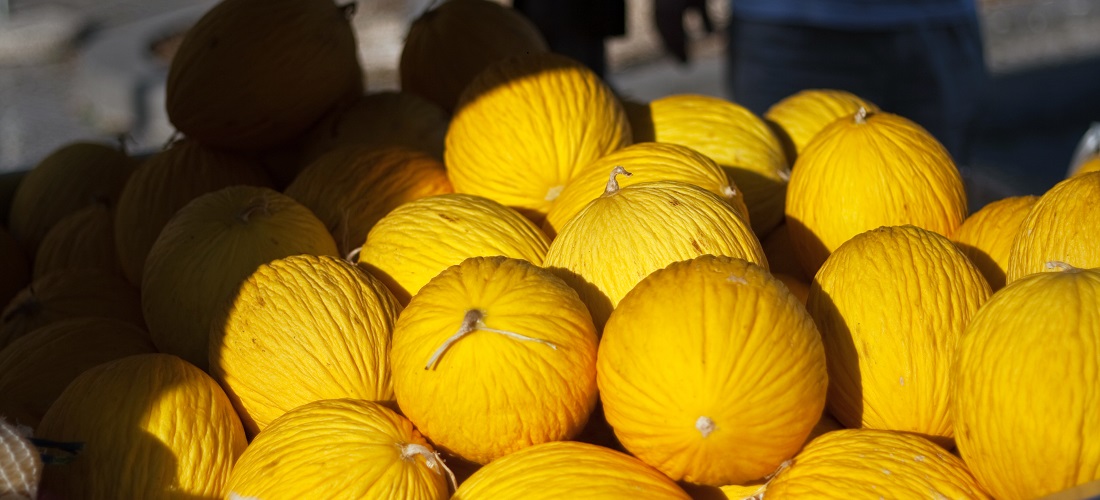
Brazil exported more than 194,000 metric tons of melons between August 2025 and January 2026, up 6% from the 183,000 tons shipped in the same period of the previous season, reinforcing positive prospects for the 2025/26 crop.
According to analysts at the Center for Advanced Studies on Applied Economics (Cepea), growers in the states of Rio Grande do Norte and Ceará brought forward harvests ahead of the peak rainy season from January to March, helping boost export volumes in the first half of the season.
The main destinations for Brazilian melons during the period were the Netherlands, which accounted for 43.34% of shipments, followed by Spain with 24.88%, the United Kingdom with 23.16%, and Canada with 3.27%. The same markets were also the leading buyers during the equivalent period of the previous season.
The following chart details the monthly outbound volumes of Brazilian melons, recorded since January 2023. The figures are sourced from Datamar’s DataLiner platform:
Source: DataLiner (click here to request a demo)
Rio Grande do Norte
Rio Grande do Norte is currently the second-largest fruit-exporting state in Brazil. According to data from the Secretariat of Foreign Trade (Secex), the state exported $269.5 million worth of fruit in 2025, trailing only Pernambuco and representing a 33% increase from 2024, when it ranked third behind Pernambuco and Bahia.
Expectations for the 2025/26 season are even higher, with the state potentially exporting up to 300,000 tons of fresh fruit through the Port of Natal — double the volume shipped in the previous season. If confirmed, the figure would consolidate the terminal as Brazil’s leading hub for fruit exports.
The increase is supported by major investments in port infrastructure. In August 2025, during the Expofruit trade fair in Mossoró, Governor Fátima Bezerra announced that the federal government would allocate 130 million reais ($26 million) to upgrade the port.
“These investments were requested mainly by the fruit sector in Mossoró and Baraúna. The works are already underway, including dredging, bridge protections, quay reinforcements and warehouse upgrades, as well as the installation of a photovoltaic plant,” the governor said at the time. “The roughly 130 million reais in investments will improve logistics and navigational capacity, allowing us to expand exports, particularly in the fruit sector. Currently part of this production is shipped through the ports of Pecém, Suape and even Cabedelo,” she added.
In an interview with newspaper Tribuna do Norte, Carlo Porro, chief executive of Agrícola Famosa — the state’s largest fruit exporter — highlighted the advantages of using a dedicated port and vessel for shipments.
“The advantages of having a dedicated port and, above all, a dedicated vessel are fruit quality and transit time. The ship does not call at other ports, so the fruit arrives faster and in ideal condition. That makes a big difference for quality,” he said.
The Port of Natal currently handles around 10,000 tons of fruit per week, mainly melons. However, the Rio Grande do Norte Port Authority (Codern) is seeking to expand cargo diversity at the terminal, including the potential export of iron ore, sugar and live cattle in the coming years. Iron ore shipments could begin as early as 2027.
New markets
Another priority for the sector is expanding sales beyond Europe, which currently absorbs around 90% of fruit exports from Rio Grande do Norte.
“We ship nearly 90% of all fruit produced in Rio Grande do Norte to the European Union, a market of about 500 million people,” said Fábio Queiroga, president of COEX/RN, the state fruit exporters association. “Now we are also entering China, a country with 1.5 billion people. We were in Shanghai earlier this year to strengthen relationships with major importers, and we even brought a Chinese importer to Expofruit to develop these negotiations. Despite the distance and logistical challenges, we are gradually expanding this possibility,” he said.
For five years, melons from the Mossoró region were the only Brazilian fruit allowed in the Chinese market. Recently, grapes from Petrolina were also authorized. Each new product accepted by China increases the chances of achieving sufficient export volumes to support dedicated shipping lines for fruit, Queiroga added.
Competition
Despite the positive outlook, stronger international competition — particularly from Central America — could limit Brazilian shipments during the remainder of the season, from February to July.
According to industry publication Fresh Plaza, Central American exports have already begun and may increase due to expanded cultivation areas in parts of Costa Rica, alongside expectations of higher production and strong export volumes from Guatemala.
“The increase in exports from Central America, which expects a better harvest compared with previous years, could affect Brazilian shipments during the off-season from April to June, a period that has seen above-average volumes in the past two years,” Cepea researchers said.
Reporting by Guilherme Dorigatti for Notícias Agrícolas
-
Jan, 08, 2025
0
Rio Grande do Norte’s Exports Grow 42.6% in 2024, Reaching a Historic Record.
-
Economy
Nov, 06, 2025
0
New DataLiner update: Brazilian container exports remain stable in 2025 as imports accelerate amid industrial recovery
-
Meat
Sep, 21, 2023
1
Brazil opens five new markets for live cattle export
-
Shipping
Feb, 19, 2020
0
Posidonia presents new multi-purpose ship