


Brazil Plans Port Saturation Monitoring Tool Through 2030
Oct, 13, 2026 Posted by Gabriel MalheirosWeek 202642
Brazil’s Ministry of Ports and Airports is developing a new tool to monitor saturation across the country’s ports during the next presidential cycle, from 2027 to 2030.
The proposal is to periodically track the balance between cargo handling demand and available capacity at port complexes, while also measuring operational service levels.
The tool is expected to cover all port complexes and some private-use terminals, allowing the government to identify which facilities are approaching their operational limits and which still have capacity to absorb additional cargo flows.
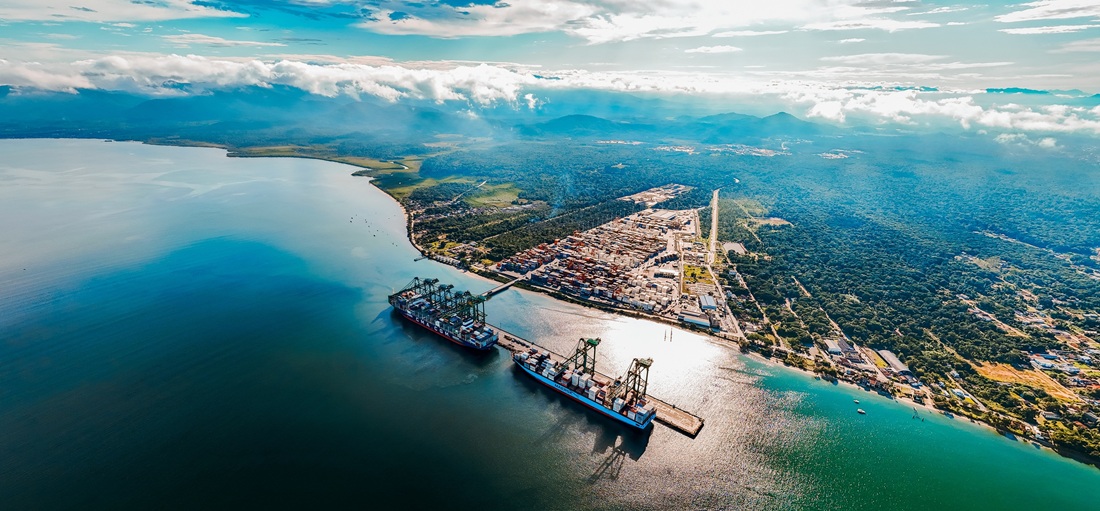
The initiative comes at a time of growing pressure on Brazil’s port infrastructure. A Macroinfra study reported by CNN found that the country’s main container terminals could reach their capacity limits by 2030 if expansion projects and new terminals fail to move forward.
The study identified signs of saturation in Santos, São Paulo; Paranaguá, Paraná; Itajaí/Navegantes, Santa Catarina; and Itapoá, Santa Catarina. The projection takes into account growth in container throughput and expected capacity over the coming years.
In Santos, for example, the occupancy rate at the main container terminals reached 79.7% last year, up from 55.9% in 2015. Productivity also increased over the period but, according to the study, not fast enough to keep pace with demand growth.
The problem is already beginning to show up in costs and waiting times. A study presented to CNN by Luis Cláudio Montenegro of Neowise Consultoria found that average vessel waiting time for a berth in Santos rose from around eight to nine hours in 2019 to approximately 35 hours in 2024.
The same study showed a sharp increase in the average cost of THC, the charge applied to container handling at terminals. According to the consultancy, the estimated cost rose from a range of $70 to $100 per TEU in 2019 to around $500 in 2026.
Monitoring Port Capacity in Brazil Aims to Anticipate Pressure
The ministry’s proposal is for the new monitoring system to help anticipate this type of pressure. Tracking demand against port capacity in Brazil is expected to serve as an indicator to guide decisions on investment, terminal expansion and infrastructure planning.
In Santos, one of the main planned responses is Tecon Santos 10, a new container terminal expected to increase the port complex’s capacity by 50% and attract nearly R$6 billion in investment.
The project, however, remains under discussion amid an impasse over the auction format and possible restrictions on the participation of operators that already have a presence at the port.
Source: CNN
-
Fruit
Feb, 04, 2025
0
Brazil aims to boost fruit exports beyond $1.2 billion despite trade hurdles
-
Oil and Gas
Jul, 05, 2024
0
20-year FLNG gig in South America opening doors to LNG exports’ club for Argentina
-
Ports and Terminals
Nov, 20, 2025
0
Portonave welcomes ONE’s sustainable vessel on first call to Latin America
-
Sugar and Ethanol
Jul, 13, 2026
0
Tereos ships record 75,000 tonnes of VHP sugar to China in partnership with VLI