


Brazil prepares response to US tariffs, seeks expanded trade with Mexico
Jul, 24, 2025 Posted by Lucas LorimerWeek 202531
Amid difficulties in expanding dialogue with American interlocutors and the unpredictability that President Donald Trump himself brings to U.S. negotiations, Brazilian President Luiz Inácio Lula da Silva is expected to receive a contingency plan next week to mitigate the tariff hike set to take effect on August 1. According to Finance Minister Fernando Haddad, the government’s technical team has finalized the outline of the measures. On another front, Lula has decided to send a delegation to Mexico in August to broaden the trade agreement between the two countries.
The contingency plan is being developed based on guidelines set by Haddad and Vice President Geraldo Alckmin, who also serves as Minister of Development, Industry, Trade, and Services (MDIC). After the two give their approval, the measures must still be validated by Chief of Staff Rui Costa and Foreign Minister Mauro Vieira before being presented to Lula, Haddad told reporters, adding that the date of the potential announcement is a political decision for the president. “The technical teams from the three involved ministries [Finance, Industry, and Foreign Affairs] will present the details to me tomorrow [today]. We’ll likely take the plan to the president next week.”
According to the minister, the matter is highly concentrated within the White House advisory team, which makes it difficult to understand what the U.S. government’s move will be fully. Still, Haddad believes there is room for negotiation, particularly since “there have been good surprises in recent days from other countries” that managed to renegotiate tariffs announced by Trump.
“We might reach August 1 with some signal or some possibility of an agreement, but for an agreement to happen, both parties have to sit at the table and come to a conclusion,” Haddad stated. “We can’t anticipate a move that doesn’t depend solely on us, but Brazil has never left the negotiating table.”
Behind the scenes, the rapidly approaching deadline for the 50% tariff hike on Brazilian exports to the U.S. has increased anxiety within the Brazilian government. The goal is to find a solution as soon as possible, but the Brazilian side accuses the Americans of not showing the same willingness to engage. So far, there has been no indication that the U.S. will accept Brazil’s proposal or backtrack on Trump’s announcement.
In recent days, sources told Valor that with the United States still lacking an ambassador in Brazil, the presidential palace has no properly credentialed American officials to engage with. Chargé d’Affaires Gabriel Escobar currently leads the U.S. embassy in Brasília.
When questioned by Brazilian authorities, the U.S. Embassy has reportedly advised that any inquiries be directed to officials from the Office of the United States Trade Representative (USTR), the agency responsible for handling trade disputes. When contacted by Valor, the U.S. Embassy did not comment.
In addition, the Brazilian government has struggled to determine which of Trump’s aides have full authority to discuss the issue. Since the beginning of the crisis, Brazilian officials have approached various people in Trump’s circle in search of more direct dialogue about the tariff hike. Despite these efforts, they have been told repeatedly that those aides are not authorized to engage and that the matter is being handled directly by the White House.
During his interview with journalists, Haddad did not detail the measures under discussion. On Monday, he noted that the plan may not necessarily involve primary public spending. For example, there is the expectation of emergency credit lines for sectors affected by the tariff hike. In that case, the government’s challenge is to ensure that only companies truly impacted will have access to such resources, similar to the response following the floods in Rio Grande do Sul.
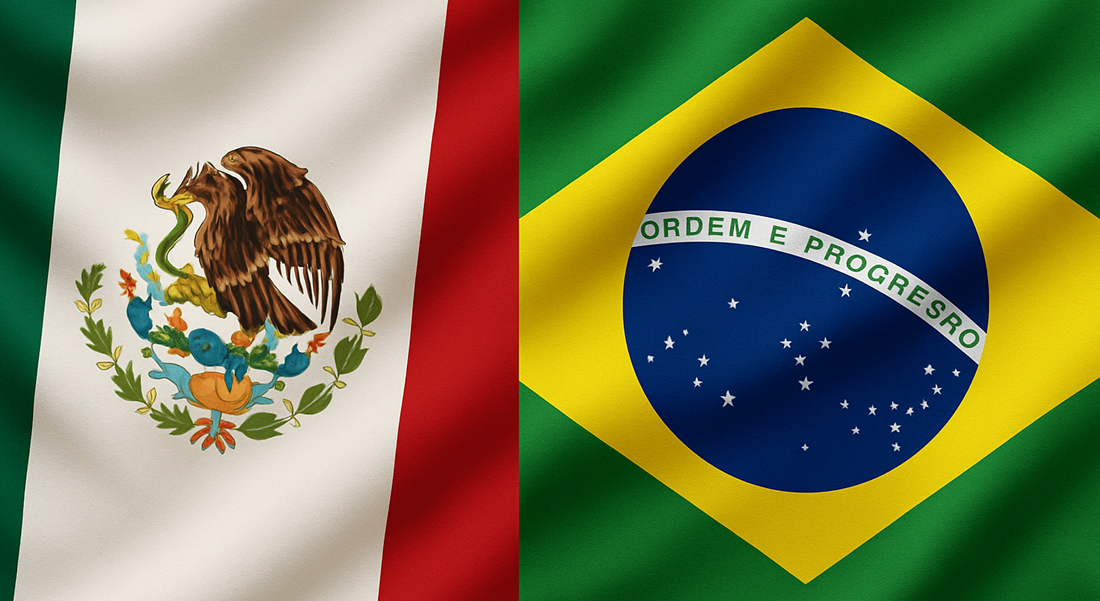
On the international front, the government is also stepping up its efforts. On Wednesday evening, Lula spoke by phone with Mexican President Claudia Sheinbaum. He proposed deepening the countries’ “economic and trade” relations in light of the “current moment of uncertainty.”
Lula also pushed to launch negotiations aimed at expanding the Brazil-Mexico trade agreement. Talks are expected to move forward as early as mid-August, when Vice President Geraldo Alckmin and a delegation of Brazilian business leaders are scheduled to travel to Mexico.
In a statement, the presidential palace said that improving the Brazil-Mexico trade deal could benefit key sectors in both economies. “As a result of the visit [by Alckmin], Lula proposed starting negotiations to expand the Brazil-Mexico trade agreement to increase trade flows between the two countries. President Claudia and President Lula identified the pharmaceutical, agribusiness, ethanol, biodiesel, aerospace, innovation, and education sectors as strategic areas in the bilateral relationship,” the statement read.
Since Trump announced the tariff hike, Brazil has begun a push for new free trade agreements with the international community. The plan is to utilize Brazil’s current Mercosur presidency, which runs through December, to seek out countries interested in pursuing similar trade agreements, modeled on the one with the European Union.
According to sources, Mexico is one of the markets that has expressed interest in such a deal. As part of this push, Brazil has also identified a number of other countries that are open to this type of negotiation. The list is led by Canada, a neighbor of the United States, but also includes the United Arab Emirates, South Korea, Indonesia, and Vietnam.
Canada’s inclusion stems from what Lula reportedly saw as a positive signal from Prime Minister Mark Carney during the G7 summit. “Canada was explicit in saying it wants to reduce its dependence on the U.S. market and views Mercosur as an ideal partner,” said one source.
Without naming Trump directly, Brazil has also lodged a complaint with the World Trade Organization (WTO) over the tariffs. Government sources say the move is both necessary and symbolic, given Brazil’s longstanding support for the multilateral trading system. However, they acknowledge that it is unlikely to produce tangible results, as the WTO remains weakened.
Source: Valor Econômico
-
Oil and Gas
Aug, 14, 2026
0
YPF seeks record $51 billion investment for Argentina LNG exports
-
Meat
May, 28, 2025
0
Free from Foot-and-Mouth Disease, Brazil Set to Begin Beef Exports to Japan
-
Ports and Terminals
Jan, 26, 2021
0
Public hearings to define two new leases at Port of Paranaguá
-
Ports and Terminals
Mar, 03, 2023
0
Port of Itajaí to remain under city and federal control