


Brazil rail freight hits record 555.5 million tons in 2025
Mar, 06, 2026 Posted by Gabriel MalheirosWeek 202610
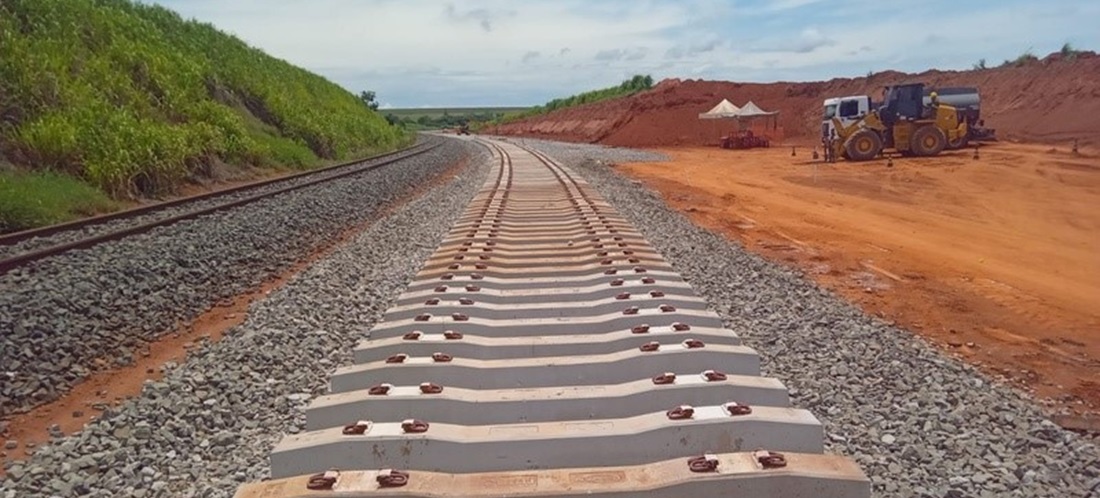
Rail freight transport in Brazil reached a record 555.48 million metric tons in 2025, a 2.57% increase from 2024, according to data from the Ministry of Transport. The volumes reflect cargo moved across the country’s rail network for both domestic supply and international trade.
The result marks the third consecutive annual record for rail freight volumes in Brazil and is part of the federal government’s strategy to expand national logistics infrastructure. For 2026, the government plans to hold eight rail auctions, with projected investments of 140 billion reais ($27.7 billion). Total investments in the sector are expected to reach 600 billion reais over time.
“For the third consecutive year we have broken the record for cargo transported by rail in Brazil, at a time when we are also seeing historic levels of private investment in the sector,” said Leonardo Ribeiro, national secretary for rail transport.
“These results show that planning, regulatory predictability and dialogue with the market are producing concrete outcomes. But there is still much to do, and we intend to move further forward with the National Rail Policy,” he added.
The ministry said its efforts have focused on improving land-based logistics chains so that commodities moving across the country can use infrastructure that offers lower costs and greater efficiency.
For long-distance routes, for example, grain produced in Mato Grosso — Brazil’s largest agricultural state — can be transported by rail to ports in the Southeast, reducing truck traffic on highways and lowering greenhouse gas emissions.
Data compiled by state-owned logistics company Infra S.A. show that the agricultural sector posted the strongest growth in rail shipments in 2025, rising 4.62%, followed by other cargo categories, which increased 3.43%.
Iron ore remained the dominant commodity, totaling 401.35 million tons transported by rail, up 2.72% from the previous year.
“The expansion of rail freight highlights the strategic role of this transport mode amid the continued growth of economic activity,” Ribeiro said. “It is not just a trend but a crucial logistics infrastructure for the country’s development in the coming years.”
Rail concessions and investment
Brazil currently has 14 active rail concessions and is working to advance projects that stalled under previous administrations. The government has introduced the first National Rail Concessions Policy, aimed at enabling the largest pipeline of rail assets to be auctioned.
The ministry also issued the first rail authorization after revising Brazil’s rail regulatory framework in 2023.
Under the new concession model, the government said investments of about 140 billion reais will be guided by planning, governance and sustainability principles while maintaining fiscal responsibility.
Authorities are also developing solutions for five rail concessions nearing the end of their contracts: Malha Sul (covering São Paulo, Paraná, Santa Catarina and Rio Grande do Sul), Malha Oeste (Mato Grosso do Sul and São Paulo), Ferrovia Centro-Atlântica (spanning several southeastern and northeastern states), Ferrovia Tereza Cristina in Santa Catarina, and the Transnordestina Logística network in the Northeast.
In parallel, the Ministry of Transport submitted guidelines to the National Land Transport Agency (ANTT) for the first public call to revive idle rail segments. The initiative will offer the Minas–Rio corridor — currently classified as an inactive line — to private investors.
The program could help restore up to 10,000 kilometers of Brazil’s federal rail network.
Rail investment has also accelerated in recent years, with about 40 billion reais invested between 2023 and 2025 — roughly 60% more than the 25 billion reais invested between 2019 and 2022.
One of the key projects is the Transnordestina railway in northeastern Brazil, where construction resumed in 2023. The project is about 71% complete and is expected to cost around 15 billion reais, of which 11.3 billion reais have already been invested.
The government expects the first phase of the railway to be completed in 2027, with the second phase scheduled for 2028.
Source: Informativo dos Portos
-
Other Cargo
Nov, 16, 2023
0
Port of Salvador Experiences Tenfold Cotton Trade Growth in Three Years
-
Trade Regulations
Apr, 23, 2020
0
Arab Authority for Agricultural Investment and Development seek steady food supply
-
Grains
Sep, 27, 2024
0
Plunging Chinese appetite for corn shakes Brazil, US export performance
-
Ports and Terminals
Nov, 17, 2023
0
Drought in the Amazon Fuels Record-Breaking Operations at Pecém Amid Soaring Global Demand