


Brazilian exports to Argentina surge over 50% amid economic rebound
Aug, 19, 2025 Posted by Lucas LorimerWeek 202535
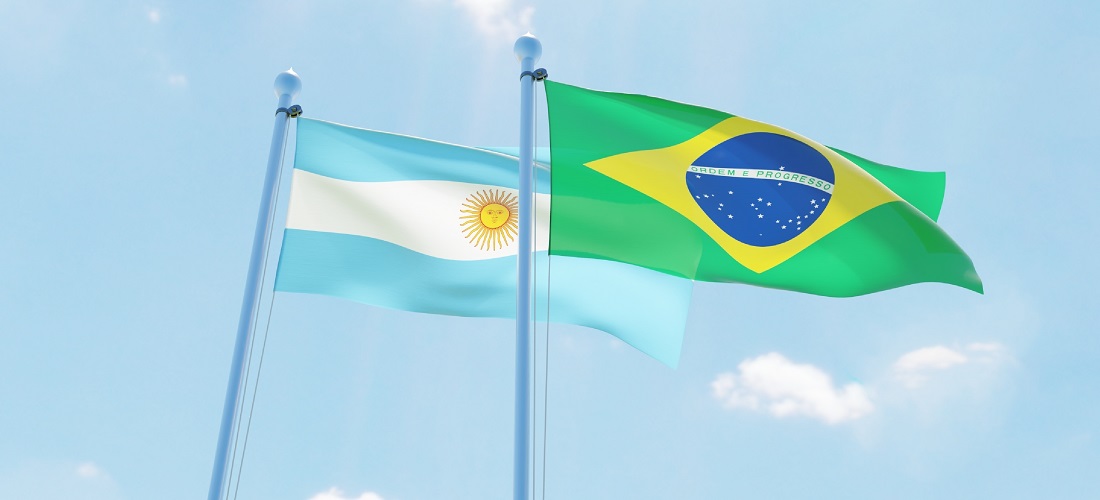
Argentina’s recent economic rebound is driving a significant increase in Brazilian exports, which have already risen by more than 50% in 2025.
Of the 1,500 new jobs created by an automaker across Brazil this year, 1,200 were added in Betim, a city in the metropolitan region of Belo Horizonte. The Betim plant produces the majority of vehicles exported to Argentina, which is now purchasing at much higher volumes. Exports from the plant rose 73% between January and July compared to the same period in 2024.
“The export volume to Argentina has contributed greatly to this growth,” said Valter Ferreira, director of Fiat’s Betim plant. “As a result, we’re generating new jobs and development opportunities. This is a key moment for the Betim automotive hub.”
Brazil’s total exports to Argentina surpassed USD 10 billion in the first seven months of 2025 — a 53% increase over the same period last year. The jump was largely driven by the automotive sector, where sales more than doubled (+116%). Other export categories also experienced growth, including industrial machinery (+36%) and electrical equipment (+43%), which is supported by signs of economic stabilization in Argentina.
When President Javier Milei took office in December 2023, he launched a comprehensive economic overhaul, including the reduction of public spending, privatization of state-owned companies, and devaluation of the peso, which had previously been artificially pegged.
Although poverty soared to over 50% in 2024, it has since dropped to 38%. Inflation, which stood at 25.5% in Milei’s first month in office, fell to 1.9% in July.
According to Insper economics professor Roberto Dumas, an agreement with the IMF to release USD 20 billion in funding is another indicator of Argentina’s recovery. “Inflation in the ten years before Milei hit 12,000%. He’s managed to cut public spending significantly, and now the country is running a fiscal surplus,” Dumas said.
This rebound is also good news for Brazil, which counts Argentina as its third-largest trading partner, behind only China and the United States. The countries’ long-standing relationship, strengthened by the Mercosur trade bloc, has endured despite political clashes between Presidents Milei and Lula.
International relations professor Vinícius Rodrigues Vieira said political tensions don’t necessarily hinder economic ties. “This is a result of Mercosur,” he noted. “Mercosur makes Brazil-Argentina trade immune to ideological disputes. While Milei and Lula clearly don’t get along, neither side is likely to challenge the bloc’s existence.”
With Donald Trump’s tariff threats looming over global trade, experts emphasize the importance of strengthening traditional partnerships while exploring new ones.
“Brazil must stand firm with various partners — especially Argentina, where trade has high added value,” Dumas said.
Vieira added, “Brazil needs to go beyond Mercosur. It should pursue bilateral agreements with Mercosur members, but also look toward emerging markets like Asia, and to the EU, a mature market now also dealing with Trump’s tariff pressures.”
Source: G1
-
Ports and Terminals
Jul, 31, 2023
0
Cellulose Megaterminal is inaugurated in the Port of Santos this Monday
-
Meat
Jan, 04, 2022
0
Paraguay exports 326,000 tons of beef in 2021
-
Grains
May, 29, 2023
0
Bayer delivers Brazil’s first carbon footprint-measured grain shipment
-
Other Logistics
Oct, 13, 2021
0
MRS Logística signs a R$ 200 million contract for CSN’s cargo transportation