

Economy

Brazilian exports to the Persian Gulf fall 31% in March as Hormuz blockade disrupts trade

Apr, 23, 2026 Posted by Gabriel Malheiros

Week 202617

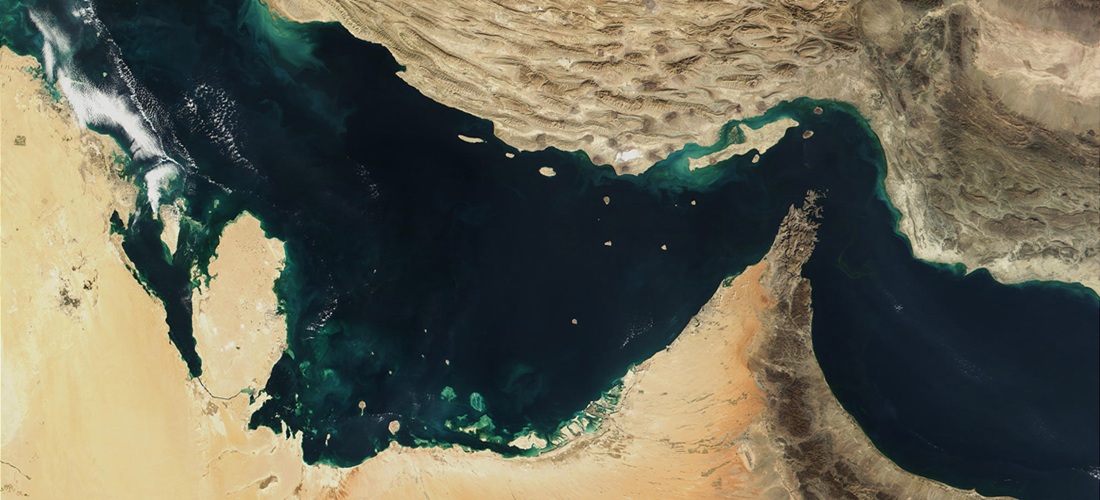
The closure of the Strait of Hormuz due to the war in Iran interrupted a rising trend in Brazilian exports to Persian Gulf countries, an important market for Brazil’s mineral and agribusiness products.

According to data from ComexStat, the trade platform of Brazil’s Ministry of Development, Industry, Trade and Services, and the Arab-Brazilian Chamber of Commerce, sales to Saudi Arabia, the United Arab Emirates, Qatar, Kuwait, Bahrain and Oman fell 31.47% in March from a year earlier, to $537.11 million.

Despite the drop in exports, March still ended with a trade surplus of $41.4 million, even with a 113% jump in imports during the most critical month of the conflict.

In the January-March period, exports still posted positive growth of 8.14%, reaching $2.41 billion. With imports totaling $1.4 billion in the first quarter, Brazil recorded a surplus of $1 billion in the period.

For now, higher sales of some products have been enough to offset the total interruption or sharp decline in shipments of others, such as corn and sugar.

For agribusiness, which accounts for about 75% of exports to the region, sales fell 25.38% in March but were still up 6.8% in the quarter, to $1.44 billion. In the month, sugar exports dropped 43.37%, to $54.07 million, while corn shipments to the Gulf were virtually nil.

Coffee, on the other hand, rose 34.24% in March to $9.97 million and climbed 64.3% in the quarter to $49.58 million.

Poultry meat and byproducts, the largest item in the agribusiness export basket, fell 13.8% in the month to $185.5 million. In the year to date, they were down 2.32%, totaling $619.12 million.

Beef stood out on the upside, rising 24.7%, or $47.75 million, in March, while advancing 65.29% in the quarter to $194.56 million.

The table below, based on Datamar container throughput data, provides details on beef export flows to the main Middle East destinations in the first two months of 2026, compared with the same period a year earlier.

Beef Exports to the Middle East | Main Destinations | Jan-Feb 2026 | TEUs

wdt_ID wdt_created_by wdt_created_at wdt_last_edited_by wdt_last_edited_at FOREIGN COUNTRY Jan-Feb 2026 YTD YoY Diff 2025 %Growth %Market Share
1 I_write_a_lot 23/04/2026 04:08 PM I_write_a_lot 23/04/2026 04:08 PM EGYPT 934 508,00 119.0% 23%
2 I_write_a_lot 23/04/2026 04:08 PM I_write_a_lot 23/04/2026 04:08 PM UNITED ARAB EMIRATES 854 445,00 108.8% 21%
3 I_write_a_lot 23/04/2026 04:08 PM I_write_a_lot 23/04/2026 04:08 PM SAUDI ARABIA 720 31,00 4.5% 17%
4 I_write_a_lot 23/04/2026 04:08 PM I_write_a_lot 23/04/2026 04:08 PM ISRAEL 613 -16,00 -2.5% 15%
5 I_write_a_lot 23/04/2026 04:08 PM I_write_a_lot 23/04/2026 04:08 PM LEBANON 195 -167,00 -46.2% 5%
6 I_write_a_lot 23/04/2026 04:08 PM I_write_a_lot 23/04/2026 04:08 PM JORDAN 195 23,00 13.3% 5%
7 I_write_a_lot 23/04/2026 04:08 PM I_write_a_lot 23/04/2026 04:08 PM IRAQ 152 124,00 442.9% 4%
8 I_write_a_lot 23/04/2026 04:08 PM I_write_a_lot 23/04/2026 04:08 PM LIBYAN ARAB JAMAHIRIYA 148 -248,00 -62.6% 4%
9 I_write_a_lot 23/04/2026 04:08 PM I_write_a_lot 23/04/2026 04:08 PM TURKEY 105 -170,00 -61.8% 3%
10 I_write_a_lot 23/04/2026 04:08 PM I_write_a_lot 23/04/2026 04:08 PM QATAR 101 58,00 133.9% 2%

Source: DataLiner (click here to request a demo)

“The stronger performance of beef reflects an increase in the average price of the product, not in the quantity exported. Export beef prices rose, but the actual volume in tonnes declined,” said Felippe Serigati, a researcher at FGV Agro.

Serigati noted small differences between the calculations of the Arab-Brazilian Chamber of Commerce and Brazil’s Development Ministry, which he said stem from methodological differences in how countries and product categories are grouped.

Saudi Arabia and the United Arab Emirates remained the two countries in the region with the largest shares of Brazilian exports, at 46.2% and 38.5%, respectively. The main products shipped were poultry meat and byproducts, at 34.6%, non-monetary gold, at 10.2%, sugars and molasses, at 10.1%, and beef, at 8.7%.

Although year-to-date data still show growth, the conflict caused major disruptions to beef exports in March in countries such as Qatar, down 55.3%, the United Arab Emirates, down 49.5%, and Iraq, down 42.5%, said Celso Grisi, a professor at the University of São Paulo’s School of Economics and Administration.

According to Grisi, shipowners began charging “war surcharges,” while the closure of the Strait of Hormuz lengthened voyage times. He also said that “the route around Africa increased freight and insurance costs, affecting the final trade flow.”

“In summary, the growth in sales to Arab countries is a structural trend driven by the region’s food dependence and by the quality and certification of Brazilian meat, but this flow faces severe logistical disruption during peaks in conflict,” Grisi said.

The halal meat market, which follows Islamic slaughter requirements, remains resilient, according to Grisi. In addition, Brazil has been increasing its share of that market over the long term, becoming the world’s largest halal meat exporter, which has helped drive annual records such as the one posted in 2025, when beef exports to Arab countries rose 1.91%.

He added that higher costs and logistics uncertainty are putting this expanding market on alert.

Brazil’s import basket from the region remains narrow, concentrated mainly in five products. Fertilizer imports from Gulf countries rose 268% in March to $30 million compared with February 2026. In volume terms, the increase was 171%, to 52,900 tonnes in March.

In the first quarter of 2026, however, fertilizer imports fell 51.35%, from $175 million to $85 million. In volume, the decline was nearly 60%, from 455,000 tonnes to 183,000 tonnes.

According to the Arab-Brazilian Chamber of Commerce, fertilizer shipments from Qatar were sent by air to bypass the Strait of Hormuz blockade.

Imports of oil, bituminous minerals and crude oil fell 21% in March from February, from 633,000 tonnes to 500,000 tonnes. In value, the drop was 6.14%, from $393.6 million to $369.4 million in the same period.

In the quarter, compared with the same period of 2025, total imports rose 29.5% to $1 billion.

Source: report by Sylvia Miguel for Folha de S. Paulo

Sharing is caring!

Leave a Reply

Your email address will not be published. Required fields are marked *


The reCAPTCHA verification period has expired. Please reload the page.