


Record Brazilian Port Throughput Increases Pressure on Inland Connections
Oct, 19, 2026 Posted by Gabriel MalheirosWeek 202643
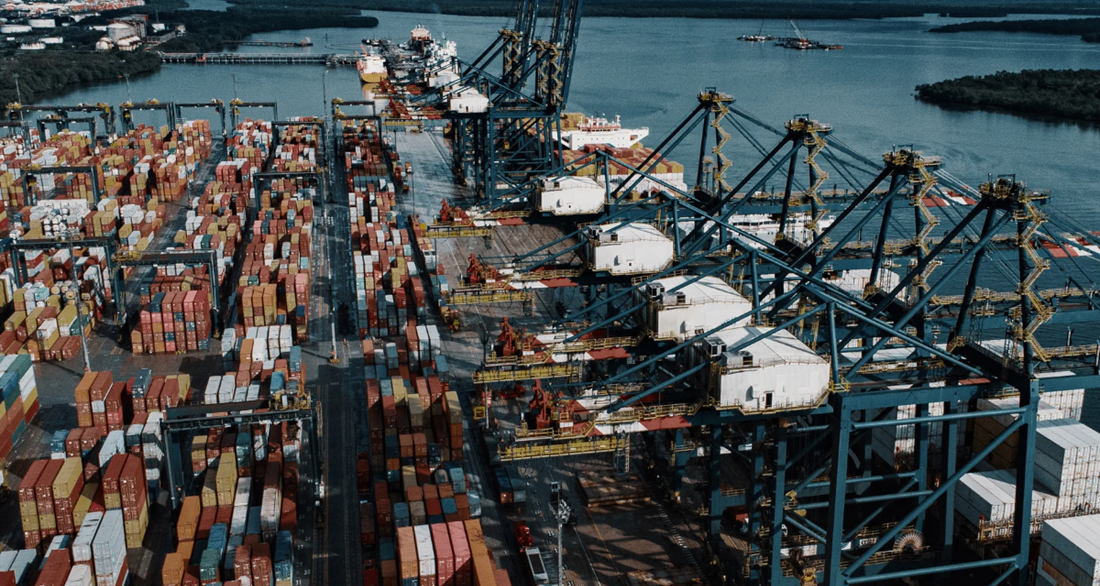
Brazilian port throughput has reached new heights. In August 2026, the Port of Santos handled 538,200 TEUs, its highest monthly container volume on record and an increase of 3.9% from August last year. That same month, the Port of Suape, in Pernambuco, handled 2.7 million tonnes, also setting a monthly record, while liquid bulk throughput rose 61% year over year. The results are part of a broader trend: in 2025, Brazilian ports handled 1.4 billion tonnes of cargo, the highest volume ever recorded in the country and 6.1% more than in 2024.
This expansion reflects transformations that have taken place over several decades. Containerization, the mechanization of port operations, terminal specialization and the adoption of new technologies have increased productivity and capacity. Another milestone came in 1993 with Brazil’s Port Modernization Law, which expanded private-sector participation in port operations and encouraged investment in equipment and infrastructure.
Brazilian Port Throughput Growth Puts Pressure on Inland Logistics
For the Transport Memory Foundation (FuMTran), the latest records also reveal a shift in the challenges facing Brazil’s ports. While much of the industry’s development has focused on the capacity of docks and terminals, today’s growth requires highways, railways, off-dock areas and supporting infrastructure to keep pace.
“Brazilian ports have undergone a major transformation and now handle cargo volumes that would have been difficult to imagine just a few decades ago. But as terminals become more efficient, the need to ensure that cargo can move in and out just as efficiently also grows. The challenge now extends to the entire logistics corridor,” said Antonio Luiz Leite, president of FuMTran.
The challenge is to prevent efficiency gains within port complexes from simply shifting bottlenecks to their inland connections. Expanding road and rail capacity, organizing truck staging areas and off-dock facilities, and improving integration with intermodal terminals are becoming increasingly important as cargo volumes grow. After all, port operations depend on a network that begins well before the docks and extends far beyond them, connecting production areas, industries, distribution centers and consumer markets.
In this context, rail transportation could gain a larger share of long-distance, high-volume freight movements, while road transport remains essential for cargo collection, distribution and connections between different points in the supply chain. The expansion of port terminals themselves reinforces the need for this planning: between July 2025 and January 2026, 25 contractual instruments related to Private Use Terminals (TUPs) were formalized, with R$9.23 billion in planned investment.
“The records show how far Brazilian ports have come. The next step is to ensure that highways, railways, intermodal terminals and supporting facilities also develop in a coordinated way. Sustaining ever-higher cargo volumes will depend less on any single piece of infrastructure and more on how efficiently the entire system can move those goods,” Leite concluded.
Source: FuMTran
-
Blog News (ENG)
Nov, 16, 2022
0
Corn exports from Brazil grow 127% in early November, says Secex
-
Other Cargo
Sep, 04, 2026
0
Brazil fertilizer imports fall, but Santos increases volumes
-
Shipping
Jun, 18, 2026
0
Norsul and Norcoast invest in deck officer training to ease Brazil’s cabotage labor shortage
-
Oct, 28, 2022
0
Mexico to proceed with GMO corn ban, seeks international grain deals