

Brazilian Ports Accelerate Decarbonization to Maintain Logistics Competitiveness
Jun, 03, 2026 Posted by Sylvia SchandertWeek 202623
Port decarbonization is no longer a long-term goal but has become an immediate strategic necessity for Brazil. That is the assessment of Mauro Sammarco, Chairman of the Board of the Brazilian Infrastructure Institute (IBI) and President of the Santos Commercial Association.
According to Sammarco, the pressure stems from international emissions-reduction targets, market requirements, and the concerns of port cities affected by pollution.
“Companies are feeling pressure and an urgent need to make efforts toward decarbonization,” he said.
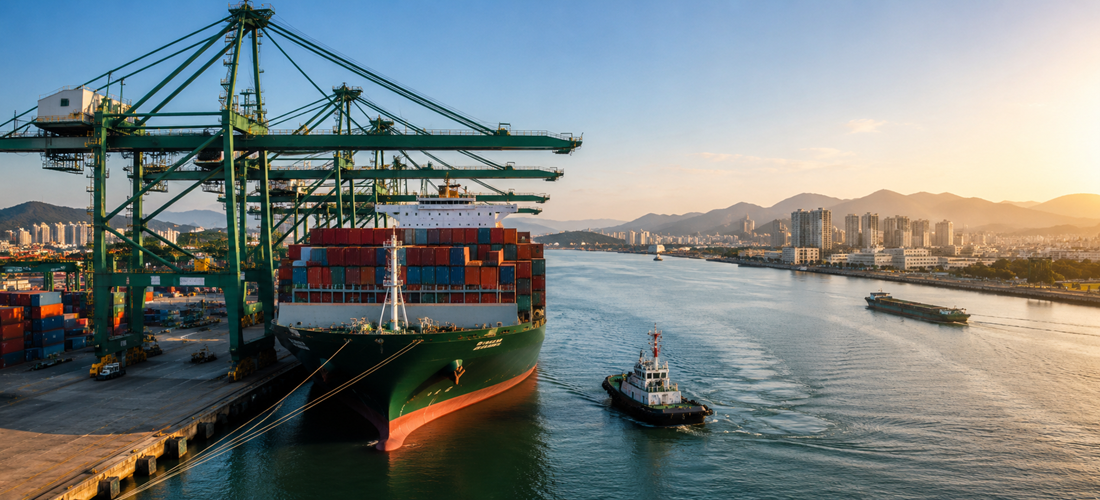
The Port of Santos is already making progress in this direction, particularly at container terminals, where diesel-powered equipment is being replaced by electric vehicles. Port cranes and yard equipment are among the assets undergoing this transition to reduce reliance on fossil fuels.
Another key initiative is the provision of shore power to vessels while berthed, a practice known as shore-side electrification. This allows ships to shut down their diesel generators while remaining in port.
“When a ship is berthed at the quay, its main engine is not running, but its generators are. This generates pollutants in the port area,” he explained.
Sammarco highlighted that the issue is already advancing through projects in Brazil, such as those at the Port of Pecém and Portonave in Navegantes. According to him, the country is still discussing regulatory adjustments and the participation of power generation and distribution companies in meeting vessels’ energy demands.
In the executive’s view, the environmental agenda also includes issues such as ballast water and hull fouling, which can transport organisms between different regions. He noted that ballast water regulation falls under the jurisdiction of the Brazilian Navy, in accordance with international conventions, and mentioned discussions in Santos regarding additional rules imposed by the local port authority.
Sammarco also pointed to railway expansion as an essential part of the transition toward a more efficient and sustainable logistics system. In his view, Brazil has fallen behind due to its historical focus on road transportation.
“Unfortunately, the country made a choice in the past to stop investing in railways,” he said.
According to him, Brazil’s grain production, which exceeds 350 million tonnes, is putting pressure on a logistics system that remains inefficient in transporting cargo from the Midwest and the Matopiba region to export corridors. Sammarco cited railway concessions, the Ferrogrão project, and bioceanic corridor initiatives as positive developments.
Coastal shipping was also identified as an underutilized mode of transport in Brazil. According to Sammarco, its limited use results from cultural and regulatory factors, including the country’s historical preference for road transport and the taxation of fuel used in coastal navigation.
“We need incentives to make greater use of this mode, which offers significant efficiency gains,” he said.
Commenting on competition among Brazilian ports, Sammarco said that Santos is expected to maintain its leading role in container handling due to its proximity to the country’s largest consumer market, the state of São Paulo. For grain cargoes, however, he emphasized that investments in the Northern Arc ports make economic and logistical sense.
According to him, the possibility of shipping grains through the Pacific coast could reduce transit times to China, lower freight costs, and enhance Brazil’s competitiveness against the United States.
Source: Times Brasil
-
Other Cargo
Nov, 07, 2022
0
Brazil footwear exports slow down in October
-
Fish
Jan, 27, 2025
0
Brazilian Aquaculture Records Historic Growth in Exports in 2024
-
Ports and Terminals
Apr, 14, 2021
0
Paranaguá breaks record for largest soybean meal shipment
-
Meat
May, 03, 2022
0
Minerva Foods announced its 1st shipment of carbon-free meat in Uruguay