

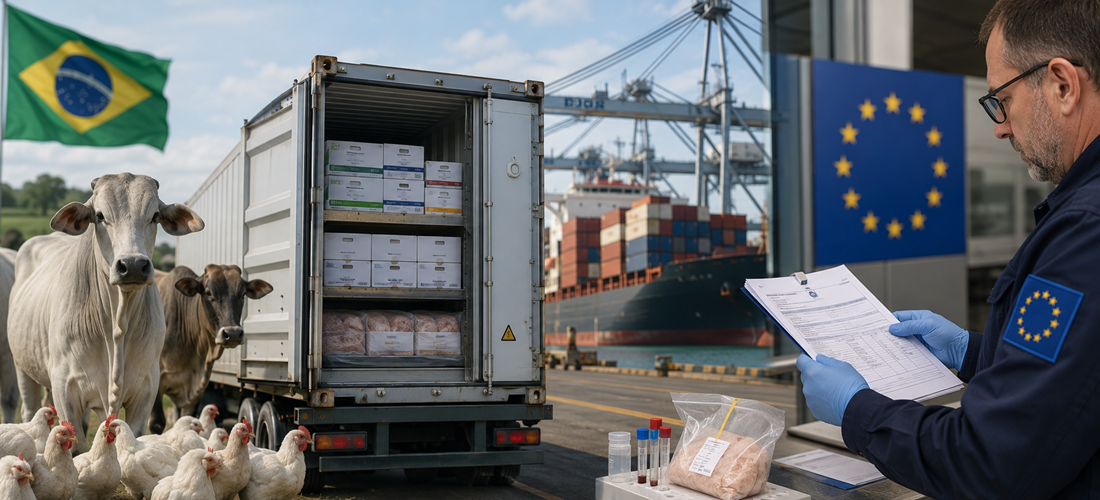
Imagem gerada com inteligência artificial
Meat

European Union to ban imports of Brazilian meat from September

May, 12, 2026 Posted by Gabriel Malheiros

Week 202620

The European Union on Tuesday (May 12) published an updated list of countries that comply with its rules against the excessive use of antimicrobials in livestock production and removed Brazil from that list. The measure will take legal effect once it is published in the bloc’s official journal.

According to the EU, Brazil was excluded because it failed to provide assurances regarding the non-use of antimicrobials in livestock farming, AFP reported. Other Mercosur countries, including Argentina, Paraguay and Uruguay, remain authorized.

In an interview with Portuguese news agency Lusa, European Commission health spokesperson Eva Hrncirova confirmed that Brazil is no longer on the list and could therefore stop exporting to the EU products such as cattle, horses, poultry, eggs, aquaculture products, honey and casings.

According to the spokesperson, for Brazil to return to the list, “it must ensure compliance with EU requirements regarding the use of antimicrobials throughout the life cycle of the animals from which the exported products originate.” “As soon as compliance is demonstrated, the EU may authorize or resume exports,” she said, adding that the bloc has been working with Brazilian authorities on the issue.

On the 2024 list, Brazil appeared as authorized to export beef, chicken and horse meat, as well as casings, fish and honey.

Ban on antimicrobials

The European Union prohibits antimicrobials that are also used to promote animal growth, said Leonardo Munhoz, a doctor of agro-environmental law and a lawyer at VBSO.

  • These include:
  • virginiamycin;
  • avoparcin;
  • bacitracin;
  • tylosin;
  • spiramycin;
  • avilamycin.

In April, Brazil’s Agriculture Ministry published an ordinance banning the import, manufacture, sale and use of some antimicrobials used as performance enhancers, including avoparcin and virginiamycin.

To return to the EU list, Brazil has two options: legally restrict the use of the other medicines mentioned or ensure that exported meat does not contain those substances. The second option is not easy to implement because it depends on product traceability and is more time-consuming and costly, Munhoz said.

Once it is proven that Brazilian livestock production does not use those antimicrobials, the country may resume exports, even if that happens after September. According to the researcher, the EU had already been planning these restrictions since 2019.

The European Union is the third-largest destination for Brazilian beef by export value, after China and the United States, according to Agrostat, the Agriculture Ministry’s data system. For meat in general, the bloc is the second-largest market, behind China.

The following analysis highlights monthly beef exports bound for the European Union over the last three years, based on Datamar’s container throughput data:

Beef Exports to the EU | Jan 2023 – Mar 2026 | TEUs

Source: DataLiner (click here to request a demo)

What the industry says

The Brazilian Beef Exporters Association, Abiec, said Brazil remains “fully authorized to export beef to the European market” and that “a possible ban on exports would occur only if the guarantees and adjustments required by the European authorities are not presented by the established date.”

“The Brazilian beef industry meets the sanitary and regulatory requirements of the main international markets, with strict official controls, traceability systems and globally recognized protocols. Brazil currently exports to more than 170 countries, supported by one of the most robust agricultural inspection and animal health defense systems in the world,” the group said.

The Brazilian Animal Protein Association, ABPA, said that, with government support, it “will provide all necessary clarifications to the European Union.” It added that Brazil has robust sanitary and production control structures, with strict traceability protocols, veterinary monitoring and responsible use of medicines, in line with international animal health and food safety standards.

Renato Azevedo, president of the Brazilian Honey Exporters Association, told g1 that the news “came as a surprise” to the sector. “I understand this is something political, given the strong pressure from Europeans to block Brazilian products after the Mercosur agreement,” he said.

The Brazilian Fish Industry Association, Abepesca, said it has not exported to the EU since 2016.

Mercosur-European Union agreement

The publication of the list came 12 days after the signing of a free trade agreement with Mercosur countries, which has been criticized by European farmers and environmentalists, especially in France.

The Tuesday measure is unrelated to the agreement, Munhoz said. The list is a sanitary regulation, in other words, a requirement that any country may adopt to ensure the safety of food consumed by its population.

The agreement entered into force provisionally on May 1 and is awaiting a court decision in Europe on its legality.

“Our farmers follow some of the strictest health and antimicrobial standards in the world. Therefore, it is legitimate that imported products be subject to the same requirements. The decision taken today shows that the European control system works,” European Agriculture Commissioner Christophe Hansen said.

 Source: G1

Sharing is caring!

Leave a Reply

Your email address will not be published. Required fields are marked *


The reCAPTCHA verification period has expired. Please reload the page.