


Gaps in port anti-trafficking efforts create opening for Brazil’s Navy
Apr, 10, 2026 Posted by Gabriel MalheirosWeek 202615
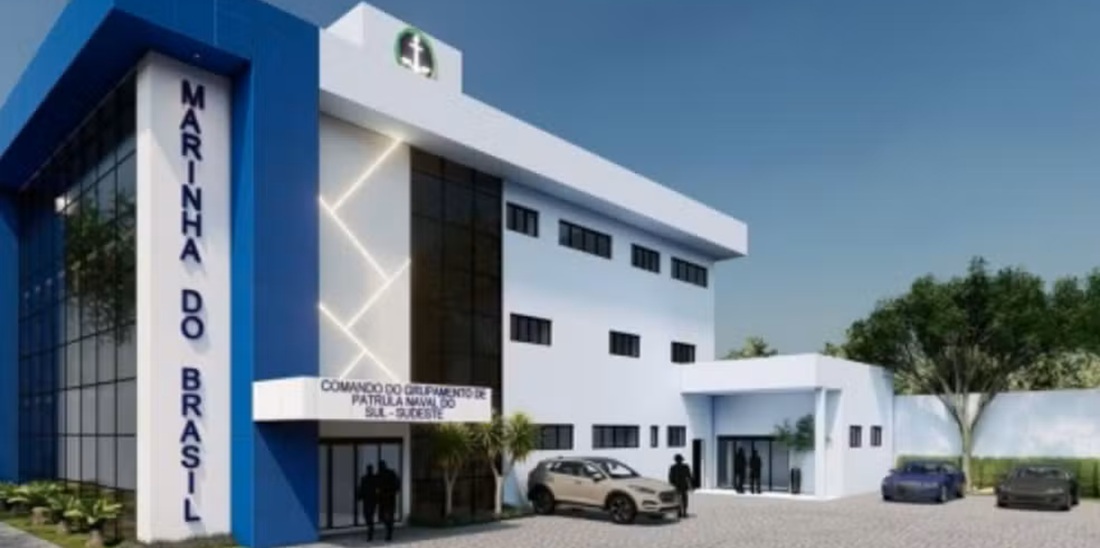
Shortcomings identified by Brazil’s federal audit court in the fight against international drug trafficking at the country’s ports have opened a new window, behind the scenes in government, for the Brazilian Navy to argue for an expanded role for SisGAAz, the Blue Amazon Management System.
More than a naval defense project, the Navy is trying to persuade Brasília that the structure should be seen as a broader-use tool capable of supporting surveillance of port areas, maritime routes, anchorage zones, energy assets and other sensitive points along the coastline.
The audit by the Federal Court of Accounts (TCU) identified failures in the government’s response and found that ports still lack sufficient and integrated control technologies, undermining efforts to combat transnational drug trafficking.
It is in that environment that the Navy sees room to reinforce the argument that SisGAAz should not be treated as a sector-specific military expense, but as a state investment.
The system was created by the Navy to monitor and strengthen surveillance over the so-called Blue Amazon, Brazil’s maritime jurisdictional area. It brings together data from radars, cameras, satellites and other sensors to track vessels, improve maritime situational awareness and support defense and anti-illicit operations.
In the view of officials in the naval area, the system could function as an additional layer of maritime enforcement by integrating sensors, expanding monitoring around ports and supporting joint action by different agencies.
The TCU’s diagnosis of the ports helps support that case.
According to the report, only the Port of Vitória currently has a fully operational Vessel Traffic Management Information System (VTMIS), a technology used to monitor vessel movements in real time in port and approach areas.
At Brazil’s other major ports, such as Santos, Paranaguá, Suape and Itajaí, there are no active systems for continuous monitoring of waterborne traffic in anchorage and approach areas.
“The other Brazilian ports, such as Santos, Paranaguá, Suape and Itajaí, do not have active systems for monitoring waterborne traffic, leaving their anchorage and approach areas without continuous surveillance,” the TCU said.
The assessment is that the country needs a broader maritime surveillance architecture, capable of tracking suspicious movements, fusing data from different sensors and supporting faster responses in areas used by criminal organizations, including around strategic facilities.
SisGAAz brings together exactly the capabilities the TCU said are insufficient or fragmented at ports, such as continuous monitoring, data fusion and real-time tracking of vessels and aerial vectors.
The TCU itself said the absence of effective systems for monitoring waterborne traffic at the main ports undermines not only navigational safety, but also the state’s ability to prevent and repress illicit activities associated with international drug trafficking.
The court also described the use of advanced technologies, including real-time processing of large volumes of data, as promising for reducing vulnerabilities exploited by transnational criminal networks.
“The use of systems such as VTMIS, combined with solutions based on artificial intelligence for the detection of anomalous behavior, represents a promising path to strengthen surveillance, increase predictability and reduce logistical vulnerabilities exploited by transnational criminal networks,” the TCU said.
The idea is that the Navy’s system could be presented to the government as a dual-use platform. At the same time that it reinforces sovereignty and deterrence at sea, it could also contribute to port security, protection of logistics infrastructure, monitoring of offshore areas and support for anti-illicit operations.
The discussion has gained additional weight because the TCU recommended that the Ministry of Ports and Airports begin considering public security criteria, especially the incidence of drug seizures, when prioritizing investments in waterborne traffic monitoring systems such as VTMIS, Vessel Traffic Services and Local Port Services.
The audit says this perspective needs to be broadened in light of the growing importance of public security and the shifting routes used by traffickers.
The dispute, however, is not only technical. It is also budgetary and political.
The TCU itself noted that no data are available on the volume of resources specifically allocated to preventing and combating transnational drug trafficking at Brazilian ports.
In that context, the Navy is trying to argue that SisGAAz could be a more cross-cutting response. Rather than being viewed only as a military expense, the system would also be framed as an investment aimed at protecting logistics chains, the ocean economy, energy infrastructure and the country’s institutional security.
Original reporting by Gabriel Garcia for CNN Brasil
-
Other Cargo
May, 17, 2023
0
Brazil opened 20 new markets for agricultural products in 2023 to date
-
Ports and Terminals
Jan, 20, 2021
0
Port of Vitória expands supply of marine diesel as cargo handling grows
-
Other Cargo
Apr, 15, 2024
0
Paraná changes tax rules to contain imports of powdered milk
-
Other Cargo
Jun, 29, 2026
0
Brazil seeks emergency fertilizer supply from Russia, China and Morocco