


Iran creates bitcoin-backed maritime insurance for shipments through Strait of Hormuz
May, 20, 2026 Posted by Gabriel MalheirosWeek 202621
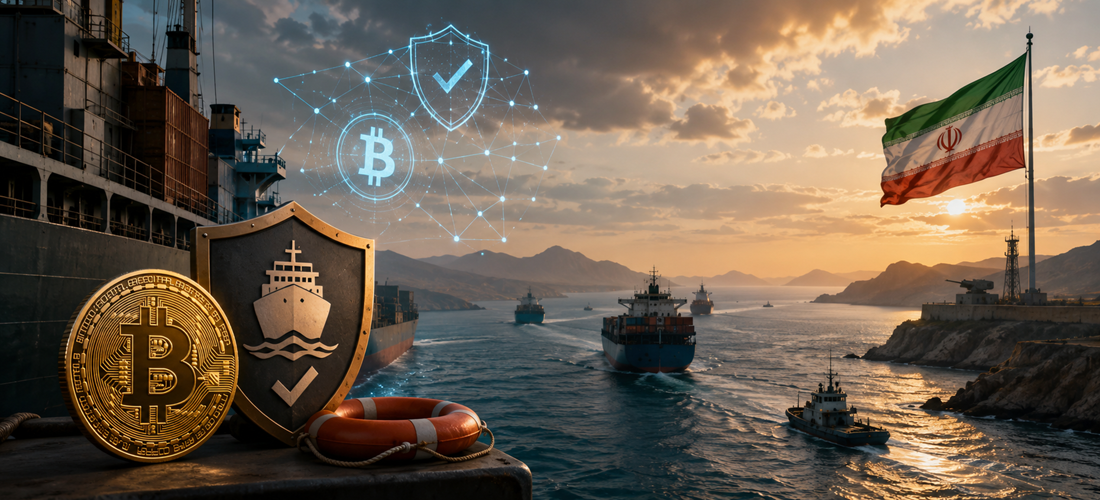
Iran has launched a bitcoin-backed insurance service for shipping companies seeking to transit the Strait of Hormuz, the semi-official Fars news agency reported, citing documents obtained from the country’s Ministry of Economic Affairs and Finance.
Called Hormuz Safe, the service could generate more than US$10 billion in revenue for the Islamic Republic, according to the Iranian government, Fars reported, without detailing the timeframe or explaining how the mechanism would work.
Iran has effectively closed the Strait of Hormuz — a key route for global energy supplies and other goods — since the United States and Israel began airstrikes against the country on Feb. 28. Since then, the government and the Islamic Revolutionary Guard Corps have sought to formalize control over the waterway, including through the collection of tolls and other fees. An insurance service could provide another source of revenue.
According to a screenshot of the Hormuz Safe website shared by Fars, the service will target “Iranian shipping companies and cargo owners.” Iran is under heavy U.S. sanctions, and the use of cryptocurrencies such as bitcoin and tether has grown sharply in the country since President Donald Trump began targeting its economy and energy exports during his first administration.
“Cryptographically verifiable insurance policies will be provided for cargo passing through the Persian Gulf, the Strait of Hormuz and nearby maritime routes, and payments will be settled in bitcoin,” Fars reported, citing the website hormuzsafe.ir, which apparently cannot be accessed from outside Iran. “Cargo will be covered from the moment of confirmation, and a signed receipt will be delivered to the owner.”
The United States and Iran have observed an unstable ceasefire since early April, and resolving the standoff over the Strait of Hormuz is essential to any formal peace agreement.
Trump issued a new threat to Iran on Sunday, telling Tehran that it “better move, and fast, or there will be nothing left of them,” according to a post on Truth Social. The two sides have repeatedly rejected each other’s demands and have been unable to agree on how to resume peace talks.
As the impasse continues, more than 1,500 commercial vessels were stuck in the Persian Gulf in early May, according to the U.S. military. Oil producers in the region were forced to sharply reduce output as they ran out of space to store crude.
The Iranian government and the Revolutionary Guard have allowed some vessels to cross through a designated route near Iran’s coast, in some cases after requesting payments of up to US$2 million. In response, the United States blocked Iranian ports.
It is still unclear to what extent the Hormuz Safe insurance service is directly linked to the Revolutionary Guard or to the government’s broader plans to consolidate an official toll system. Fars has strong ties to the Guard.
It is also uncertain whether a bitcoin-based maritime insurance system is viable. Unlike so-called stablecoins, which are pegged to fiat currencies such as the U.S. dollar, bitcoin is highly volatile — a feature that has limited its adoption as a means of payment. Foreign shipowners may also hesitate to use the mechanism out of concern that they could violate U.S. sanctions against Iran.
Babak Zanjani, an Iranian businessman who made a fortune helping the Islamic Republic circumvent sanctions, began promoting the idea of an Iranian maritime insurance scheme for the Strait of Hormuz on May 8.
Zanjani — released from prison last year after his death sentence was commuted — shared the first details of Hormuz Safe with his followers minutes after Fars published its report. He had previously been imprisoned for embezzling billions of dollars from Iran’s Oil Ministry.
The information about Hormuz Safe coincided with a statement from an Iranian lawmaker that the Islamic Republic would soon present a professional mechanism to manage traffic through the strait using a designated route.
Ebrahim Azizi, head of the Iranian Parliament’s national security committee, said “only commercial vessels and parties that cooperate with Iran will benefit.”
“The necessary fees will be collected for the specialized services provided under this mechanism,” Azizi said in a statement on X, adding that parties involved in the war between the United States, Israel and Iran would be barred from accessing the route.
Esmail Baghaei, spokesperson for Iran’s Foreign Ministry, said on Monday that Iranian and Omani officials met last week to discuss joint efforts to “develop a mechanism” to ensure safe passage for vessels transiting the strait.
Source: Valor Econômico
-
Meat
Jun, 06, 2024
0
Brazil ships 10,000 tonnes of poultry to Algeria
-
Economy
Aug, 17, 2022
0
Brazil is selling less to China, but price makes up for it
-
Ports and Terminals
May, 18, 2021
0
Governor of Paraná signs concession for vehicle-handling area at the Port of Paranaguá
-
Oil and Gas
May, 04, 2026
0
Petrobras expands production and exports in Q1 2026 and strengthens cash generation